


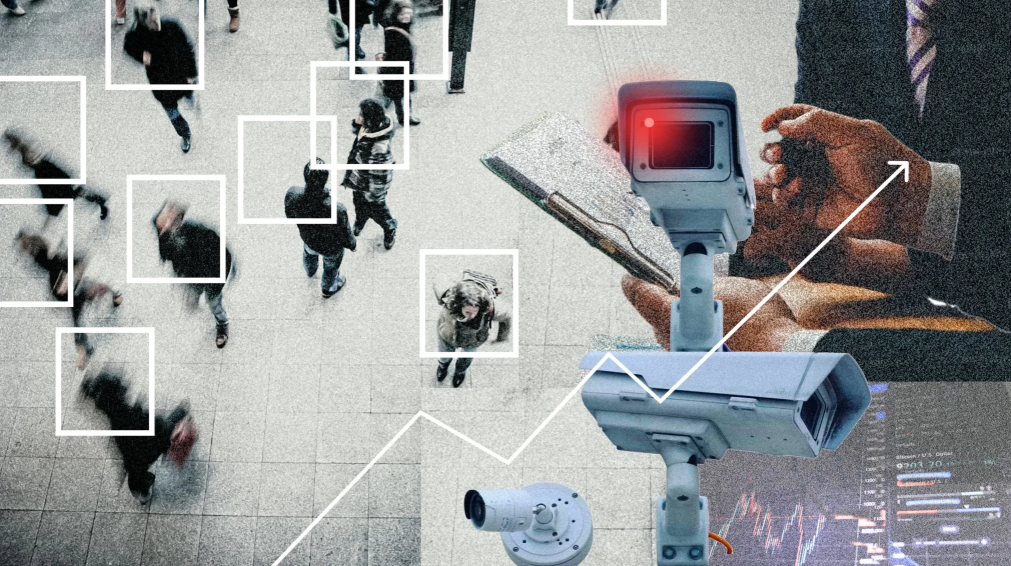
An industrial designer found an unidentified device at the end of a house block in Troy, a small city with a population of 52,000 people in New York state, in February while taking a walk with a newborn in a stroller. It was a camera with solar panels on it. After searching the Internet out of curiosity, he soon got goosebumps. It was an artificial intelligence (AI) license plate recognition camera with more than 90,000 units spread across the U.S. The small discovery split the city in two months. The mayor of the Republican Party declared a state of emergency, saying he would never take it off, and the Democratic-controlled city council filed a lawsuit against the mayor. It is a miniature version of the “AI surveillance camera backlash” that is spreading across the U.S. According to the New York Times, a Trojan resident sent an e-mail titled “Troy’s Flock Camera, Please Share” to his neighbors right after identifying the identity of the AI surveillance camera. Introducing himself as “not a political activist,” he successfully rallied citizens. “Watch cameras are not safety” chanted in front of Troy City Hall.
The revelation was shocking. It has been confirmed that the police have signed a pilot contract with ‘Flock Safety’, an AI license plate recognition camera company, since 2021 and have installed 26 cameras throughout the city.
The problem is that the city council was not aware of this at all. A contract worth more than 350,000 dollars is supposed to be approved by the city council, but a two-year contract worth 1.56 million dollars was signed by the police alone. Sue Steele, the council’s chairman, said, “(The contract) was conducted in a secret and opaque manner,” adding, “This sparked fears that George Orwell’s novel ‘1984’ and ‘Big Brother is watching.”
Flock Safety is one of the largest suppliers of cameras to more than 6,000 communities in the United States. AI cameras take pictures of all vehicles passing by to create digital “fingerprints” containing bumper stickers and gun stands, and police track vehicle movements through national databases. Trojans police protested that “cameras are used in almost all investigations,” and that they contributed to solving violent crimes, including two murders. The debate exploded at a city council meeting on March 19. More than 150 residents protesting the installation of cameras filled the small council hall. They shouted “liar!” when Mayor Camella Mantello tried to speak, and the chairman repeatedly hit the gavel.
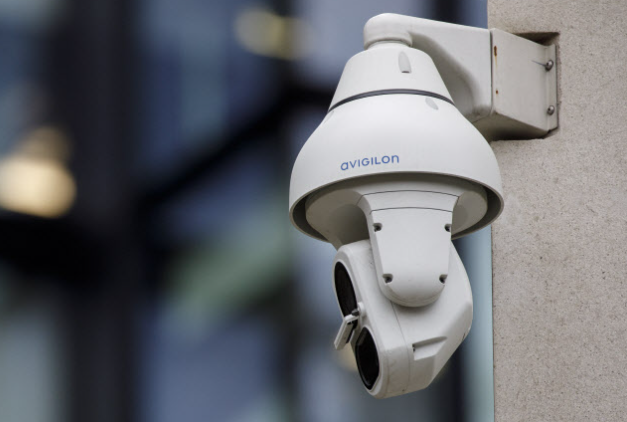
When the city council stopped paying for Flock Safety, Mayor Mantelo immediately declared an “emergency”. It was a roundabout payment of $78,000 in arrears by mobilizing measures used during floods and heavy snowfall. Mayor Mantelo, a native of Troy and whose father was a former police officer, vowed not to jeopardize public safety.
Two months later, on the 13th, the city council eventually filed a lawsuit against the mayor. He called the declaration of an emergency “illegal” and demanded an immediate withdrawal. At the same time, the city council is also seeking to enact an ordinance to shorten the data retention period to two days. The mayor responded by calling it “dangerous and wrong policy that will be a gift to criminals.” The controversy in Troy is the tip of the iceberg. According to DeFlock, a citizen mapping project against Flock cameras, more than 90,000 AI surveillance cameras are currently in operation across the U.S.
More than 60 of them have terminated or refused contracts. Under the slogan “Get the Flock Out,” someone even damaged a camera after the city council voted to end the contract, the New York Times reported.
Worsening the controversy was the case of misuse. It has been revealed one after another that federal immigration enforcement agencies such as the Immigration and Customs Enforcement (ICE) used local police as a detour to access Flock data. In Kansas, a police chief resigned after being found to have used a Flock camera to stalk his ex-girlfriend.
AI monitoring expert Andrew Guthrie Ferguson, a law professor at George Washington University, warned that “this ineligible surveillance network gives the police new power that never existed before,” and that it could expose private movements such as attending alcoholism meetings and visiting immigration lawyers.
JENNIFER KIM
US ASIA JOURNAL

