


The Diet will compile its view this year on revising a law to maintain the number of imperial family members, the lower house speaker said Wednesday, after all the political parties from both chambers held talks amid longstanding concerns over a stable imperial succession.
House of Representatives Speaker Eisuke Mori, a veteran lawmaker from the ruling Liberal Democratic Party, told a press conference after the meeting that he aims to amend the 1947 Imperial House Law during the ongoing Diet session through mid-July, the same target as that of the LDP.
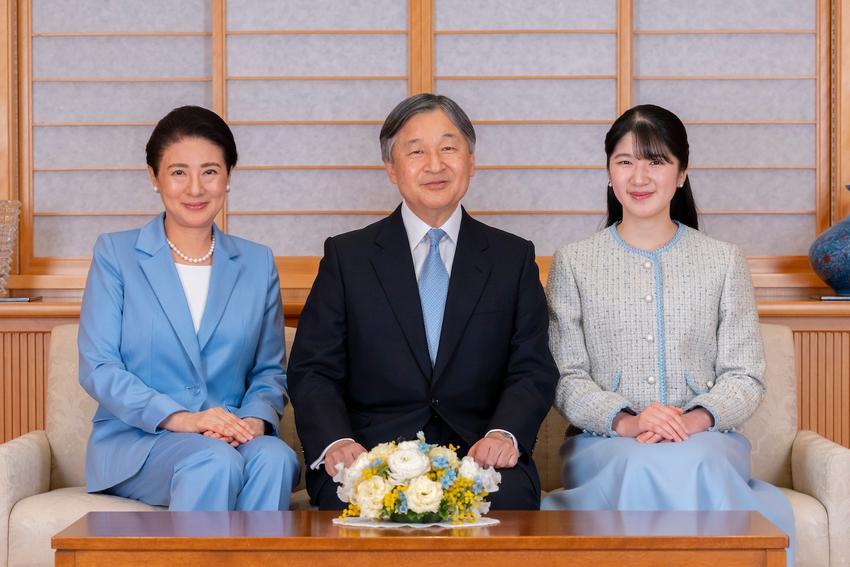
Securing imperial family members has become a more urgent task since there are only three heirs to 66-year-old Emperor Naruhito — his younger brother Crown Prince Fumihito, 60, nephew Prince Hisahito, 19, and uncle Prince Hitachi, 90.
Prince Hisahito is the only unmarried male in the imperial family. The current law limits heirs to a male who has an emperor on his father’s side, while requiring female members to leave the family upon marriage to a commoner.
“As I intend to consolidate the legislative body’s collective will as soon as possible, I asked for cooperation from all parties,” said Mori, who serves as a coordinator of the closed-door talks together with his House of Councillors counterpart and the vice speakers of the two chambers.
The meeting was held for the first time since April last year, after which Prime Minister Sanae Takaichi, who doubles as the LDP head, took office in October.
At the gathering, 12 out of the 13 parties and groups, presented their views on two major legislative proposals, with many showing support for both, LDP policy chief Takayuki Kobayashi told reporters, adding that the proposals should be realized together.
The Centrist Reform Alliance, the main opposition party in the lower house, was the only group not to present its views, as it has yet to reach an internal consensus on the two proposals.
The first proposal is having female members who marry commoners retain their imperial status. The second is allowing male heirs from former branches to be adopted into the imperial family.
The LDP and its junior partner, the Japan Innovation Party, aim to revise the law during the current parliamentary session. Their coalition agreement in October stated that the latter proposal is their “first” choice.
The ruling bloc won more than 350 seats in the 465-member lower house in an election in February, well above the two-thirds threshold required to override the upper house, where the coalition remains in a minority, to push through bills.
Mori also said that he asked the Central Reform Alliance to conclude its opinion by the next meeting expected to be held in about a month’s time.
The alliance was formed just weeks before the February election by lower house lawmakers from the Constitutional Democratic Party of Japan and the Komeito party, the LDP’s former longtime ally.
The CDPJ remains the largest opposition force in the upper house. Its lawmaker, Hiroyuki Nagahama, told reporters that revising the law at the ongoing parliamentary session would be “impossible” and the proposal on adopting male heirs into the imperial family requires “extreme careful review.”
In a nonbinding resolution in June 2017, committees on the issue in both the lower and upper houses called on the government to promptly hold discussions on “challenges in securing a stable imperial succession.”
The two proposals for amending the law were submitted in 2021 by the government’s expert panel, which did not touch on whether women or matrilineal imperial members would be eligible to ascend the Chrysanthemum Throne, saying it would be premature to go into the specifics of the issue.
Japan’s hereditary monarchy is traditionally said to stretch back more than 2,600 years, including early emperors whose existence is disputed and several female emperors, with the throne consistently passed down the male line.
At the LDP’s annual convention on Sunday, Takaichi, a conservative, expressed her willingness to speed up work to change the law while preserving the male line that she said underpins the emperor’s “authority and legitimacy.”
© KYODO