


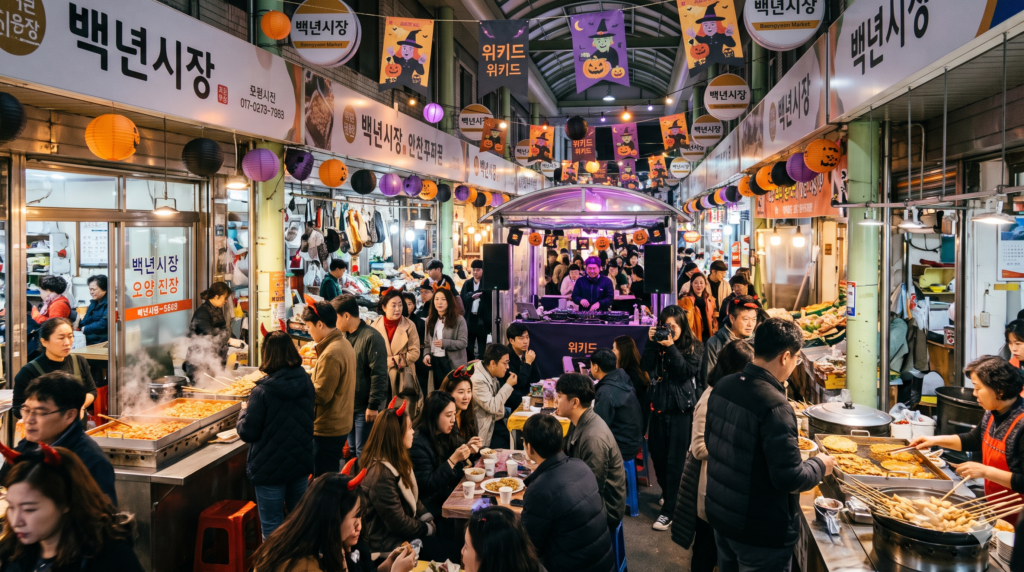
A traditional market in northern Seoul is embracing Halloween-inspired entertainment this weekend, combining street food, live music and retro-themed activities in an effort to bring a different kind of nightlife experience to one of the city’s established shopping districts.
Baengnyeon Market in Gangbuk District is hosting a two-day night market event titled “WICKED” on Oct. 30 and 31, transforming its usual shopping environment into a seasonal gathering space.
The event runs from 4 p.m. to 9 p.m. on both days, with free admission and activities open to the public.
Organizers have incorporated witch-themed decorations and nostalgic elements into the program, alongside food stalls, traditional-style drinking areas and DJ performances.
A public DJ booth also allows visitors to participate in the entertainment rather than simply watch scheduled performances.
The event reflects how some of South Korea’s traditional markets are experimenting with cultural programming to appeal to customers beyond their regular shoppers.
Traditional markets have long served as neighborhood centers for fresh produce, household goods and inexpensive meals. But their role is evolving as shopping habits change and consumers seek experiences that combine dining, entertainment and social interaction.
Night markets offer one approach to that transition.
By extending activities into the evening, markets can create opportunities for food vendors and nearby businesses to reach customers who might not ordinarily visit during daytime shopping hours.
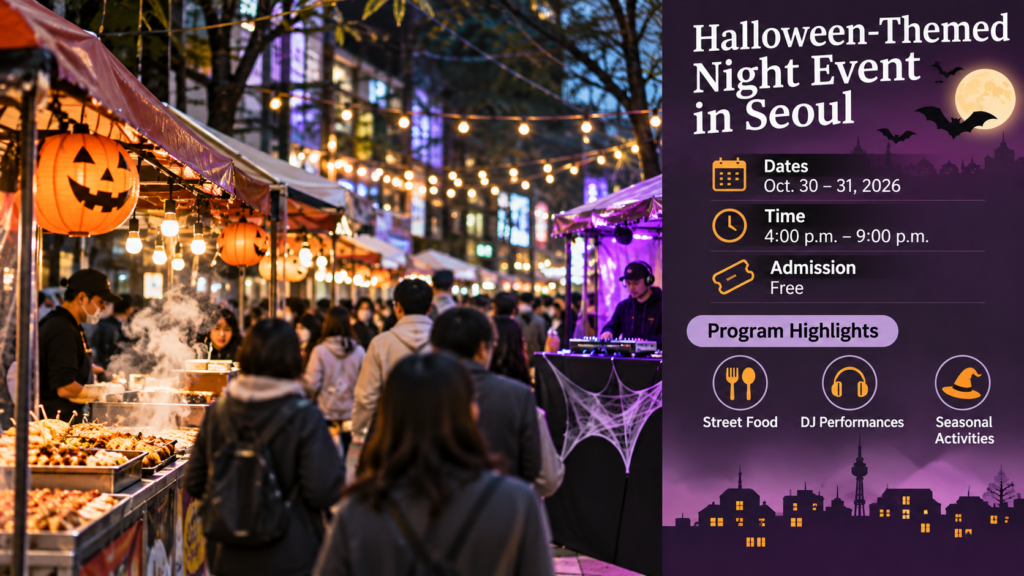
The Halloween-inspired setting also provides an alternative to the shopping malls, restaurants and nightlife districts commonly associated with seasonal celebrations.
Baengnyeon Market was recognized as a top-performing night market in a national evaluation in 2025, giving its latest event a foundation on which to build its local cultural programming.
Unlike large commercial Halloween attractions, the Gangbuk event places entertainment within an existing neighborhood marketplace.
Visitors can explore food stalls, listen to music and experience a setting that retains elements of the market’s everyday character.
For international travelers, such events offer a different perspective on Seoul beyond its best-known shopping streets and tourist attractions.
The combination of local food, live performances and seasonal decorations also illustrates how traditional commercial spaces can adapt to changing leisure habits without abandoning their original purpose.
The event is scheduled to conclude Saturday evening, but its format highlights a broader possibility for neighborhood markets: attracting new visitors by offering experiences alongside everyday commerce.
SOPHIA KIM
US ASIA JOURNAL