


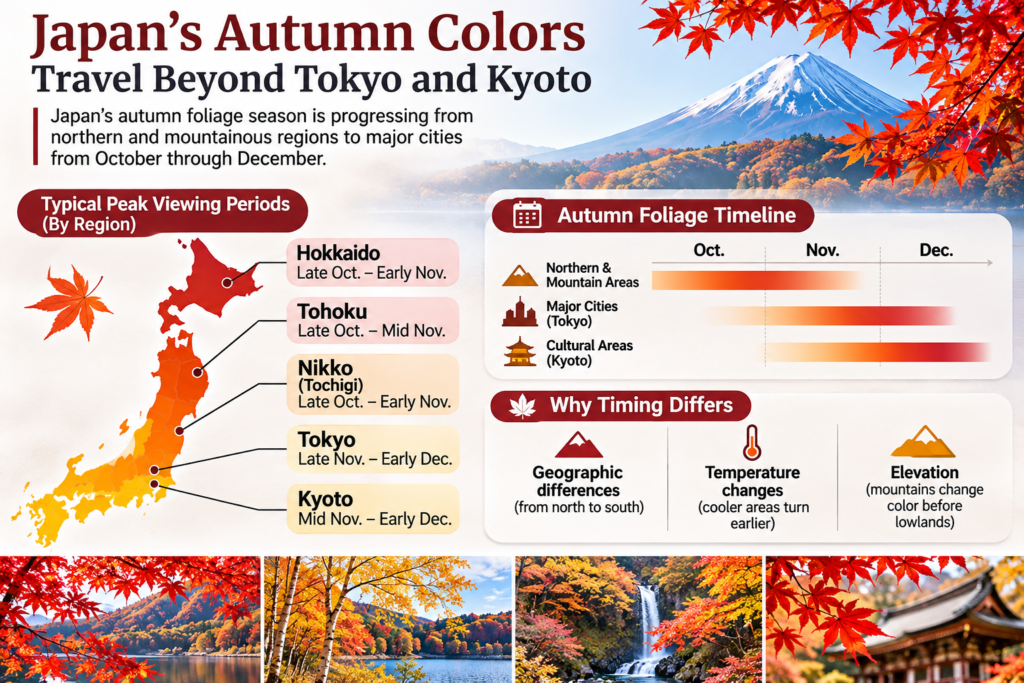
Japan’s autumn foliage season is moving through its northern and mountainous regions, offering travelers colorful landscapes weeks before the country’s best-known urban destinations reach their peak viewing periods.
While Tokyo and Kyoto remain popular choices for autumn sightseeing, destinations in Hokkaido, the Tohoku region and the mountains north of the capital are already experiencing some of the season’s most striking changes.
The staggered arrival of red and golden leaves creates opportunities for visitors to explore different parts of Japan throughout October and November.
In Nikko, a historic destination in Tochigi Prefecture known for its shrines, waterfalls and mountain scenery, autumn colors have reached their peak in several areas.
The region, located north of Tokyo, is particularly popular for its combination of cultural landmarks and natural landscapes.
Farther north, parts of Hokkaido, including Sapporo and Onuma Park, are also experiencing peak foliage conditions, according to autumn color reports updated in late October.
Other destinations, including Lake Towada and Naruko Gorge in northeastern Japan, are approaching or experiencing their most colorful periods.
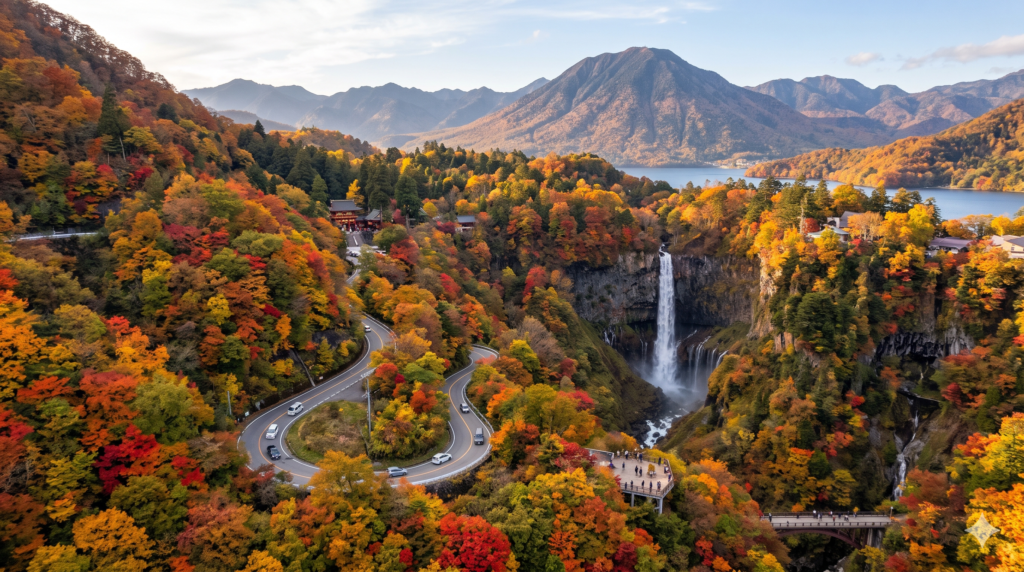
The timing contrasts with conditions in Tokyo and Kyoto, where many trees remain green.
Peak autumn colors in Tokyo are expected from late November into early December, while Kyoto’s main viewing period is forecast to extend from mid-November into early December.
The difference reflects Japan’s geography, which stretches across several climate zones and includes substantial variations in elevation.
Leaves generally begin changing color in cooler northern areas and mountain regions before the seasonal transformation spreads toward lower elevations and southern destinations.
The Japan Weather Association said in its October forecast that autumn foliage across much of the country was expected to peak around the usual time or later this year.
Warmer temperatures during the latter part of September and into autumn have contributed to slower color changes in some regions, although certain mountainous areas experienced earlier transitions.
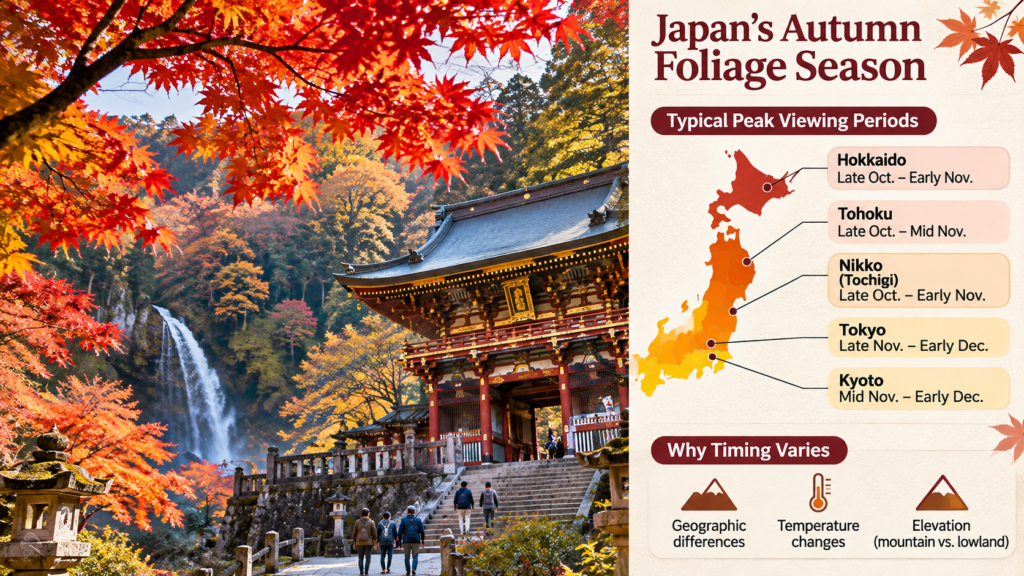
For travelers, these variations make timing an important part of planning an autumn itinerary.
A destination that has already passed its peak in late October may be replaced by another region reaching its best viewing period in November.
Japan’s seasonal sightseeing culture places particular importance on koyo, the appreciation of autumn leaves, which attracts visitors to gardens, mountain trails, lakes and historic sites.
The tradition provides a different perspective on the country’s natural scenery from the cherry blossom season in spring.
Autumn travel can also encourage visitors to look beyond major urban centers.
Regional destinations offer opportunities to combine foliage viewing with local cuisine, traditional accommodations and visits to smaller towns.
Nikko, for example, brings together mountain landscapes and centuries-old religious architecture, while northern destinations offer lakeside scenery and forested valleys.
The seasonal progression gives Japan an extended period of autumn sightseeing rather than a single nationwide peak.
For international visitors planning trips in the coming weeks, the changing colors provide another reason to consider destinations beyond Tokyo and Kyoto, where some of the season’s most memorable landscapes can be found well before the leaves turn in the cities.
SOPHIA KIM
US ASIA JOURNAL

