


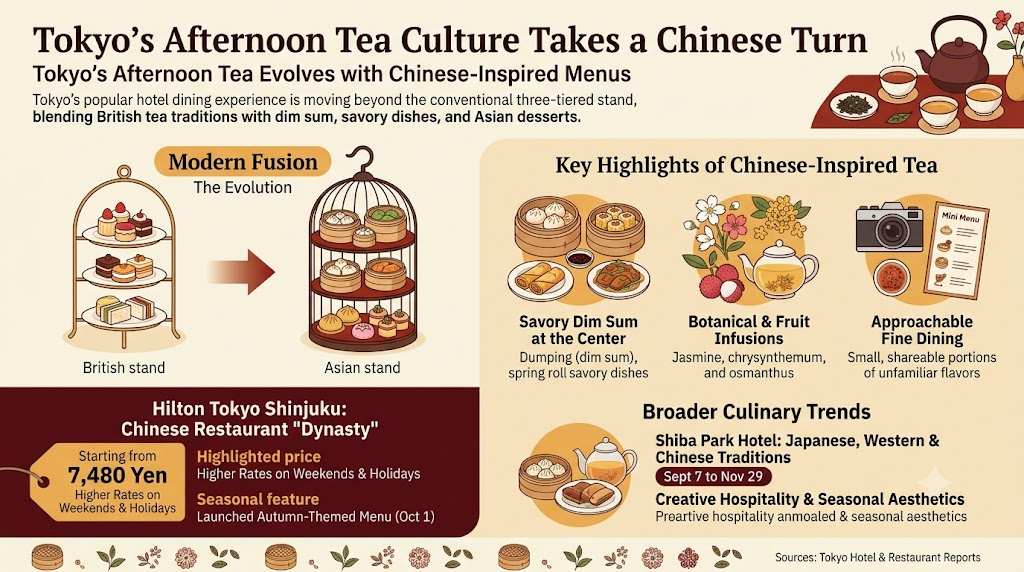
Afternoon tea in Tokyo is taking on new flavors as hotels and restaurants introduce Chinese-inspired menus that combine traditional tea service with dim sum, savory dishes and Asian desserts.
Long associated with British-style sandwiches, scones and pastries, afternoon tea has become a popular dining experience in Japan, where hotels regularly develop themed menus to attract visitors and local customers.
The latest variations are moving beyond the conventional three-tiered stand, offering combinations of Chinese cuisine and carefully selected teas.
At Hilton Tokyo in Shinjuku, the Chinese restaurant Dynasty launched an autumn-themed afternoon tea on Oct. 1, featuring Chinese delicacies, desserts and unlimited servings of selected dim sum.
The menu draws on ingredients such as jasmine, lychee, chrysanthemum and osmanthus, bringing floral and fruit flavors into both savory and sweet dishes.
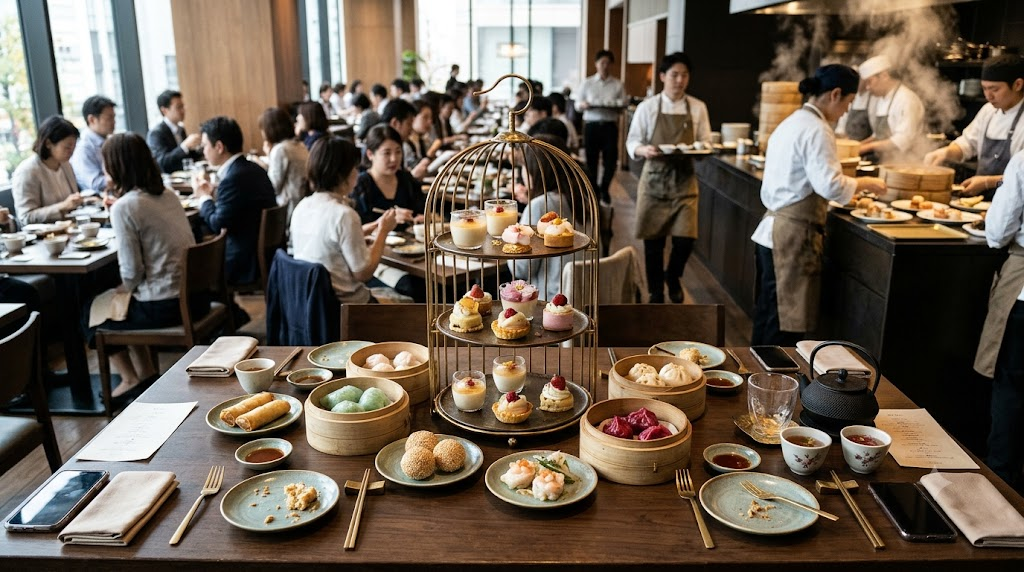
Prices begin at 7,480 yen per person on weekdays, with higher rates on weekends and public holidays.
The experience reflects a different approach to afternoon tea. Rather than treating savory dishes as small accompaniments to sweets, Chinese-inspired menus can place dumplings, seafood and other prepared dishes at the center of the meal.
Elsewhere in Tokyo, Shiba Park Hotel is offering an autumn afternoon tea that combines Japanese, Western and Chinese culinary traditions.
Available from Sept. 7 through Nov. 29, the seasonal offering brings together dishes and desserts prepared by the hotel’s restaurants, allowing guests to sample several styles of cooking in a single sitting.
The format also fits Tokyo’s broader dining culture, where seasonal ingredients and elaborate presentation play an important role in attracting customers.
Afternoon tea offers restaurants a way to introduce unfamiliar flavors in smaller portions, making the experience approachable for guests who may not ordinarily order a full Chinese meal.
For hotels, it provides an opportunity to distinguish their dining services in a competitive market. Carefully arranged food, distinctive serving stands and tea pairings can turn a traditional afternoon break into a more substantial culinary experience.
The appeal extends to international travelers looking for dining experiences that reflect Tokyo’s mixture of global influences and local creativity.
Chinese-inspired afternoon tea also illustrates how culinary traditions can change as they move between cultures. A dining custom with British roots is being adapted through Chinese cooking techniques and Japanese hospitality.
The result is an afternoon tea experience that can include steamed dumplings and fragrant Chinese tea as comfortably as pastries and sweets, offering another example of Tokyo’s willingness to reinterpret familiar food traditions.
SOPHIA KIM
US ASIA JOURNAL

