


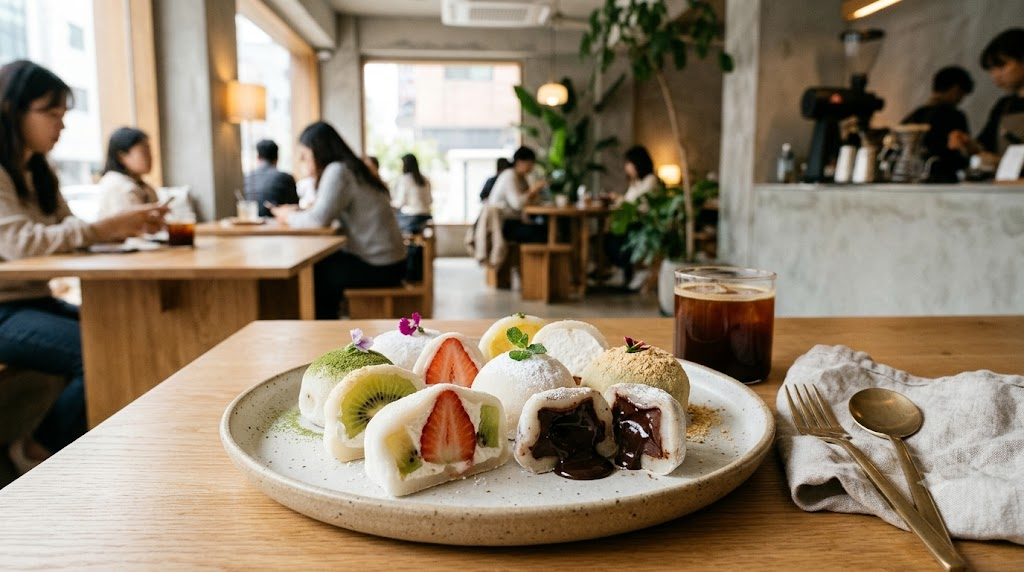
Traditional Korean rice cakes are finding a new audience as younger consumers turn to chewy desserts, inventive fillings and social media-driven food trends, helping bring a familiar part of Korean cuisine into the modern snack market.
Known locally as tteok, rice cakes have long been associated with family celebrations, holidays and traditional markets. Now, versions filled with fruit, yogurt cream and chocolate are appearing alongside more conventional varieties, attracting shoppers looking for something different from cakes and pastries.
The shift is showing up in consumer spending.
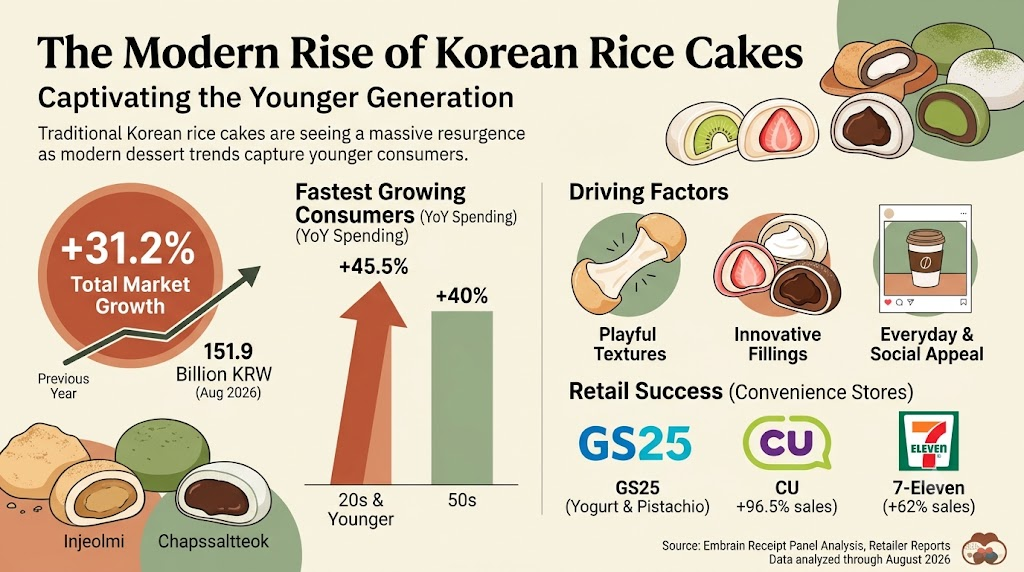
Estimated purchases of rice cakes across major South Korean retail channels reached 151.9 billion won in the 12 months through August 2026, up 31.2% from the previous year, according to market research firm Embrain, which analyzed receipts from a panel of 20,000 consumers.
Spending among shoppers in their 20s and younger rose 45.5%, the fastest growth of any age group. The increase suggests that rice cakes are gaining ground among consumers who may previously have regarded them primarily as traditional food.
Texture is part of the attraction. Many Korean rice cakes have a soft, elastic consistency that fits the growing popularity of chewy desserts. New combinations also make them easier to market as everyday treats rather than foods reserved for special occasions.
Some specialty shops have attracted attention for glutinous rice cakes filled with fruit and cream, while retailers are bringing similar flavors to convenience stores.
GS25 introduced yogurt- and pistachio-flavored rice cakes through collaborations with dessert brands. The two products had sold more than 1.3 million units combined by Oct. 25, according to figures reported by the retailer.
Other chains are expanding their selections. CU reported a 96.5% increase in rice cake sales during the first nine months of 2026 compared with the same period a year earlier, while 7-Eleven reported a 62% rise.
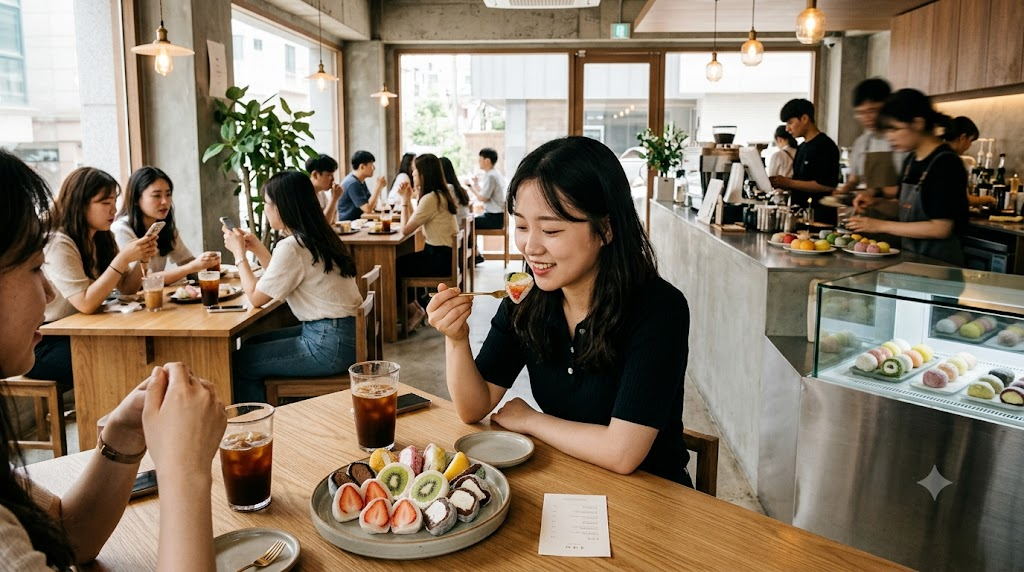
The appeal is not limited to younger buyers. Embrain’s figures showed that spending among consumers in their 50s increased 40%, indicating that the market’s growth extends beyond the latest social media trends.
Traditional varieties are also benefiting. Injeolmi, commonly coated in roasted soybean powder, and chapssaltteok, made from glutinous rice, recorded substantial increases in spending.
For overseas visitors, the new products offer another way to explore Korean food culture. Rice cakes can be found in traditional markets, specialty dessert shops and increasingly in convenience stores, where familiar flavors are being presented in unexpected forms.
The changing market illustrates how established Korean foods can find new commercial opportunities without losing their cultural identity.
For rice cakes, a dessert trend built around texture and experimentation is giving an old favorite a new place in everyday shopping.
SOPHIA KIM
US ASIA JOURNAL

