


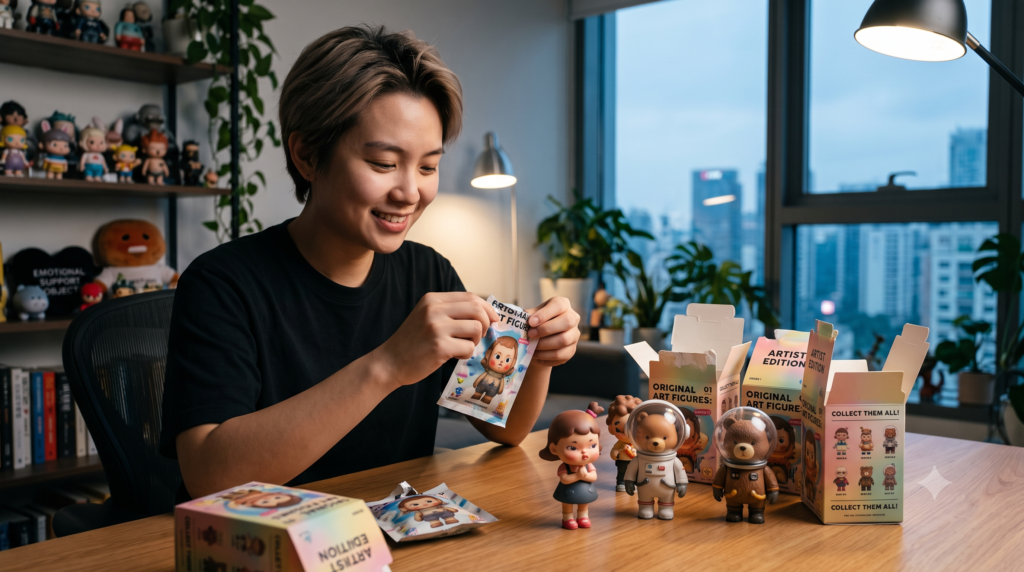
Walking through the trendy shopping districts of major Asian metropolises, one might assume a massive release of a new video game or luxury sneaker is underway. Instead, the winding lines of young adults are waiting for something much smaller: collectible vinyl art toys.
The “blind box” phenomenon—where consumers purchase a small, sealed package without knowing exactly which figure from a specific series is inside—has evolved from a niche hobby into a multi-billion-dollar global retail empire.
Originating largely from creative studios in East Asia, these designer toys are characterized by their quirky, artistic, and emotionally expressive designs. Unlike traditional Western action figures tied to massive movie franchises or comic books, these characters often stand on their own original artistic merit.
Characters like pouting little girls, space-traveling bears, and anthropomorphic foods have struck a profound chord with young professionals. For many, these small figures serve as “emotional support” objects, bringing a touch of whimsy and comfort to sterile office desks and small urban apartments.
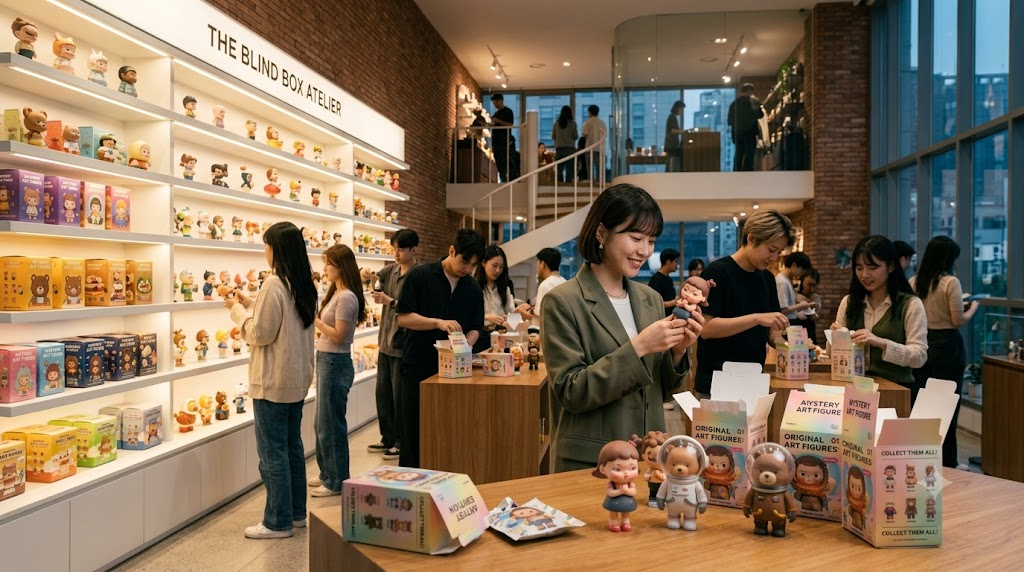
The blind box mechanism adds a layer of gamification to the shopping experience. The thrill of opening the box to discover a rare or “secret” figure triggers a small dopamine rush, making the purchasing process itself a form of entertainment.
This excitement has spawned a massive online culture. “Unboxing” videos and live-streamed pack openings dominate social media feeds, allowing the excitement of the reveal to be shared communally across the globe.
A thriving secondary market has also emerged. Collectors utilize dedicated apps and online forums to trade duplicates, while highly sought-after secret figures can sell for hundreds of dollars above their original retail price.
The trend has swiftly moved beyond Asia. Major designer toy companies have opened flagship stores in London, New York, and Paris, discovering that Western consumers are equally susceptible to the charm of these artistic collectibles.
Retail experts describe this phenomenon as part of the “kidult” economy. As young adults delay traditional milestones like homeownership due to economic pressures, they are redirecting their disposable income toward small, affordable luxuries that bring immediate joy.
High-end brands have taken notice. Luxury fashion houses, cosmetics companies, and global coffee chains are now collaborating with popular art toy characters, producing limited-edition merchandise that blends high fashion with playful pop culture.
What began as a simple retail gimmick has transformed into a global subculture. By combining original art, the thrill of surprise, and community building, Asia’s blind box industry has successfully redefined how adults play and collect in the modern era.
SOPHIA KIM
US ASIA JOURNAL

