


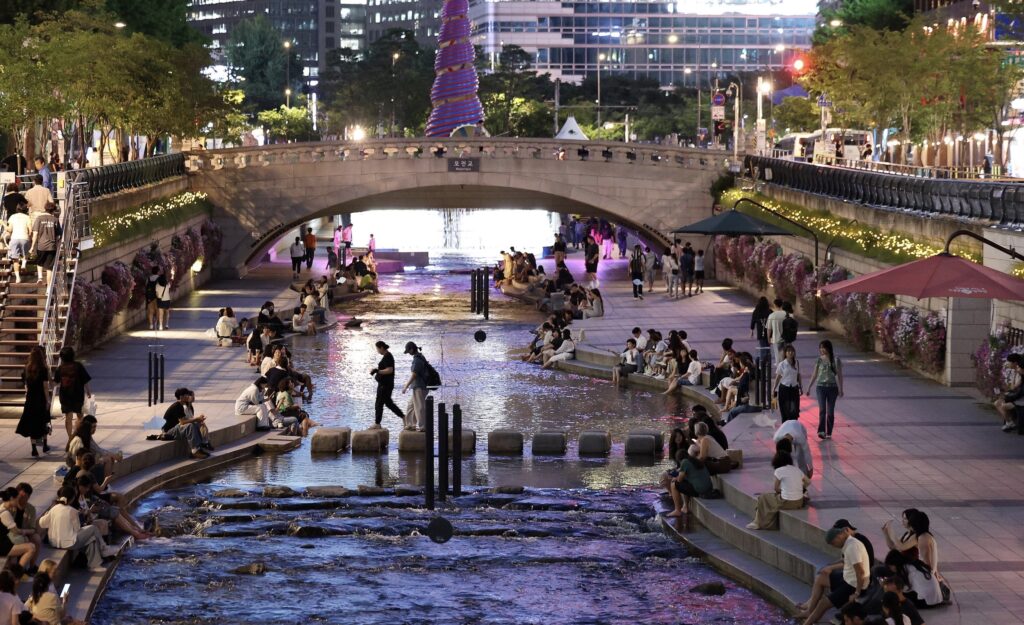
South Korea’s tourism industry is increasingly moving into the evening as local governments, entertainment venues and retailers expand nighttime programs to attract visitors during one of the country’s hottest summers.
The change is being driven partly by necessity. South Korea has experienced unusually persistent heat this summer, including a record number of tropical nights recorded through late July. The Korea Meteorological Administration reported a nationwide average of 7.8 tropical nights between June 1 and July 27, the highest for that period since nationwide observations began in 1973.
For tourism operators, the weather is changing when people choose to go outside.
Rather than concentrating activities during the afternoon, destinations are increasingly offering events after sunset, when temperatures become more manageable and visitors can spend longer periods outdoors.
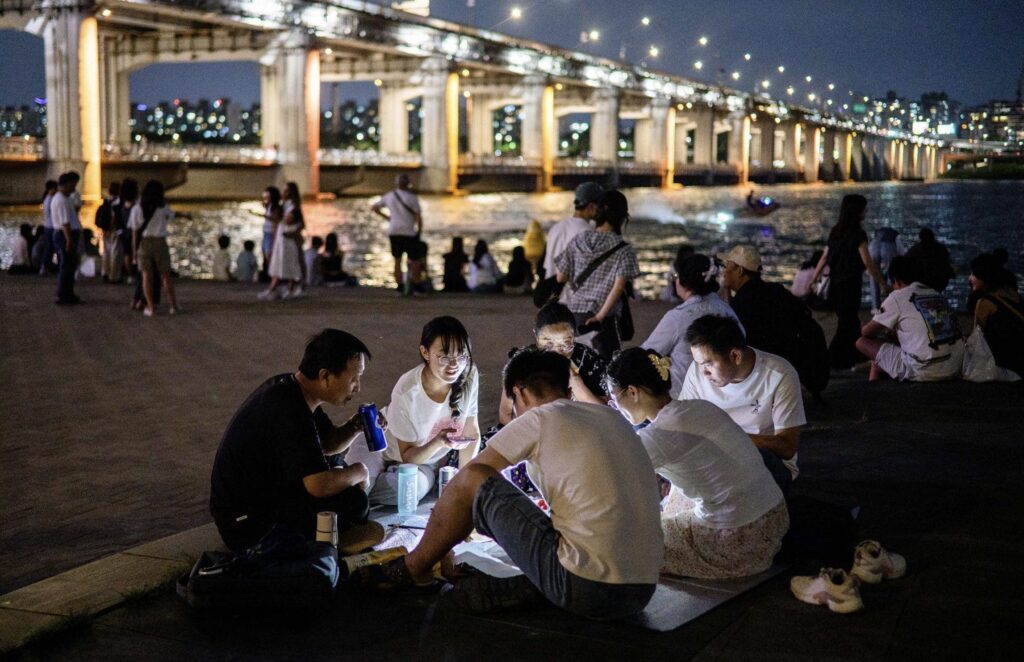
Local governments are responding with extended beach hours, night markets, drone performances and evening cultural programs. Recent initiatives have been designed not only to provide entertainment but also to increase spending at restaurants, shops and other local businesses.
Seoul has also expanded its summer programming.
The city has promoted nighttime cultural activities alongside seasonal attractions designed to help residents and tourists cope with the heat. Events around the Han River, Cheonggyecheon and major downtown areas have become part of a broader summer tourism strategy that combines recreation with urban sightseeing.
The trend is changing the traditional rhythm of a Korean city break.
A visitor might spend the afternoon indoors at a museum, department store or café before heading outside in the evening for a riverside event, market or performance.
For international tourists, this creates a different way of experiencing Seoul.
The city is already known for its late-night restaurants, cafés, shopping districts and entertainment venues. Nighttime tourism adds another layer by turning public spaces and cultural attractions into evening destinations.
Food is also becoming increasingly important.
Recent efforts to promote so-called “K-Delivery” are allowing overseas visitors to experience Korean delivery food in outdoor settings such as the Han River. The initiative, developed through cooperation between the Seoul Metropolitan Government and food-delivery operator Baemin, is intended to connect Korean food culture with tourism while supporting local businesses.
The concept illustrates how Korea’s tourism industry is increasingly focused on ordinary aspects of daily life rather than only traditional tourist attractions.
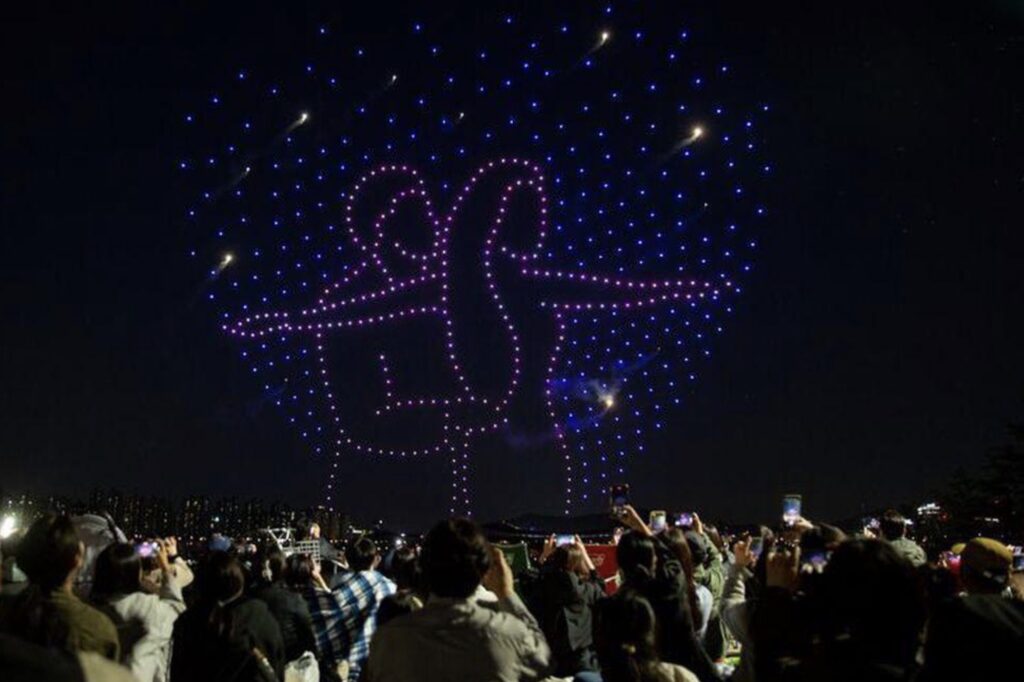
Eating fried chicken beside the Han River, visiting a nighttime market or attending an outdoor performance can offer visitors a more contemporary view of Korean culture than a conventional sightseeing itinerary.
Regional destinations are following the same direction.
Gyeongsangnam-do, for example, has promoted nighttime summer programs featuring music, media art and drone performances. Such events are designed to make regional travel more attractive during the summer while encouraging visitors to remain in destinations after dark.
Entertainment companies are also extending seasonal experiences into the evening. Everland’s 2026 summer program, for example, includes nighttime attractions, a night safari, seasonal performances and other evening activities alongside its daytime water festival.
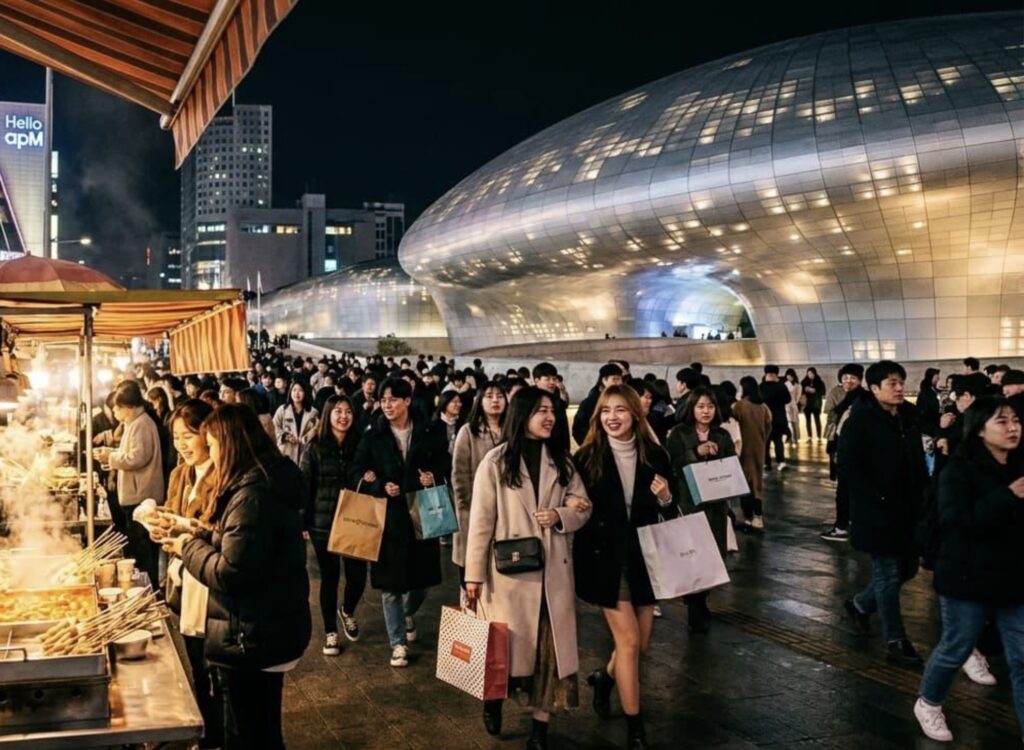
The expansion of nighttime tourism could have economic benefits beyond ticket sales.
Visitors who stay out later are more likely to spend money on restaurants, cafés, transportation, shopping and accommodation. For smaller cities, extending tourism activity into the evening can help distribute spending across a wider range of local businesses.
There are also practical limits.
Heat, humidity and sudden weather conditions can affect outdoor events, while increased nighttime activity requires additional transportation, security and public services. Tourism planners therefore face the challenge of expanding evening programs without creating excessive pressure on local infrastructure.
Nevertheless, the shift reflects a broader transformation in Korean tourism.
International visitors are increasingly interested in experiences that reveal how Koreans actually live, eat and socialize. Nighttime cafés, convenience stores, food delivery, riverside picnics and local festivals can all become part of that experience.
South Korea’s summer tourism strategy is therefore becoming less dependent on the traditional idea of sightseeing during daylight hours.
As temperatures rise, the evening is becoming a new tourism window — one where food, entertainment, culture and everyday urban life come together.
For a country seeking to attract more international visitors beyond Seoul’s traditional landmarks, that could prove to be an important advantage.
Sophia KIM
US ASIA JOURNAL

