


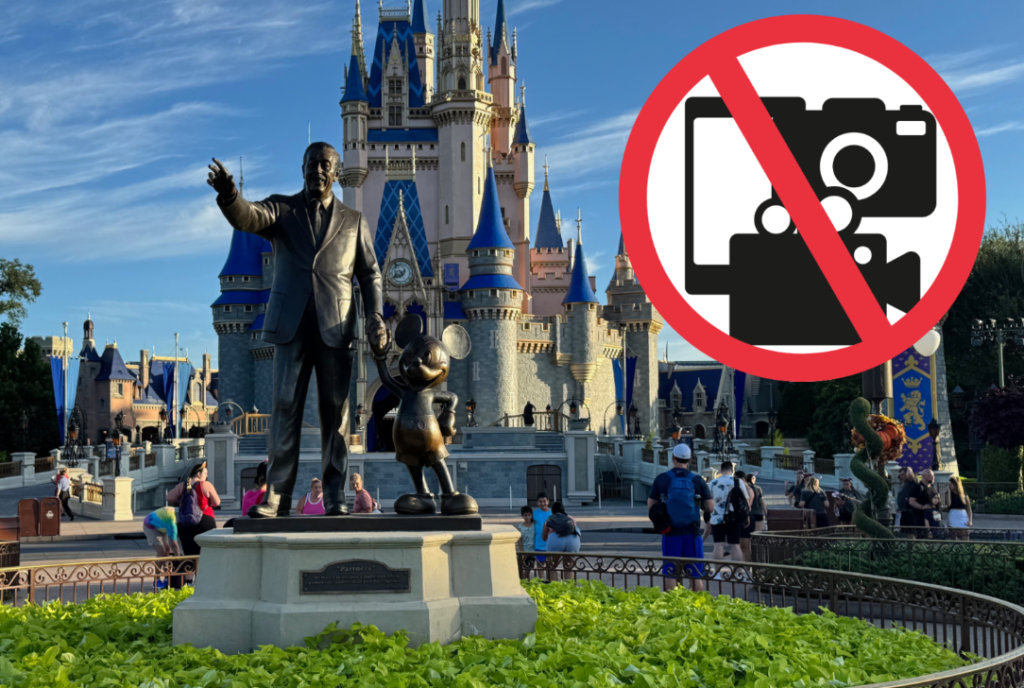
Recently, police were dispatched to influencer who was broadcasting live at Disneyland as a report of false shootings and explosives was received. This incident highlighted safety issues and inconvenience to visitors, and raised the possibility of prohibiting or restricting live streaming.
According to the New York Post, Disney is considering restricting live broadcasting in theme parks, especially streaming that generates revenue. It is highly likely that Disneyland in California and Walt Disney World in Florida will be applied.
The background of the discussion is the disturbance that occurred at Disneyland, California, in March. At that time, a large number of police were dispatched as false reports of shootings and explosives were received, but the investigation confirmed that it was a “switching” incident with no actual threat. As some influencer were reportedly broadcasting live at the scene at the time, Disney’s regulatory discussions also gained momentum. Swapping refers to the act of sending armed police to the scene by making false reports as if there is a shooting or explosive threat.
After the incident, Disney reportedly created an atmosphere that “it is no longer acceptable.” Disney sees “profitable broadcasting” as the core of the problem, not just filming. Some influencer earn money by “live shopping” that earns sponsorship or advertising revenue, or purchases products requested by viewers on their behalf. Critics point out that such behavior could violate the regulations prohibiting unauthorized commercial activities in theme parks. There have also been complaints from on-site users. They say that repeated cases of broadcasting loudly on rides or blocking movements with filming equipment harm the experience of ordinary visitors.
A former employee also said, “Some live broadcasting is interfering with the experience of other guests.” Online reactions are also mixed. Some users expressed the need for regulation in the wake of the swapping incident, criticizing the need for regulation, saying, “It ruins the atmosphere in the park.” Pointing out the privacy infringement issue, some also said, “It’s uncomfortable to be filmed without knowing even during vacation.”
On the other hand, some are skeptical that it is not easy to distinguish it from ordinary users who shoot with a smartphone, so it is possible to crack down on it.
Some overseas Disney theme parks have already tightened regulations. Tokyo Disneyland introduced regulations restricting commercial filming and public transmission in 2022, while Paris Disneyland recently tightened standards for using filming equipment.
However, official policy changes for Disney theme parks in the U.S. have not been announced yet. The industry believes that if regulations become a reality, changes will be inevitable in the way content creators, who have used theme parks as their main activity stages, operate.
SALLY LEE
US ASIA JOURNAL

