


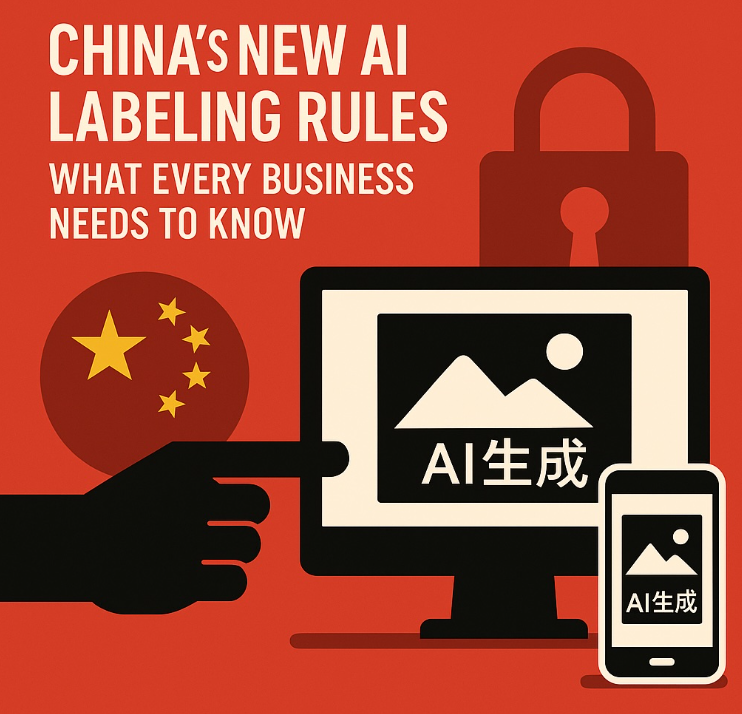
China’s Internet regulators have imposed sanctions on platforms that violate their labeling obligations as content created using artificial intelligence (AI).
China’s National Internet Information Office announced on the 28th that it had taken strict measures, including guidance, warnings, and disposition of those responsible for ByteDance’s apps “Jianying,” “Mao Xiang,” and “Jimeng AI,” for not fulfilling its obligation to identify AI-generated content, according to the Ministry of Economy and Finance of the Goods Network.
Authorities emphasized the failure to comply with the regulations to specify that it is an AI product and vowed to strengthen related supervision in the future to prevent the spread of false information and protect public interests.
The move reflected the Chinese authorities’ stance to significantly strengthen regulatory compliance with AI-generated content, the media noted..
All three platform services that have been sanctioned are major applications of ByteDance, the operator of the short-form platform TikTok. ‘Zhenying’ is a video editing app with a high share in China and is famous for ‘capturing’ abroad.
“Jimeng AI” is a creative platform centered on image and video generation functions, and “Mao Xiang” is an app that provides services to communicate with AI characters and experience social experiences.
These apps allow users to easily generate realistic images and voices using AI.
According to the authorities’ announcement, these platforms did not properly label content created and synthesized with AI to clearly distinguish it. Such actions violate China’s ‘Cyber Security Act’, ‘Temporary Measures for Generative Artificial Intelligence Service Management’, and ‘Regulations for Identifying AI-generated synthetic content’.
Accordingly, the authorities ordered the implementation of sanctions on the platform through the local Internet Information Office. Specifically, it included interviews with the person in charge, corrective orders, warning measures, and severe punishment for the person in charge.
The official stressed that platform operators must strictly comply with legal standards and thoroughly implement labeling regulations for AI-generated content.
In the meantime, he announced his position to protect public interests and induce orderly development of technology by strengthening AI content management and supervision in the future.
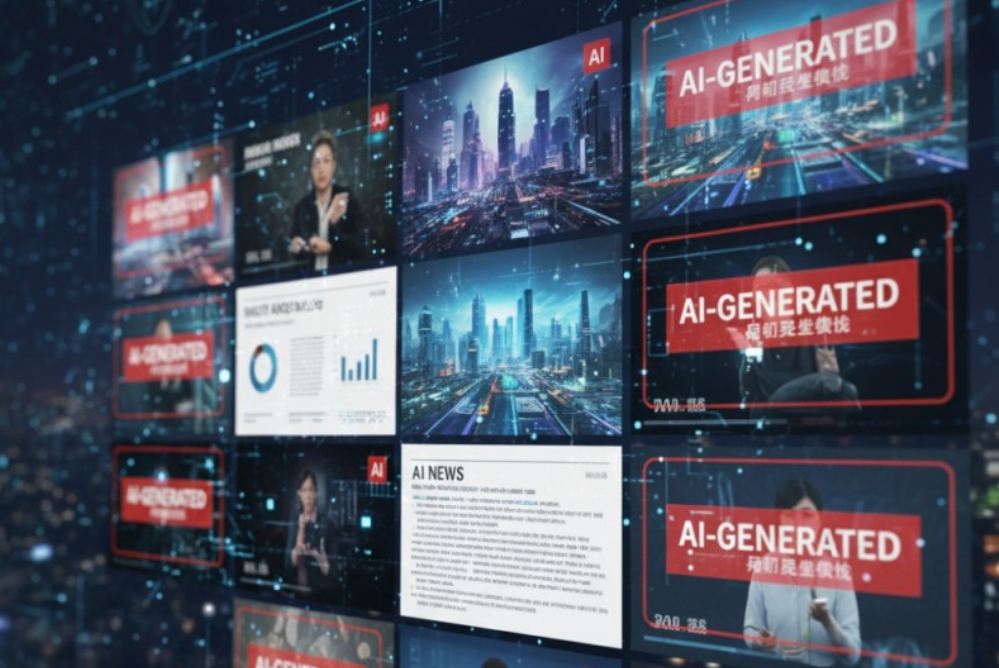
The crackdown was carried out amid China’s tightening regulations on deepfake and Generative AI content. As risks such as fraud, dissemination of false information, and manipulation of public opinion have increased due to the spread of facial synthesis or voice imitation technology, China has introduced a system that requires users to easily recognize AI products such as text, images, audio, and video.
Relevant regulations require service providers to clearly mark the generated content so that it is not confused with the real thing, and strong punishment is required in the event of spreading false information or damaging public interests.
Currently, ByteDance and the platform have not made an official position. The industry believes that the detection measures go beyond sanctions against certain companies and have a strong warning character to the AI content industry as a whole.
Experts interpreted that the Chinese authorities have made clear their willingness to put regulatory compliance first at a time when the balance between innovation and risk management has emerged as a key task while Generative AI has entered the stage of full-scale commercialization.
JENNIFER KIM
US ASIA JOURNAL

