


A draft U.N. resolution on North Korean human rights calls for referring the totalitarian nation’s leader, Kim Jong-un, to the International Criminal Court, a diplomatic source in New York said Wednesday.
The draft resolution, written by the European Union, was circulated behind closed doors at the U.N. on Wednesday, the source told Yonhap News Agency on condition of anonymity because he was not allowed to speak about the proposed resolution until it was adopted.
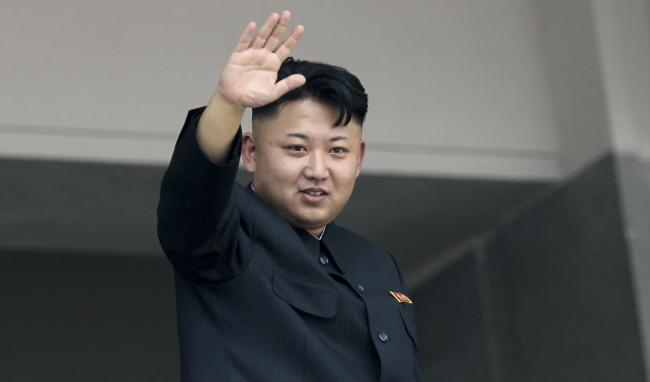 |
| Kim Jong-un (AP-Yonhap) |
“It marks the first time that a U.N. resolution on North Korean human rights includes a plan to bring the North Korean leadership to an international court over anti-human rights charges although this is a draft now,” the source said. The resolution needs to be approved by related U.N. councils and the General Assembly to become effective.
The U.N. Commission of Inquiry issued a report in February after a yearlong probe, saying that North Korean leaders are responsible for “widespread, systematic and gross” violations of human rights.
The report said the International Criminal Court should handle its “crimes against humanity.”
On Tuesday North Korea’s deputy U.N. ambassador Ri Tong-il publicly acknowledged the existence of his country’s “reform through labor” camps, a mention that appeared to come in response to the report.
Diplomats for the reclusive, impoverished country also told reporters that a top North Korea official has visited the headquarters of the European Union and expressed interest in dialogue, with discussions on human rights expected next year.
Ri said the secretary of his country’s ruling Workers’ Party had visited the EU, and that “we are expecting end of this year to open political dialogue between the two sides.” The human rights dialogue would follow.
In Brussels, an EU official confirmed a recent North Korea meeting with the EU’s top human rights official, Stavros Lambrinidis, but said any dialogue currently planned is limited to rights issues.
Choe Myong-nam, a North Korean foreign ministry official in charge of U.N. affairs and human rights issues, said at a briefing with reporters that his country has no prison camps and, in practice, “no prison, things like that.”
But he briefly discussed the “reform through labor” camps. “Both in law and practice, we do have reform through labor detention camps ― no, detention centers ― where people are improved through their mentality and look on their wrongdoings,” he said.
Such “re-education” labor camps are for common offenders and some political prisoners, but most political prisoners are held in a harsher system of political prison camps.
The North Korean officials took several questions but did not respond to one about the health of leader Kim Jong-un, who has made no public appearances since Sept. 3 and skipped a high-profile recent event he usually attends.
The officials said they don’t oppose human rights dialogue as long as the issue isn’t used as a “tool for interference.” Their briefing seemed timed in advance of the latest resolution on North Korea and human rights that the EU and Japan put to the U.N. General Assembly every year.
(From news reports)

