


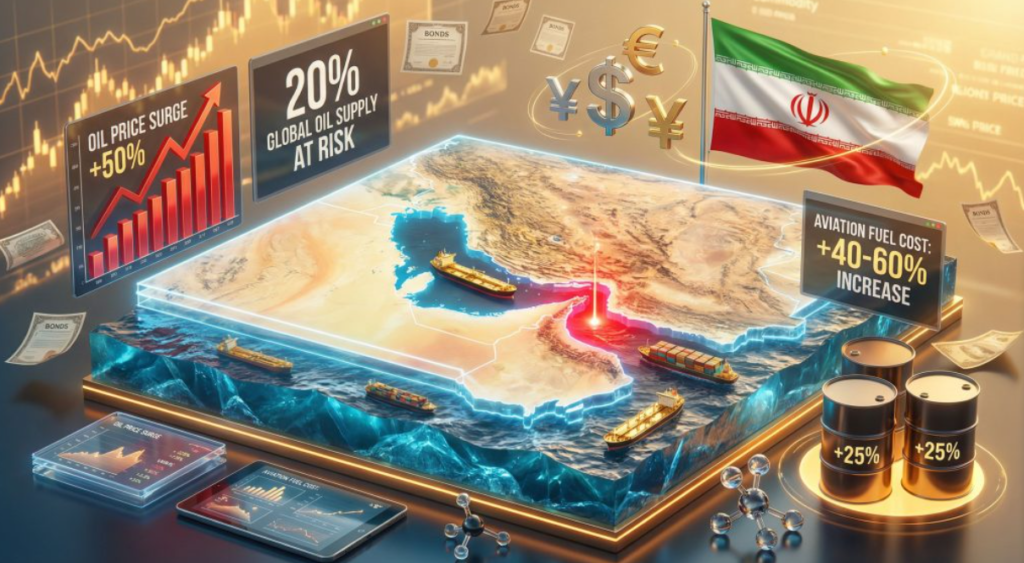
Fatih Birol, secretary-general of the International Energy Agency (IEA), warned that aviation oil stocks left in Europe could be only about six weeks’ worth.
In an interview with the Associated Press, Birol defined the current situation caused by the Iranian war and the blockade of the Strait of Hormuz as “the largest energy crisis we have ever experienced,” and said, “It is already in serious trouble and will have a great impact on the global economy.”
“If the Strait of Hormuz does not open and the refinery is suspended, we will soon hear that some flights from one city to another have been canceled due to lack of aviation oil in Europe,” he said. “The problem is not only high prices, but also whether we can actually secure gas, aviation oil, and diesel,” he pointed out.
Birol predicted that if the blockade of the Strait of Hormuz continues until the end of May, the repercussions will be in full swing. “From countries with weak economies to countries with high inflation, slowing growth, and even some countries may face enormous difficulties with recession,” he explained.
In particular, he said, “The first front line to be hit is Asian countries such as Japan, Korea, India, China, Pakistan, and Bangladesh, followed by Europe and the Americas,” but stressed, “No country is immune unless the war ends.”
He said about 110 oil tankers and more than 15 liquefied natural gas (LNG) carriers are currently on standby in Gulf waters (Persian Bay). “If these ships can get out of the Strait of Hormuz, it will help ease the crisis, but that is not enough,” he said.
“More than 80 key assets in the region have been damaged, and more than a third of them are severely damaged,” he said. “It is an overly optimistic judgment to think that the recovery will be quick.” He also predicted that “the recovery to pre-war levels will inevitably take place gradually, and it could take up to two years.”
He also expressed concern about Iran’s move to charge tolls for ships passing through the Strait of Hormuz. “Once the system changes, it can be difficult to reverse it,” Birol said. “If the toll system is created here, it will be difficult for other regions to ask not to apply it.”
JULIE KIM
US ASIA JOURNAL

