


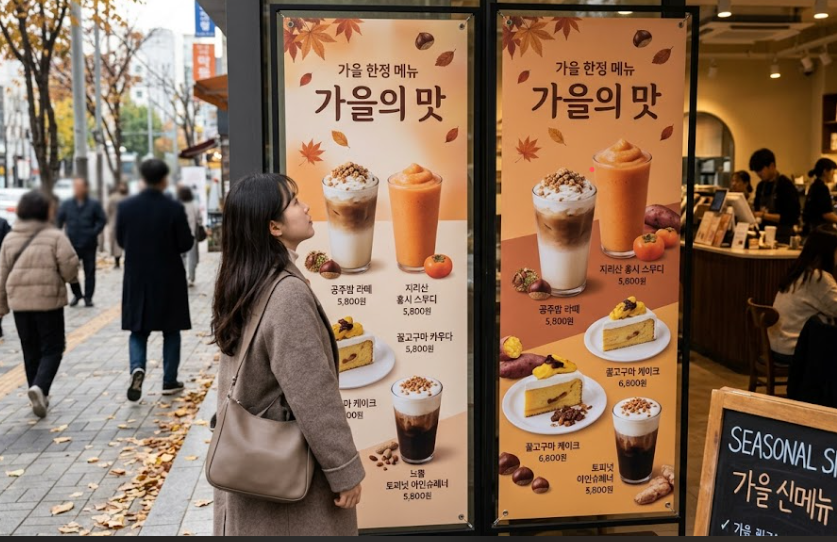
As autumn arrives in South Korea, familiar snacks and café menus are getting seasonal makeovers, with food companies turning chestnuts, sweet potatoes, tea flavors and traditional street treats into limited-time products.
The changes are easy to spot in cafés, convenience stores and supermarket snack aisles. Rather than relying only on new products, brands are giving established favorites a seasonal twist, hoping to attract customers who want to try something different without straying too far from familiar tastes.
One recent example is a fall collection from Korean confectionery maker Haitai, which reimagined several long-running snack brands around the flavors and atmosphere of a café. The limited-edition range included chestnut latte-flavored Matdongsan, cream-latte Sand Ace, royal milk tea-flavored Jayu Time and an Earl Grey and chocolate version of Oh Yes.
The concept reflects a broader approach to seasonal food marketing: the product does not necessarily need to be entirely new if its flavor, presentation or context feels different.
Korean cafés are following a similar pattern. Autumn menus commonly feature chestnuts, sweet potatoes, persimmons and other ingredients associated with cooler weather. These flavors appear in lattes, cakes, breads and desserts, bringing seasonal ingredients into everyday café visits.
Some businesses are also drawing attention to where ingredients come from. Using regionally associated products, such as yuja from Goheung or sweet potatoes from southern Korea, gives a menu a more specific identity than a generic seasonal flavor.
For consumers, the appeal can be both familiar and novel. A sweet potato latte or chestnut dessert offers a recognizable taste, while its presentation as a new seasonal item creates a reason to visit a store or try a different product.
Social media can reinforce the effect. Colorful drinks, layered desserts and distinctive packaging are easy to photograph and share. A product that looks appealing online may prompt customers to seek it out in person, although popularity can vary considerably between brands and releases.
Limited-time products also give companies a way to refresh established brands. Long-running snacks already have customer recognition, so a new flavor can attract attention without requiring shoppers to learn an unfamiliar product from scratch.
Seasonal menus can create a similar rhythm for cafés. After summer drinks and cold desserts, autumn brings warmer, richer flavors. The next shift arrives with winter treats, followed by spring products built around floral or fruit-inspired themes.
But seasonal marketing is not a guarantee of success. Consumers may be curious enough to make one purchase without returning, particularly if the flavor feels overly sweet, the price is high or the product does not live up to its presentation.
That makes the balance between novelty and familiarity important. A limited-edition product needs to feel different enough to attract attention while still delivering the taste and quality customers expect from the original brand.
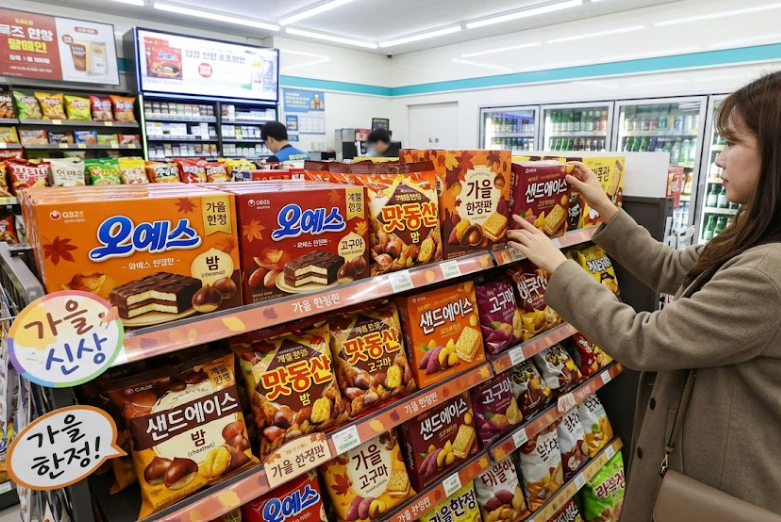
The trend also reflects how seasonal experiences are increasingly built into ordinary routines. Consumers do not need to travel to a festival or visit a specialty restaurant to participate; they can try a new drink on the way to work or pick up a seasonal snack during a grocery run.
For international visitors, these products provide another way to explore Korean food culture beyond well-known dishes. Seasonal snacks and drinks offer small, accessible experiences that can be sampled during a trip and shared with friends.
South Korea’s autumn food releases show how manufacturers and cafés are using familiar flavors to keep everyday shopping fresh. The products may be temporary, but the underlying idea is straightforward: when the season changes, even an ordinary snack can feel like something worth trying.
SOPHIA KIM
US ASIA JOURNAL