


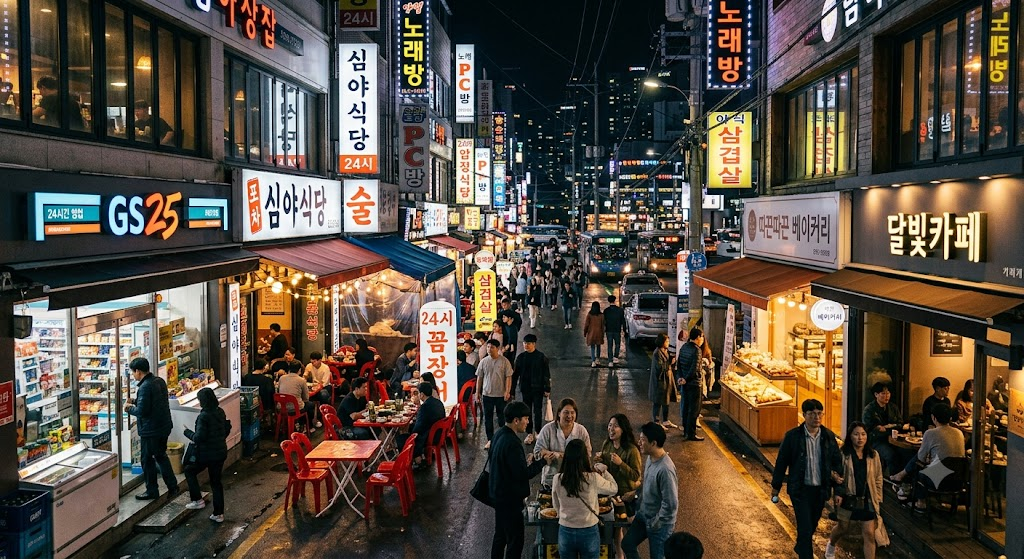
While major Western metropolises like New York, London, and Paris largely wind down after sunset, locking up storefronts and scaling back public transit, the urban centers of East Asia are experiencing a vibrant nocturnal renaissance.
From the 24-hour convenience hubs and bustling late-night districts of Seoul to the culinary alleyways and midnight bakery scenes of Tokyo, the “Night Economy” has evolved far beyond simple entertainment. It has transformed into a sophisticated economic engine and a core pillar of modern urban lifestyle.
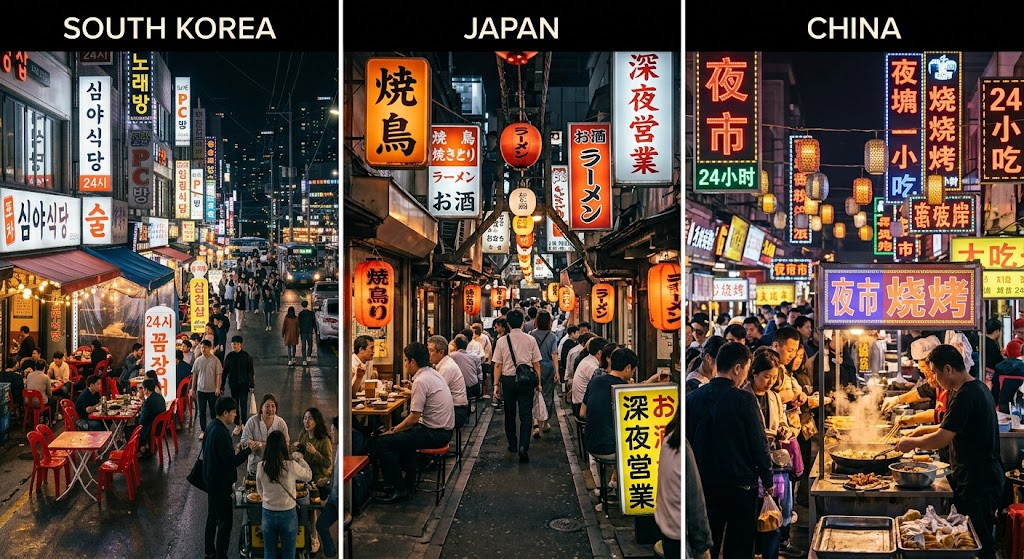
Economic analysts note that this shift is driven by high-density urban infrastructure, advanced public safety networks, and a unique cultural fabric that seamlessly blends late-night work culture with social gathering. Small business owners, independent cafes, and local bakeries are increasingly capitalizing on these moonlit hours, generating significant revenue streams that were once thought impossible during traditional off-hours.
For U.S. and European readers accustomed to early closing times, sparse public transit after 11 p.m., and quiet downtown streets, Asia’s integration of nocturnal commerce offers a striking glimpse into a truly 24/7 society. This round-the-clock vibrancy is not merely about late-night dining; it represents a fundamental rethinking of how urban spaces can be utilized safely and efficiently.
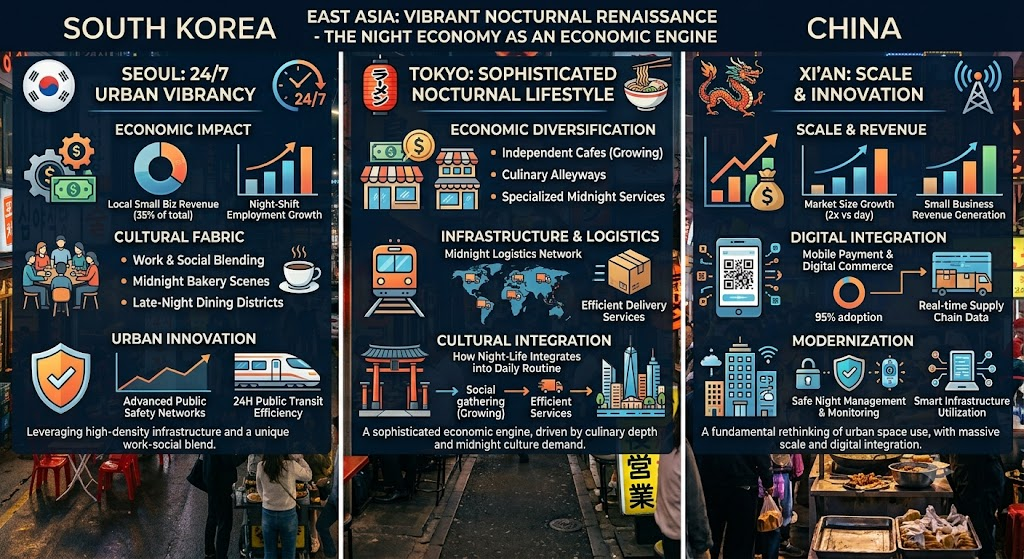
However, sustaining this midnight culture comes with its own set of logistical and regulatory challenges. Local municipalities must balance the economic benefits of a thriving night market with noise ordinances, labor regulations for night-shift workers, and public safety management. Yet, the persistent demand from urbanites who view the night as an extension of their active day suggests that Asia’s night economy is here to stay, setting a new benchmark for global urban planning.
SOPHIA KIM
US ASIA JOURNAL

