


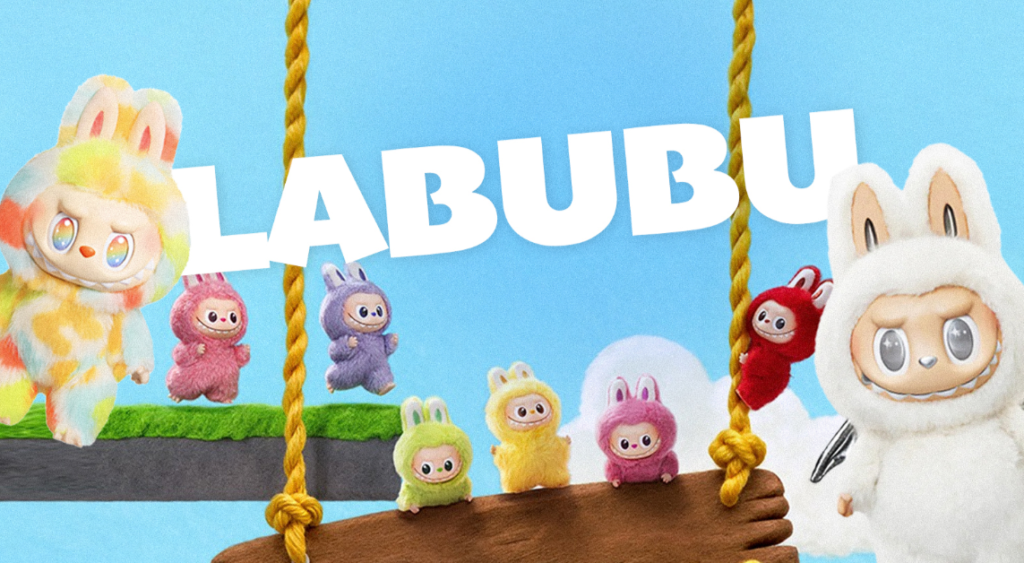
It is pointed out that cotton from Xinjiang Uyghur Autonomous Region in China is detected in some doll products, which could be subject to the U.S. ban on forced labor.
The New York Times (NYT) reported that according to a survey conducted last year by the Washington-based non-profit Uyghur Campaign and an independent examination by the NYT, it was confirmed that some Labubu used cotton from Xinjiang Uyghur Autonomous Region.
In principle, the U.S. prohibits imports of products containing raw materials from Xinjiang under the Uighur Compulsory Labor Prevention Act (UFLPA), which took effect in 2021. Failure to prove that the product has nothing to do with forced labor of the Uighur, a minority ethnic group in Xinjiang, could block customs clearance, and in severe cases, the entire company may be subject to sanctions. According to the New York Times, U.S. Customs and Border Protection has already received relevant data from PopMart.
Character Labubu, which features rabbit ears and sharp teeth, is a representative product that has sparked a global collection craze by riding Pop Mart’s “Random Box” sales strategy. Black Pink Lisa, pop singer Rihanna, and model Kim Kardashian grew popular by sharing La couple through social networking services (SNS), and there was even a shortage in the U.S. and Southeast Asia.
PopMart immediately put out the fire. In a statement, the company said it would investigate whether it uses Xinjiang cotton in its supply chain, and explained that it is considering using alternative materials instead of cotton in products for the U.S. market. “Both our companies and our suppliers are applying the highest standards,” he said.
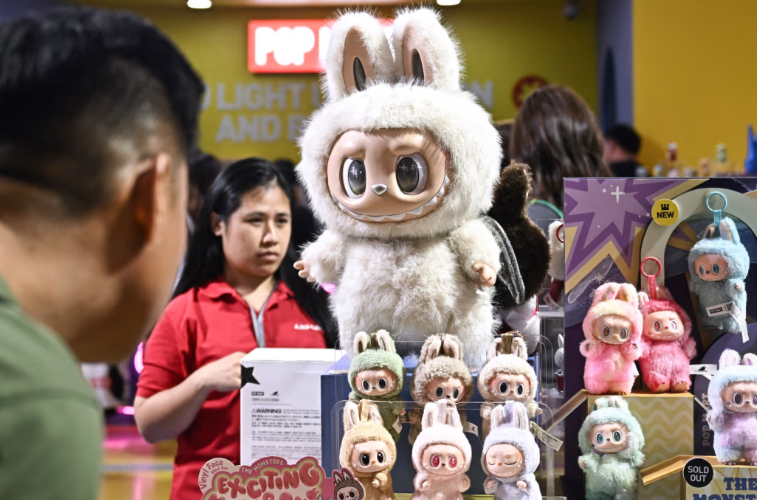
The controversy is also sensitive to China. Although China produces a lot of products, claiming to be the “factory of the world,” it has had difficulty in creating its own brand that consumers prefer, which is considered a rare success story among Chinese brands that have emerged in recent years. It was so popular in the U.S. market that there were queues in front of stores that Pop Mart’s sales in the U.S. surged more than 700 percent last year, accounting for 18 percent of the total sales.
This issue is not just a quality issue, but a political issue where supply chains, human rights, and trade regulations intersect. In particular, Xinjiang cotton is more complicated in that it has been regarded as a symbol of patriotic consumption in China.
China’s Xinjiang region supplies more than 20% of the global cotton market and accounts for more than 80% of China’s cotton production. However, since 2020, Xinjiang cotton has been embroiled in controversy over allegations of forced labor against minorities, including the Uighurs. The Chinese government has long denied these allegations and dismissed them as “red lies” fabricated by anti-China forces trying to disparage China. In 2021, when H&M, Nike, Adidas, and Uniqlo declared a halt to the use of Xinjiang cotton due to human rights issues in Xinjiang, a massive boycott erupted in China.
In fact, hard-line members of the U.S. Congress who were briefed on the results of the inspection have publicly urged the government to block imports of Lavoiselle products in the U.S. “Pop Mart must prove that all dolls sold in the U.S. have nothing to do with forced labor,” Republican Christopher Smith told the New York Times. “If they fail to prove it, customs authorities have the power to stop importing all Lavoiselle products.” In particular, given that cultural products are a soft power industry that China has actively fostered recently, some predict that if the U.S. government launches an actual investigation, it could become a spark for a new trade conflict between the U.S. and China.
SALLY LEE
US ASIA JOURNAL

