


“There are only a few ‘0km cars’ in the store, and if you want, you can show more things on the online platform.”
On the 25th, a salesperson at a used car store in Pengtai District, Beijing, China, showed one when a reporter asked him to find a car with a short mileage. As he said, several more vehicles with less than 100 kilometers of mileage being sold in Beijing were identified through the used car online trading platform “Dongchudi” and the vehicle trading platform “Eachu” used car corner. Recently, about 1,000 cars with a driving distance of less than 100 kilometers on the same trading platform have been reportedly registered nationwide.
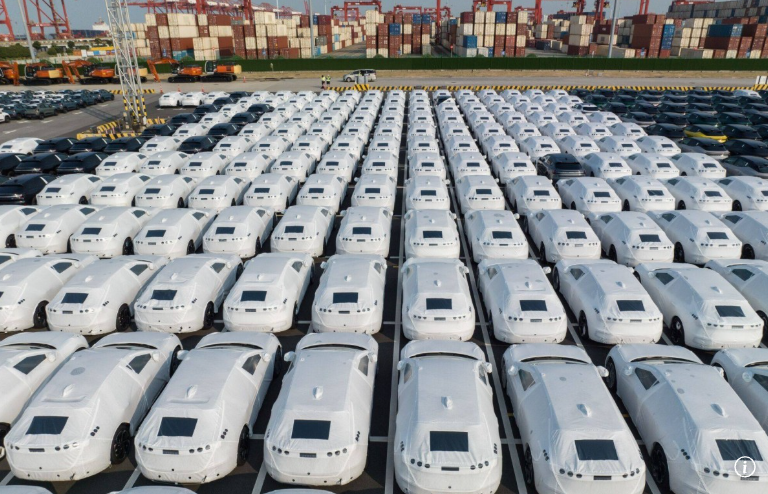
The reality that even the so-called “0km used car,” which means a car with a very short mileage, has emerged is an “abnormal signal” that has appeared in the Chinese automobile industry, which has been growing rapidly, centering on electric vehicles. As automakers and stores sell new cars that have been shipped out as used cars to accumulate performance, “0km used cars” have emerged. Vendors selling “0km used cars” are keen to promote Douyin (Chinese version of TikTok) and Xiaohongsu, saying, “It is no different from new cars, but the price is much cheaper.” The International Energy Agency (IEA) said China accounted for more than 70% of the world’s electric vehicle production last year, and ranked first in the world in sales of new energy vehicles, including electric vehicles, with 12.88 million units. These figures show that China’s choice to compete in electric vehicles, a new area, has achieved some success rather than internal vehicles, which are difficult to catch up with the existing technologies of advanced countries in automobile manufacturing. However, at the same time, as the Chinese electric vehicle market falls into overproduction and price bleeding competition, a vicious cycle of “subsidy dependence → overinvestment → bleeding sales” is in full swing. The ‘electricization strategy’, which is a plan to develop and revive the electric vehicle industry that the Chinese government has promoted since 2000, is becoming more shadowy behind its achievements. The issue of used cars to Muju has been discussed in earnest since late May. It started when Changcheng Automobile Chairman Wei Jianjun criticized the decision. Pointing out the ‘0km used car’ problem, he said in an interview with China’s ‘Shinrang Business Administration’, he said, “It is estimated that there are 3,000 to 4,000 companies handling such used cars in China.” He also criticized the excessive expansion and poor external growth of the Chinese automobile industry and pointed out that “there is such a thing as ‘Hungda’ in the Chinese automobile industry.” ‘Hungda’ is a bankrupt Chinese real estate developer.
“0km used cars are the product of excessive inventory pressure and sluggish sales by some automakers and vendors.” Xinjing Bao, a local Chinese media outlet, pointed out the reality facing the Chinese automobile industry, quoting an official from the Chinese automobile industry. An official explained that some companies think that even if they sell new cars as used cars, they are better than leaving them in stock in warehouses. Another expert added that used cars bound for Muju are a product caused by an imbalance between market demand and supply, and act as an “exit” to cope with the burden of companies’ inventory and sales targets. Morgan Stanley recently said that in China’s used car market, there are 1.60 million used cars, or 13% of the total, with a mileage of less than 50km.
The Chinese government has issued a strong warning against excessive and bleeding competition practices in the Chinese electric vehicle industry, symbolized by sharp cuts in used cars and new cars bound for Muju. On June 11, the People’s Daily, the organ of the Communist Party of China, pointed out that the sale of “zero mileage” discounts, which camouflage new cars as used cars, is a representative internal phenomenon that disrupts the normal market order. Internal competition refers to excessive competition that causes waste of resources. The newspaper also called for “strong regulatory measures to restore order,” emphasizing the need to establish a market competitive order. Chinese companies are responding to warning signs. BYD, the world’s No. 1 electric vehicle company, is expected to abolish its policy of up to 34% discount on 20 model vehicles, which has been in effect since late May. China’s economic media reported that although BYD did not make an official statement, salespeople at stores in large cities such as Beijing and Guangzhou confirmed this to consumers. “This measure is an important shift in the price competition of the new energy car industry,” he said. “It is the impact of regulatory authorities’ intervention in the disorderly competition of the industry.” As concerns over payment from subcontractors grew, more than 20 Chinese automakers, including BYD and Geely, announced on June 11 that the payment period for suppliers would be unified to 60 days.
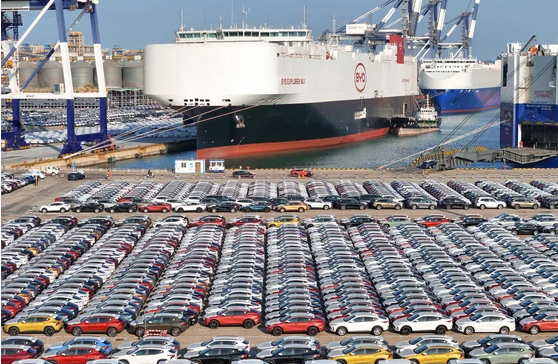
Companies that have been pointed out for overproduction are also sending messages that they will refrain from expanding their production facilities. As of April, China’s automobile inventory reached 3.5 million units. It is known to be the highest since December 2023. Geely Motors said it will not build new factories or expand existing production facilities. Reuters reported on the 26th that more than four factories planned to reduce working hours, eliminate night shifts, and reduce production by 15%. It added that plans to expand production lines were also postponed.
Excessive and bleeding competition also leads to concerns about quality degradation. As the final sales price is lowered to put pressure on cost reduction, quality of parts and finished vehicles deteriorates and safety problems are raised. According to the data compiled by the General Administration of Market Supervision and Management (SAMR), the number of recalls of new energy vehicles (including electric vehicles) in China in 2024 was 89 cases and 4.49 million units, an increase of 180% from the previous year. This trend in the Chinese automobile industry shows that companies that had grown up with subsidies are naturally expelled, entering a “jade-blocking” phase. As of the end of 2023, there are 180 automobile manufacturers in China, including more than 120 electric vehicle brands. Last year, 16 electric vehicle companies closed down, and several electric vehicle companies are reportedly in the process of closing down their businesses this year. Consulting firm Mackenzie predicted that only about 50 Chinese electric vehicle companies will survive until 2030.
The oversupply of Chinese electric vehicles is not unexpected. Pushback volume due to oversupply can also affect automobile markets and finished car companies in other countries. Reuters reported that the Chinese government is pointing out overproduction in the domestic automobile industry, but local governments are supporting the export of used cars bound for Muju. Although the Chinese government’s position is to restore market order, local governments in more than 20 regions are implementing various support policies, including issuing additional permits, to achieve their economic growth goals. “As a result of the price war over the past four years, it shows that companies are desperately moving to make any sales,” said Tour of Sino Auto Insights, a consulting firm.
Chinese electric vehicle manufacturers, which are suffering from oversupply and price competition, are quickly turning their eyes abroad. BYAD signed a cooperation contract with Korean rental car companies on Jeju Island in May to supply ATTO 3, a small electric vehicle. Geely Automobile is already expanding its market by establishing joint ventures in Southeast Asia and Europe.
As “non-driving cars” produced by Chinese companies are rushing into overseas markets, there are also issues about “dumping.” Reuters said Wang Meng, a consultant at the China Automobile Distribution Association, “China exported 436,000 used cars, including passenger cars and commercial vehicles, last year, and 90% of them are estimated to be “0km used cars.” He pointed out that China is using a route where numerous traders disguise new cars as used and export them.
JENNIFER KIM
US ASIA JOURNAL

