


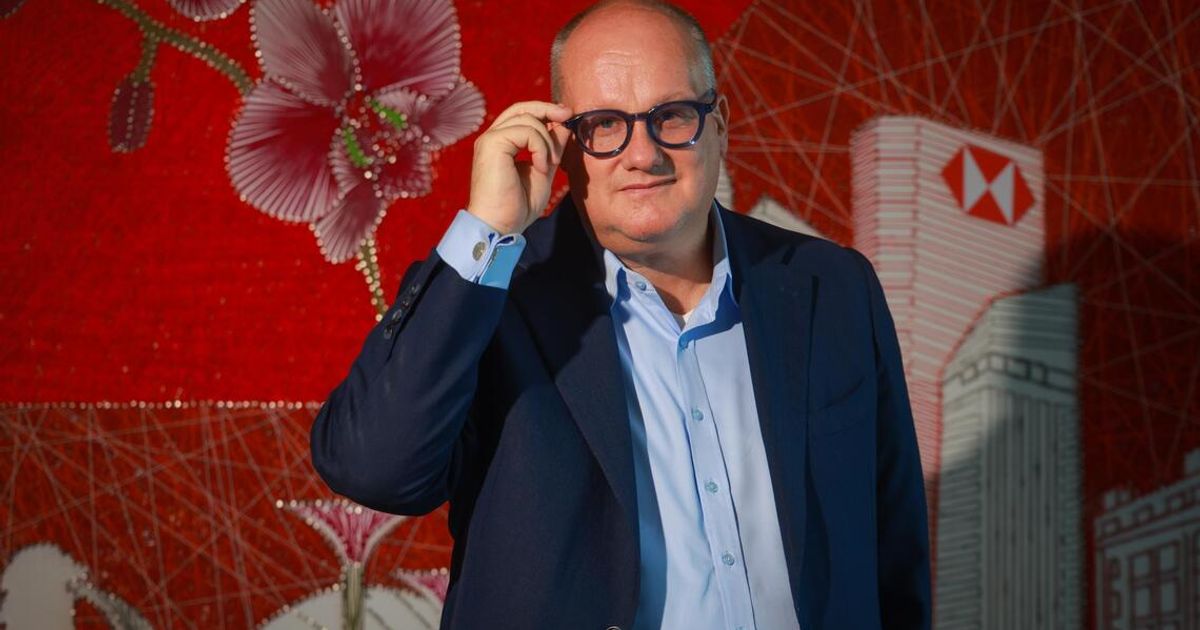
SINGAPORE – In the early 1990s, Herald Van der Linde wanted to earn some money to fund his university studies in the Netherlands. He also wanted to broaden his horizons and travel.
The Dutchman decided to take on several jobs, including working as a tour guide in China and Indonesia.
He recalled: “My first trip to China was particularly eventful: I was robbed of US$100 in Shenzhen and later found myself on a plane that made an emergency landing in a padi field near Guilin.”
But he continued his journey, and the experience changed his life, he said.
“From that point onwards, I knew that I wanted to stay in Asia and live and work there.”
After getting his master’s degree in economics, Van der Linde bought a one-way ticket to Indonesia and became a financial analyst there.
The 56-year-old is now head of Asia equity strategy at HSBC and is based in Hong Kong.
He also channelled his love for the region into books. In addition to his financial leadership role at HSBC, he is a historian who has published books including a biography of Jakarta, an exploration of Majapahit, which he calls Indonesia’s greatest empire, and a book on Srivijaya, Indonesia’s first maritime empire.
He said: “I was fascinated by the region, particularly South-east Asia, and immersed myself in its languages and cultures. I learnt Chinese and Indonesian, studied the region’s history, and eventually began writing books about it.”
He is married to an Indonesian whom he met on a flight in Jakarta. The couple have one son, who lives in Amsterdam and is building a career in the music industry.
Do you invest in anything?
Around 90% of the money I have saved, and do not expect to need in the next five years, is invested in global equity exchange-traded funds (ETFs). I focus on ETFs because they offer one of the most cost-effective ways to build a diversified portfolio through a single investment.
I consider ETFs a significant financial innovation. They enable millions of people to invest at relatively low cost, helping to make diversified investing more accessible. In the past, building a well-diversified portfolio was often limited to those with substantial capital.
What’s your approach when it comes to investing?
Diversify and stay invested.
I am a strong believer in investing in global equities and in the value of education. I regularly take part in continuing education programmes to broaden my knowledge and support my personal development. In the past, I completed online university courses in art history. However, as I have been busy writing a history book over the past few years, I have devoted less time to online study recently.
Did you collect anything when you were younger?
Books – I still love them. Nothing in my collection is particularly rare or valuable, apart from a few early editions; they are simply books I enjoy reading. My rare books focus mainly on Indonesian and South-east Asian history, including works written by Dutch archaeologists and historians.
What was your first exposure to investing?
Very early on, while we were students in the Netherlands in the 1990s, a friend of mine – now a professor of finance in Canada – and I tried to invest together. However, the bank turned us away because we did not have enough money. That was one of my earliest investment setbacks.
I have occasionally tried to time the market, convinced that I knew what would happen next. On two occasions, the market moved in the opposite direction. Those experiences taught me an important lesson: invest and then stay invested. The power of compounding returns is substantial, so why take money out of the market and forgo that potential over the long term?
What has been your biggest financial mistake?
I once believed I could trade the markets successfully and make profitable short-term decisions. I learnt the hard way that it is generally better to remain invested and take a long-term approach.
What has been your best financial decision?
My best investment decision was simply to remain invested. Since I first invested in ETFs in 2005, their value has increased nearly tenfold, illustrating the long-term potential of equities. There have been significant downturns along the way, including the 2008 financial crisis and sharp market declines in 2020 and 2023. Through each of those periods, I stayed invested and maintained a long-term perspective.
Moneywise, what were your growing-up years like?
I came of age in the late 1990s, including spending time in Indonesia during the Asian financial crisis. That experience taught me that markets and economies can recover, even after severe crises and downturns.
What was your childhood dream?
To become an astronaut.
What was your most memorable encounter with money?
When I was a student, money was tight, so I had to manage my budget carefully. Even a little income from part-time work made a real difference – I could enjoy better food, buy books and travel occasionally. Those experiences taught me that you appreciate money far more when you’ve known what it’s like not to have it.
Where’s home for you?
I own an apartment in Hong Kong.
Do you drive?
I don’t own a car.
What would your perfect day look like?
A morning gym session or a good hike, followed by some reading and an early dinner with close friends would make for an ideal day.
I enjoy turning in early and particularly like reading non-fiction, especially books on history or unusual and intriguing subjects, rather than books about markets.
Money Matters
What would you do if you suddenly had a windfall of $1 million?
If I came into some unexpected money, I’d donate a quarter of it to support other people’s education, invest the rest in an ETF and celebrate with a good meal with friends.
If you suddenly had only $100 to your name, what would you do with it?
I would invest it in an ETF and find ways to meet my day-to-day needs while preserving that investment for the future, particularly for a time when I might no longer be able to work.
Many ETFs are available for less than US$100 (S$128), making them an accessible first step into investing for people who may otherwise feel excluded from financial markets. Even a modest investment can be valuable if it encourages the habit of saving, builds financial confidence and benefits from long-term compounding.