


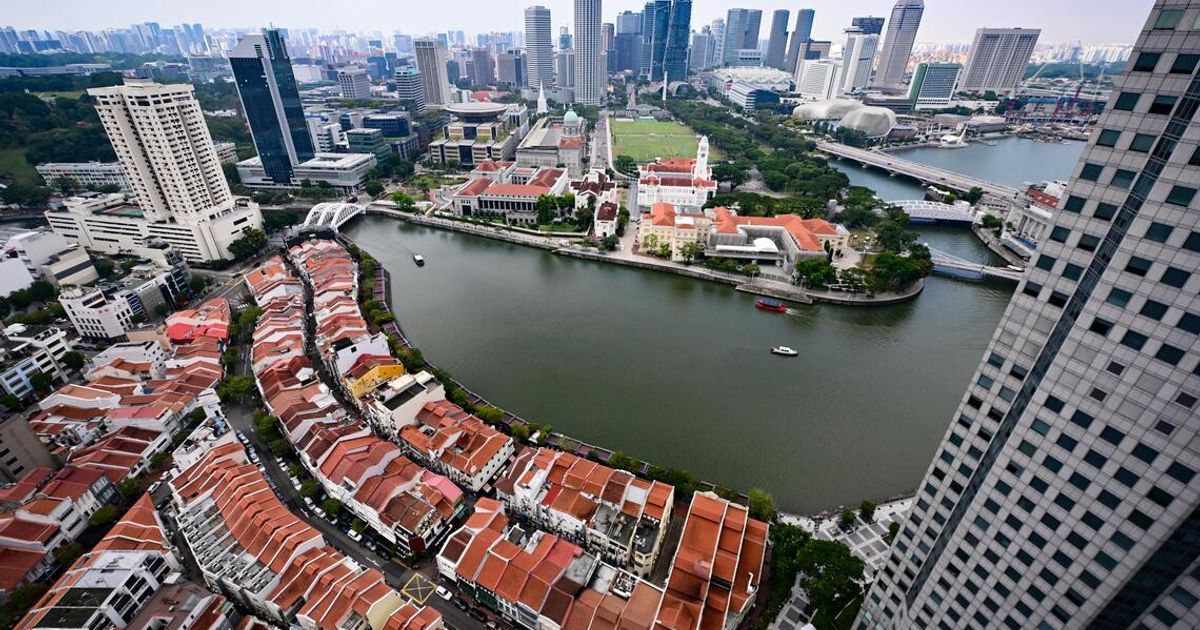
SINGAPORE – Marriott’s first Moxy hotel in Singapore is expected to open by the end of March 2027 on the site of the former Novotel Singapore Clarke Quay.
The 21-storey, 475-room Moxy Singapore Clarke Quay is part of the CanningHill Piers development, a mixed-use project currently being developed on the former Liang Court site.
CDL Hospitality Trusts (CDLHT) expects to complete its $474.6 million acquisition of the hotel when it opens, it said in a stock exchange filing on Nov 10.
In a separate announcement on the same day, CDLHT also said it would raise its dividend payouts from 90% to 100% of distributable income, starting with the six months from July 1 to Dec 31.
CanningHill Piers is being developed by CapitaLand Development and City Developments Limited (CDL), in partnership with Ascott Residence Trust.
CDLHT in 2019 sold the Novotel, which was part of Liang Court, while agreeing to buy the new hotel once it was built.
The Moxy hotel is expected to have more than 93 years left on its 99-year lease when the deal is completed.
Moxy is Marriott International’s lifestyle hotel brand, known for its compact rooms and lively communal spaces where guests can work, drink and socialise.
The hotel will have a rooftop pool and restaurant overlooking Marina Bay, while guests can choose rooms from about 17 sq m to 27 sq m in size, with views of the Singapore River, Fort Canning Park or the city skyline.
Guests will also have access to shops and dining outlets in the development, which will be linked to Fort Canning MRT station by an underground walkway.
The deal will increase CDLHT’s Singapore room count by about 19% to 3,030 and lift its global hotel room count by about 10% to 5,399, it said.
Singapore is expected to account for about 67% of the trust’s portfolio value after the deal, up from about 62% as at the end of 2025.
CDLHT’s managers said the Clarke Quay location would help the hotel draw both leisure and business travellers, while Marriott’s global booking network and Bonvoy loyalty programme could help it build occupancy after opening.
They also expect limited growth in local hotel supply, with Singapore’s room inventory projected to rise by just around 1.3% a year from end-2026 to end-2029.
The acquisition is expected to increase the cash payout investors receive for each CDLHT security they hold once the hotel’s operations stabilise.
The estimated purchase price for the hotel, excluding fees, is $468.8 million, or 5.7% below Knight Frank’s Oct 30 valuation of $497 million. At that price, CDLHT’s managers estimate that annual net property income could reach about 4.8% of the purchase price once operations stabilise.
The hotel received its temporary occupation permit on Oct 30, and CDLHT made its first payment of $23.4 million on Nov 4. A further $421.9 million is due when the deal is completed.
The acquisition will be partially funded through a preferential offering to raise about $148.8 million from existing investors, CDLHT said.
Under the preferential offering, eligible investors can subscribe for 18 new stapled securities for every 100 they hold. The issue price of 64.3 cents is 9.9% below CDLHT’s volume-weighted average traded price of 71.35 cents on Nov 10.
The offer opens on Nov 23 at 9am and closes on Dec 1 at 5.30pm, with a later deadline of 9.30pm for applications through participating banks’ ATMs. The new securities are expected to begin trading on Dec 9.
CDLHT plans to use about $145.6 million in net proceeds raised through the offering and about $324.7 million in debt to finance the acquisition. Gearing, a measure of debt relative to assets, is expected to rise from 35.6% as at Sept 30 to 39.5% after the deal.
The managers expect the hotel’s income to cover its associated interest costs from 2028. They estimate it will take about two to 2½ years for occupancy at the hotel to stabilise, with 2030 expected to be its first full year of stabilised operations.
In a separate announcement, CDLHT’s managers added that they will raise the trust’s payout ratio to 100% after reviewing its portfolio’s performance, financial position and cash needs.
It has paid out 90% of its distributable income since July 2009.