


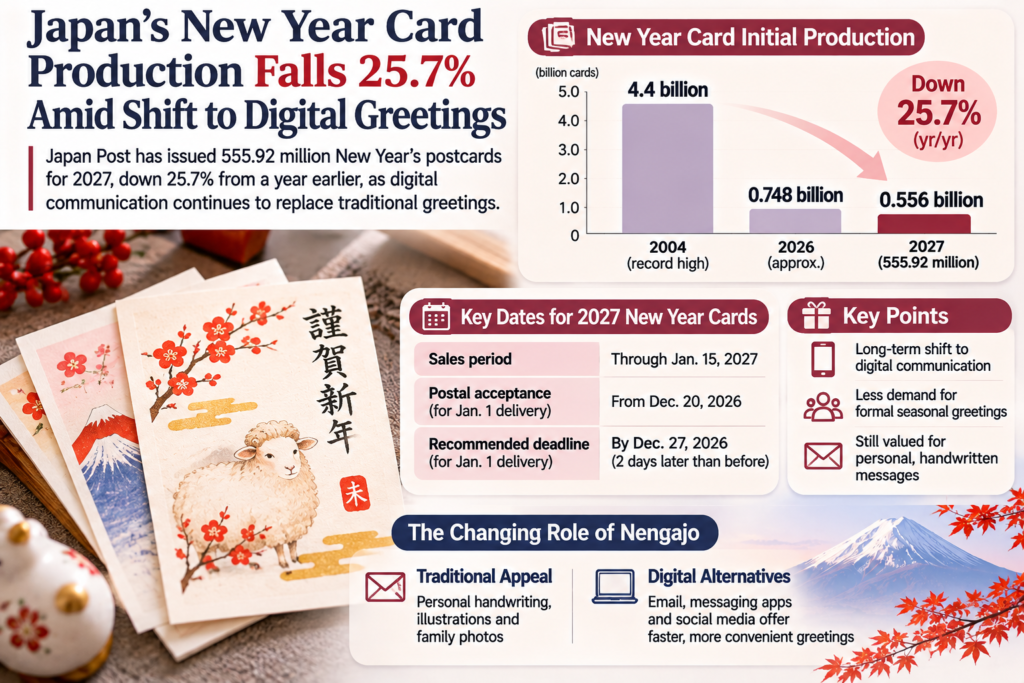
Japan’s traditional New Year’s greeting card market is continuing its long decline, with the country’s postal operator cutting its initial production for 2027 by more than a quarter as digital communication changes how people exchange seasonal messages.
Japan Post began selling its latest New Year’s postcards on Monday, issuing an initial 555.92 million cards, down 25.7% from the previous year.
The decline marks the 16th consecutive annual reduction in initial production, highlighting the changing role of a custom that once formed a central part of Japan’s holiday season.
Known as nengajo, the postcards are traditionally sent to relatives, friends, colleagues and business contacts, with many delivered on New Year’s Day.
The cards often feature zodiac animals, seasonal illustrations and handwritten messages. The 2027 designs include sheep, the animal associated with the coming year in the East Asian zodiac.
Japan Post’s initial production is now approximately one-eighth of the record level recorded for the 2004 New Year season, when more than 4.4 billion cards were issued.
The reduction reflects a long-term shift toward digital communication, with email, messaging applications and social media providing faster alternatives to physical greetings.
The custom has also been affected by changing attitudes toward formal seasonal correspondence, particularly as people increasingly maintain personal and professional relationships through online platforms.
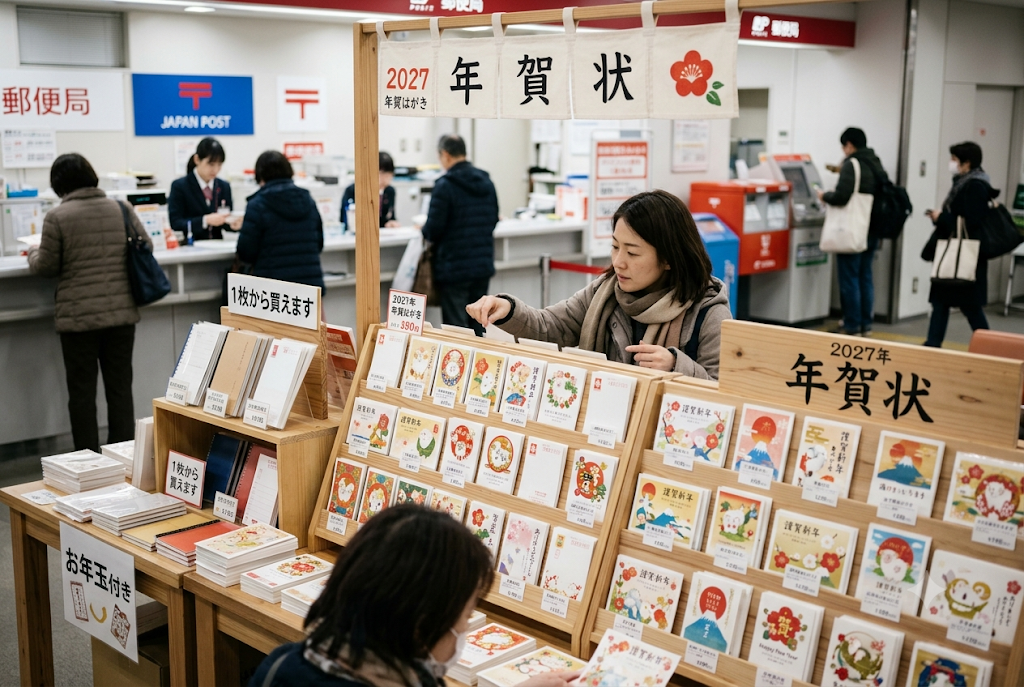
Despite the decline, Japan Post continues to offer special New Year’s postcards, including versions with lottery numbers that give recipients an opportunity to win prizes.
The company is also adjusting its mailing schedule.
Postal acceptance for New Year’s Day delivery will begin on Dec. 20, while the recommended deadline for cards to arrive on Jan. 1 has been extended to Dec. 27, two days later than previously.
The sales period will continue through Jan. 15, 2027.
The changes reflect a tendency among customers to prepare and mail their greetings closer to the end of the year.
For Japan’s postal industry, the shrinking seasonal market illustrates the challenge of maintaining traditional services as communication habits evolve.
New Year’s postcards once generated substantial demand for printing, stationery and postal delivery. Their declining production shows how even deeply established customs can be affected by changes in everyday technology.
Yet the cards retain a distinctive place in Japanese culture.
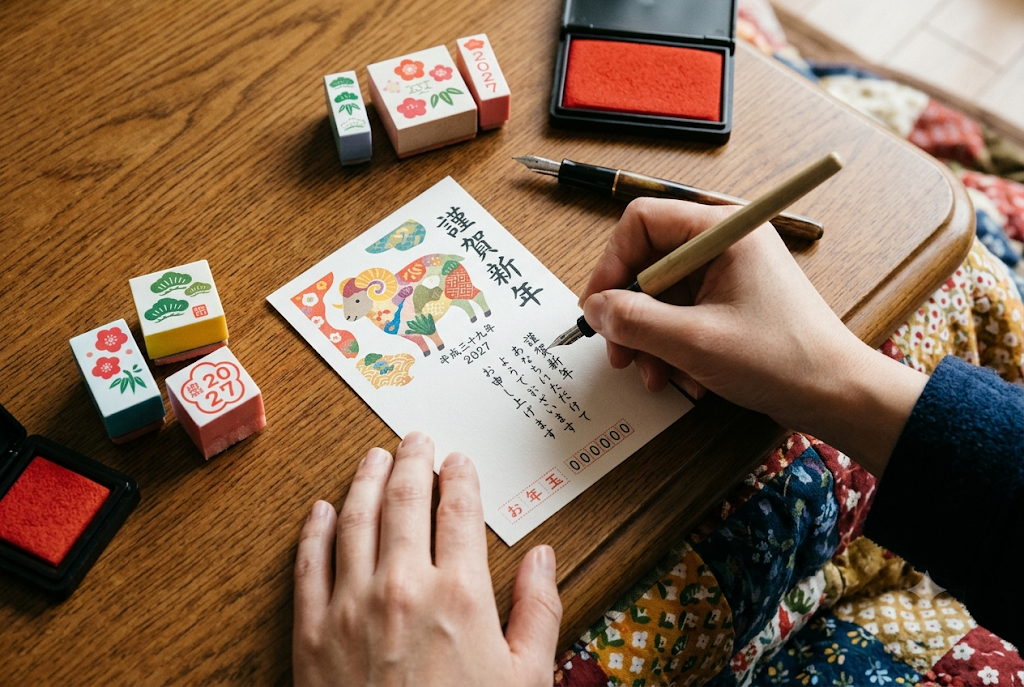
Unlike digital messages that can be sent instantly to large groups, physical postcards provide space for personal handwriting, illustrations and family photographs.
For some households, preparing and exchanging them remains an annual tradition connecting different generations.
The continued availability of the cards also reflects Japan’s ability to preserve familiar cultural practices while adapting to changing consumer preferences.
Although digital greetings are increasingly common, Japan Post’s latest release shows that the tradition has not disappeared.
Instead, the market is becoming smaller as consumers choose between the convenience of electronic communication and the personal character of a physical New Year’s message.
With the holiday season approaching, the latest production figures offer a measure of how rapidly Japan’s communication habits have changed over the past two decades.
SOPHIA KIM
US ASIA JOURNAL

