


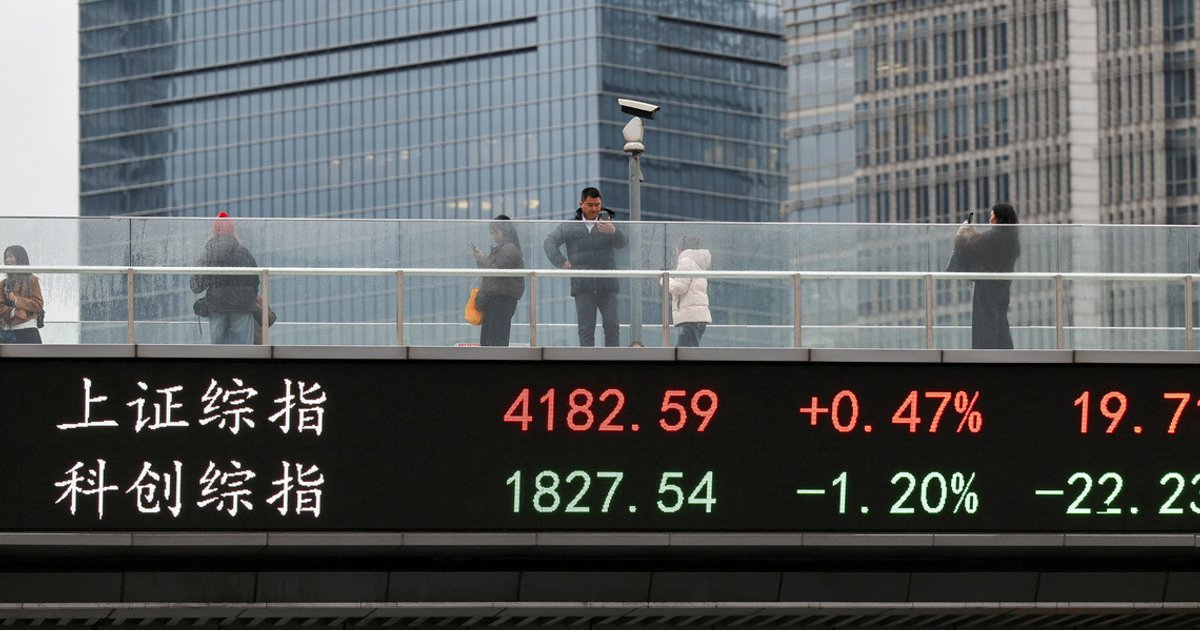
BEIJING/SHANGHAI – Chinese regulators including the central bank will hold meetings with financial institutions on Nov 2 to discuss tools to support capital markets, media reported, as turbulence in stocks and bonds fuels calls for policy support.
The benchmark CSI300 Index slumped 8.5% in October for its worst month since early 2016, while signs of stress have emerged in the bond market over the financial health of state-owned developer Zhuhai Huafa Group.
China’s central bank and the securities watchdog will hold a seminar on the morning of Nov 2 with brokerages and fund management firms to study the use of tools to support capital markets, the 21st Century Business Herald said.
Separately, the People’s Bank of China, the National Financial Regulatory Administration and the China Securities Regulatory Commission will convene major banks on Nov 2 to discuss optimising the relending policy for share buybacks and purchases, the official Shanghai Securities News said.
Huang Yan, fund manager of Shanghai QiuYang Capital Co, said regulators may prod more lending to support share buybacks.
The measures could “drive a market rebound toward the year-end,” he added, but cautioned that a policy bottom may not be the market bottom.
A growing number of listed companies have announced share buybacks over the past month.
There have also signs of state-backed buying, but these measures have so far proved inadequate to arrest a slide in the stock market, given a struggling economy and worries about lofty tech company valuations.
Investors will also closely monitor the unfolding debt issues of Zhuhai Huafa Group.
Huafa’s bonds and shares sold off last week after news that the state-owned developer failed to repay two maturing trust products and was in discussion with banks to extend loan maturities.
In a sign of potential contagion, most exchanged-traded credit bond funds lost roughly 0.5% on Oct 30 in their biggest-ever one-day percentage loss.
Hua Chuang Securities said in a note that the selloff in Huafa bonds had triggered risk aversion and pre-emptive fund redemption.
“The incident is still festering, and…the government’s expression of attitude and material support will have a key impact on the market,” the brokerage said. REUTERS