


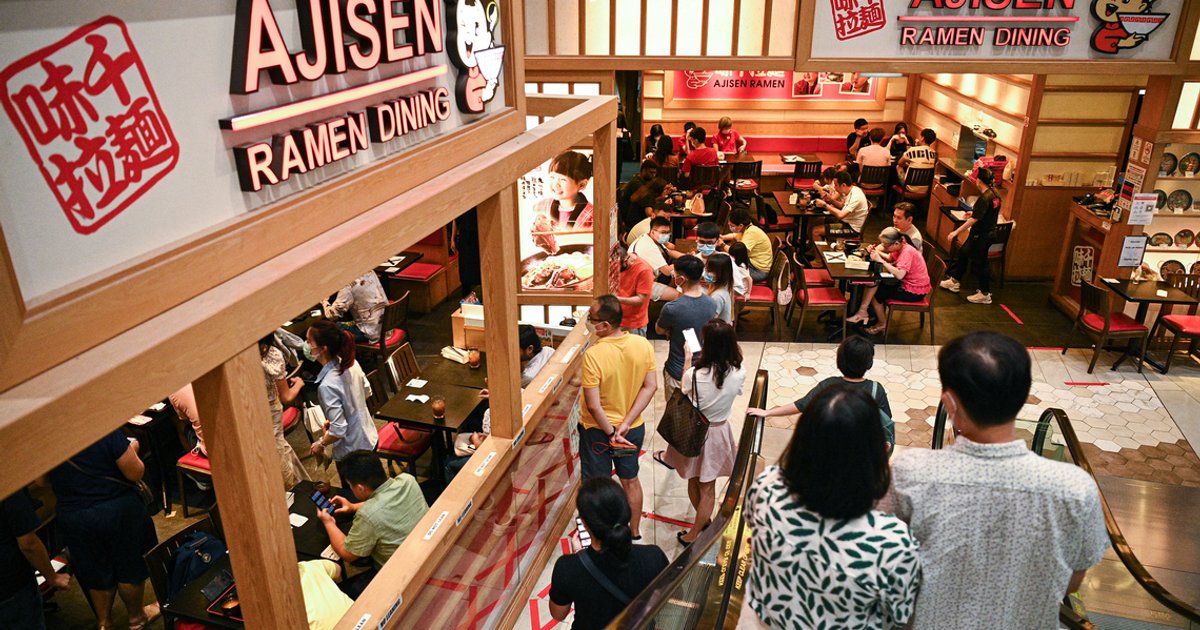
SINGAPORE – Japan Foods has returned to profit after cutting nearly a third of its outlets in Singapore and turning its focus to halal dining concepts and affordable meals.
The Singapore-listed restaurant operator had been loss-making since 2023.
The group, which operates Japanese cuisine brands including Ajisen Ramen and Yakiniku Shokudo, had 46 restaurants as at Sept 30, down from 68 a year earlier.
Alongside closing weaker-performing outlets, it also converted some existing restaurants to newer concepts, including its proprietary halal Steak 99 brand. Launched in October 2025, Steak 99 had grown to 14 outlets by Sept 30.
As a result, Japan Foods posted a net profit of $234,000 for the six months ended Sept 30, reversing a loss of $3.3 million a year earlier. This was despite revenue falling 18% to $30.2 million as its restaurant network shrank.
In response to questions from The Straits Times, Japan Foods said its halal concepts had shown encouraging performance and growth potential.
“Halal dining also allows us to cater to a broader customer base, including both Muslim and non-Muslim diners, providing opportunities to reach a wider market,” it said, adding that it would continue investing in both halal and non-halal brands.
Steak 99, which serves steaks starting from $9.90 and free-flow sides, generated $9.5 million in revenue during its first half, accounting for nearly a third of group sales.
Besides opening new outlets, the new brand also occupies outlets previously take up by Ajisen Ramen restaurants, including those at Plaza Singapura, Bedok Mall and Tampines Mall.
Japan Foods has also launched Wagyu Steak 99, Shabu Suki 99 and Yaki Zakana 99 under its “99” series. Each brand offers a $9.90 value menu item aimed at cost-conscious diners.
The company will monitor the newer brands’ performance and customers’ response to them, in order to determine its next steps.
Asked how it decides on which outlets to close and if more closures are on the cards, Japan Foods said it regularly reviews the performance of individual restaurants and brands to assess their long-term viability. This includes discontinuing weaker-performing brands and, where appropriate, terminating leases early.
It expects the pace of closures to slow in the financial year ending March 31, 2027, as it focuses on improving efficiency and the performance of its remaining outlets.
The changes have reshaped Japan Foods’ restaurant portfolio as it took steps to cut costs. Ajisen Ramen had eight outlets as at Sept 30, down from 12 a year earlier, while Tokyo Shokudo’s network fell from 14 to two. Other brands, including Menya Musashi and Osaka Ohsho, no longer have outlets in the group’s network.
As a result, selling and distribution expenses fell 27.8% to $22.3 million, reflecting lower manpower costs, utilities and depreciation of leased assets. Administrative expenses declined 22.4% to $1.4 million, while other operating expenses nearly halved to $747,000.
Despite its return to profit, Japan Foods expects Singapore’s food and beverage industry to remain challenging over the next year, citing rising operating costs, persistent manpower shortages and intense competition from local and foreign operators.
It also expects diners to remain price-sensitive as economic uncertainty and global trade and geopolitical tensions weigh on sentiment.
The group declared an interim dividend of 0.13 cent a share, payable on Dec 15. No dividend was declared for the corresponding period a year earlier.
Shares of Japan Foods, which is listed on Catalist, closed on Oct 29 at 10 cents, up more than 5%. That gives is a market capitalisation of just over $17 million.

