


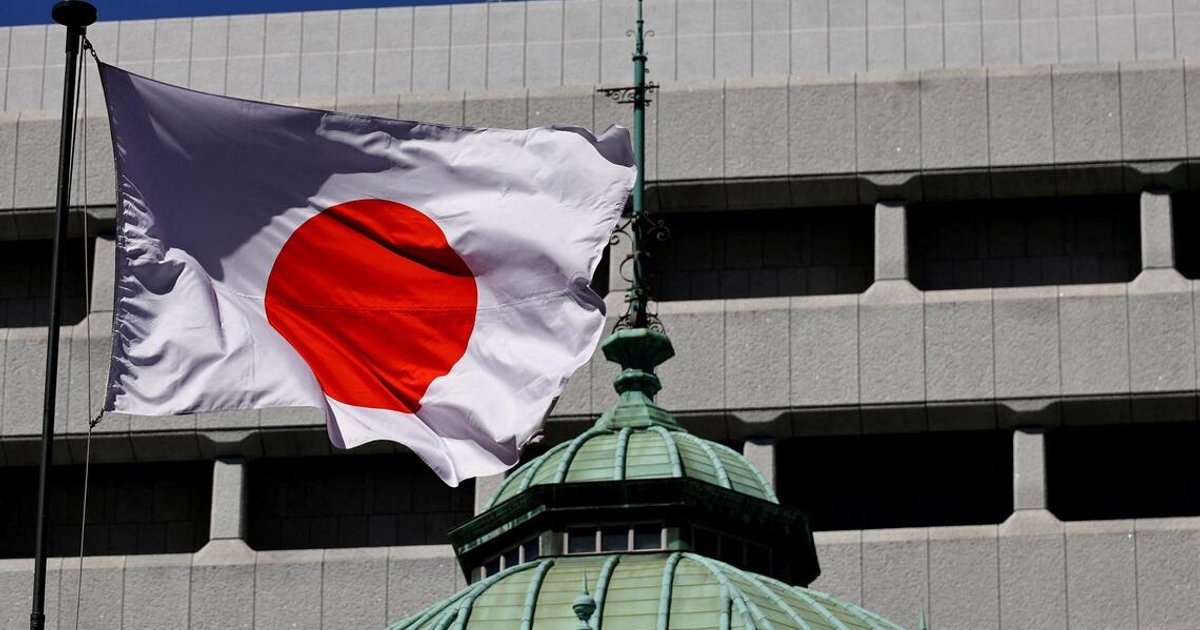
TOKYO – The Bank of Japan (BOJ) is widely expected to keep its benchmark interest rate unchanged on Oct 30 while indicating that underlying inflation has finally reached its 2% target, a milestone that would strengthen the case for further rate hikes.
All BOJ watchers polled in a recent Bloomberg survey anticipate that the central bank’s policy rate will be left unchanged at the end of its two-day gathering this week, after the bank raised it to 1.25% in September.
A key focus on Oct 30 will be whether the BOJ says underlying inflation has broadly reached its 2% target for the first time since the goal was set in 2013 – an outcome that appears likely.
That would bolster the case for further hikes as borrowing costs remain relatively low and stimulative in Japan.
“The BOJ is likely to judge that underlying inflation has now reached around 2%,” said Ryutaro Kono, chief Japan economist at BNP Paribas. “The BOJ probably sees a need to raise the rate towards neutral as soon as reasonably possible, but upside risks aren’t pressing enough to warrant back-to-back hikes.”
The BOJ’s meeting comes after the US Federal Reserve held its policy settings steady overnight, a decision that weighed on the dollar, pushing the yen to around 157.84 per dollar on the morning of Oct 29 in Tokyo.
While the BOJ has been relatively vague about where exactly underlying inflation is, a host of indicators has shown for years that inflation in Japan has been taking root.
In March, the BOJ began publishing a new set of price gauges that capture core inflationary moves while stripping out factors that are mostly temporary.
An upgraded assessment of underlying inflation would lay the groundwork for another hike at the December meeting, when more than 80% of surveyed economists expect action.
The bank adjusted the benchmark rate in September for the second time in three months, marking the fastest pace of rate increases in 36 years.
The BOJ may continue raising rates at roughly the same pace given current price trends and a view at the bank that the impact of rate hikes on the economy so far has been limited, sources familiar with the matter told Bloomberg earlier in October.
BOJ Governor Ueda has increasingly indicated that underlying inflation is “very close” to 2%, appearing to prepare investors for a change in the bank’s quarterly outlook report on Oct 30.
Earlier in October, he said the BOJ would not allow underlying inflation to rise much further from current levels.
Recognition that underlying inflation has reached the target would sharpen focus on how far rates need to rise before policy is no longer stimulative.
The BOJ estimates that the neutral rate resides somewhere between 1.1% and 2.5%, while stressing that it’s difficult to pinpoint. JPMorgan Securities and BNP Paribas are among those forecasting a 2.5% terminal rate in the current cycle.
Inflation excluding fresh food, a gauge that has been a key indicator for the BOJ, has exceeded the bank’s target for four straight fiscal years through March 2026, and if the bank’s latest forecasts prove accurate, will do so for six straight fiscal years.
Some economists say the bank has been too cautious in recognising the shift, risking falling behind the curve on inflation.
“In five or six years, a first-grader basically enters middle school. If someone claimed that inflation persisting through that entire period isn’t a trend, it’s hard to see people accepting that,” said Seisaku Kameda, a former BOJ economist and current executive economist at Sompo Institute Plus.
Recent economic data and early signals ahead of 2027’s wage negotiations suggest inflationary pressures remain firm.
In September, a BOJ gauge of underlying inflation jumped to a three-year high of 3.2%.
After three years of historically high wage growth, Japan’s largest umbrella labour organisation plans to seek even bigger pay increases in negotiations expected to culminate with a deal in March.
“Early indications from labour and business leaders ahead of 2027’s annual wage talks suggest Japan’s wage growth could accelerate in 2027,” said Taro Kimura, an economist at Bloomberg Economics.
“That threatens to stoke inflation and raises the risk the BOJ will hike its benchmark rate beyond the roughly 2% terminal level currently priced in by markets.”
Differences over the inflation outlook among the BOJ’s nine board members were evident in September’s 7-2 vote, which helped weaken the yen despite the rate increase.
Investors will watch the vote on Oct 30 for signs of momentum towards further hikes.
The milestone on the price goal would mark the culmination of a campaign that began in 2013, when the BOJ launched massive monetary easing with a goal of achieving 2% inflation in about two years.
Instead, it took nearly a decade and a global inflation shock following Russia’s invasion of Ukraine for sustained price increases to return to Japan.
The BOJ ended the world’s last negative interest rate and its yield-curve-control programme in March 2024 as confidence grew that the underlying inflation target was coming into reach.
Ueda has raised rates six times so far, the most by a single BOJ governor in at least half a century.
In a recent podcast, Hiroshi Nakaso, a former BOJ deputy governor who spent nearly four decades at the bank, highlighted the long-awaited economic shift after the “three lost decades” that followed the bursting of Japan’s asset bubble in the 1990s that resulted in about 200 financial institutions going under.
“Japan is back,” Nakaso said. “Deflation is finally behind us and the economy is shifting to an inflation regime.”
Yet, reaching the target does not mean inflation has been an unqualified success.
While rising prices have accompanied record corporate profits, nominal GDP and tax revenue, they have also intensified cost-of-living concerns, particularly among Japan’s rapidly ageing population.
Almost 30% of Japanese are 65 or older, and about 40% of elderly households rely entirely on pensions for income.
Nakaso, who once said that he would open a bottle of champagne when the bank achieves its price target, stressed the need for a strong growth strategy from the government after the BOJ hits its target.
“Its necessity has not diminished in the slightest,” said Nakaso. BLOOMBERG

