


SINGAPORE — Businesses in Singapore’s transport and storage sector are charging more for their services in the wholesale market, after the Middle East conflict drove up the cost of imported fuels like crude oil and refined petroleum products, according to the Department of Statistics (Singstat) on Oct 28.
The price increases were particularly pronounced in the sea freight transport, freight forwarding, and postal and courier segments, based on an analysis on producer prices by Singstat in its latest newsletter.
Producer prices refer to the amount that domestic businesses and manufacturers receive for the goods and services they sell at the wholesale level.
Higher producer prices do not always pass through to consumers immediately, as retail businesses may choose to absorb the additional cost or switch suppliers to keep their prices steady. But a rise in producer prices can be an early indicator of future price hikes for consumers.
Producer prices have been inflated by the outbreak of the Iran war on Feb 28 that effectively closed the Strait of Hormuz, which was used to transport around one-fifth of the world’s oil and gas.
This drove an index tracking the price movements of imported fuels, lubricants and related materials to jump by almost 79% month-on-month in March. It has since eased while remaining well above pre-conflict levels.
Singstat said the index “reflects oil prices at the point of entry into the domestic economy and can provide an early indication of upstream cost pressures”.
It added: “The extent and timing of pass-through to prices can differ across transport and storage activities. These differences were likely influenced by fuel exposure, route exposure, contract terms and firms’ ability to adjust prices during the period.”
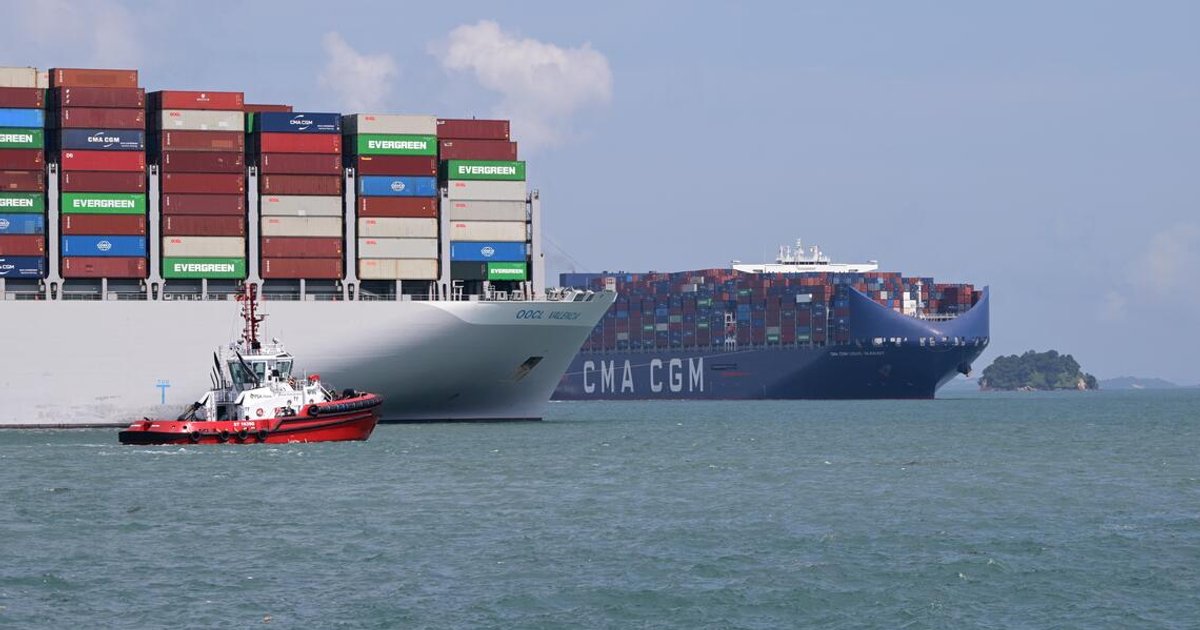
Sea freight saw the biggest increase in producer prices, surging by 25.4% in the second quarter as compared to the first quarter.
According to the newsletter, shipping activity involving liquid bulk and gas freight was more affected because of how much it relies on the Strait of Hormuz. This includes shipments of crude oil and liquefied natural gas.
Meanwhile, container shipping companies which mainly operate outside the Middle East were less affected, although they could face indirect pressures from higher bunker costs and broader shipping disruptions.
Prior to the onset of the Middle East conflict, liquid bulk and gas freight transport prices recorded relatively modest movements, while container freight transport prices were on a declining trend.
Freight forwarding was also heavily affected, with producer prices increasing by 10.2% in the second quarter from the preceding quarter.
Since the Middle East conflict began, air freight forwarding faced the most immediate cost pressures because of flight rerouting, reduced capacity and higher fuel costs, the newsletter said.
Sea freight forwarding was also affected by higher carrier rates, fuel costs and war risks surcharges. However, land freight forwarding prices have remained broadly stable.
Postal and courier prices also rose in the second quarter, with an index tracking producer price movements jumping by 7.1% as compared to the first quarter.
Singstat noted that international postal and courier prices rose, while local postal and courier prices eased. “The increase was consistent with higher fuel-related costs affecting international postal and courier prices,” it added.
Postal and courier service providers have routinely raised prices to cope with higher operational costs.
DHL Express, which recently announced a rate increase taking effect in January 2027, said its business was “influenced not only by local economic conditions but also by developments across global markets” and factors like energy costs.
Prices for cargo handling and warehouse and storage services in Singapore also increased in the second quarter by 2.7% and 0.6% respectively, month-on-month.
The indices inform businesses and policymakers looking to understand emerging price pressures, which could eventually be passed down to customers.
“While the Singapore Government has introduced support packages to help businesses and households manage cost pressures, continued monitoring of producer prices remains important as global developments continue to evolve,” said Singstat in the newsletter.
Oil prices are trading slightly below six-month highs. On Oct 23, Brent surged to more than US$117 (S$150) a barrel, the highest level seen since April, after Iranian attacks on tankers around the Strait of Hormuz.