


SINGAPORE – Businesses and workers can benefit from a more coordinated system of data collection and analysis, as ASEAN member states join a new network to strengthen workforce planning across the region.
The ASEAN Labour Statisticians Network (ALSN), which launched on Oct 27, aims to help member states identify emerging trends jobs and skills earlier and ensure sustained cooperation among countries. This comes ahead of the Republic’s ASEAN chairmanship in 2027.
The platform aims to create a stronger regional community where knowledge, methodologies and expertise can be shared. This comes amid rapid changes to jobs and skills across ASEAN and globally as demographic shifts and artificial intelligence reshape labour markets.
Singapore has been endorsed to establish and lead the network in the next five years to foster and strengthen cooperation among labour experts, statistical communities and policymakers to navigate the future of work.
“As the world of work evolves, our statistics must keep pace to support our policymakers,” said the Ministry of Manpower’s permanent secretary Stanley Loh in his welcome address at the network’s inaugural forum held at Sheraton Towers on Oct 27.
“We need to review what we measure, improve how we collect information and ensure that our findings address the questions policymakers need answered,” he said.
He noted that as ASEAN’s labour markets differ in economic structures, demographic profiles and policy priorities, their statistical systems bring different strengths and experiences.
“Yet many of us are tackling similar measurement challenges. By sharing methods and testing approaches together, we can develop useful answers faster and make better use of our resources,” he said.

Ministry of Manpower’s permanent secretary Stanley Loh said ASEAN countries are tackling similar measurement challenges, and make better use of shared resources.
ST PHOTO: DESMOND FOO
A new office, led by MOM’s Manpower Research and Statistics Department, will support the implementation of the network’s priorities and maintain cooperation between meetings. Each ASEAN country may nominate up to two focal points from relevant labour statistical or research institutions to join ALSN, and the office will work with the respective representatives to identify priorities and develop joint projects.
At the forum, which brought together over 150 leading labour market experts from ASEAN, MOM’s Loh also announced the launch of a regional knowledge portal. It will serve as a platform which pulls together methodologies, research findings, practical tools and lessons from member states, making it easier for teams to access and build on one another’s work.
Ritash Sarna, the Chief Statistician of the International Labour Organisation, said in his keynote speech that international statistical standards don’t require every country to adopt the same policy.
“They allow countries to diagnose their own circumstances, learn from others and design appropriate responses.
“Faster statistics are not necessarily better statistics. More data don’t automatically mean better evidence.”
The network also launched joint incubator projects to support interested member states develop new methods of collecting and analysing labour market information. For example, the AI Exposure Index, which was developed in collaboration with National University of Singapore and Singapore University of Social Sciences, examines how AI could affect specific tasks within jobs instead of assuming that entire occupations will be replaced.
In his opening address at the forum, His Excellency San Lwin, ASEAN Deputy Secretary-General for the ASEAN Socio-Cultural Community urged ASEAN member states to nominate the right people who can benefit the most from the network and share technical expertise with others.
“Ultimately, the sucess of ALSN would not be measured solely by the number of meetings and activities. It should be reflected in whether our labour market data intelligence is improving and becomes more effective in supporting the policy-making process.”
The ASEAN Green Jobs Report, released on Oct 27, provides a regional assessment of green jobs and green skills across all 11 ASEAN member states. For example, the report showed that the fastest growing green job titles on LinkedIn for 2025 include sustainability manager and sustainability consultant, while in the Philippines, these include biologist and agronomist.
MOM’s director of manpower research and statistics Ang Boon Heng told The Straits Times that establishing the network matters to Singapore as developments across ASEAN countries affect businesses and workers.
“Many businesses operate across the region, and shifts in investment, production and demand for skills can influence job opportunities here,” he said, adding that Singapore also benefits from the experience and expertise of other ASEAN member states.
“Working with our ASEAN counterparts gives us a clearer view of these changes and strengthens the evidence behind our employment and skills policies.”
Fostering ties with international labour networks
The establishment of the network will also build international partnerships and support sharing of methods and lessons.
This can be done through study trips to institutions with advanced labour market information system, including learning best practices from the European Network for Regional Labour Market Monitoring (EN RLMM), which has been set up and running for over two decades.
For example, ALSN’s first global engagement visit took place in September in Bilbao, Spain.
Over 20 delegates from nine ASEAN member states including Malaysia, Indonesia, Thailand and the Philippines attended workshops and site visits organised by Deutsche Gesellschaft für Internationale Zusammenarbeit (GIZ) RECOTwin, an ASEAN-German cooperation project commissioned by the German government. GIZ works with ASEAN labour officials on labour market and skills policy.
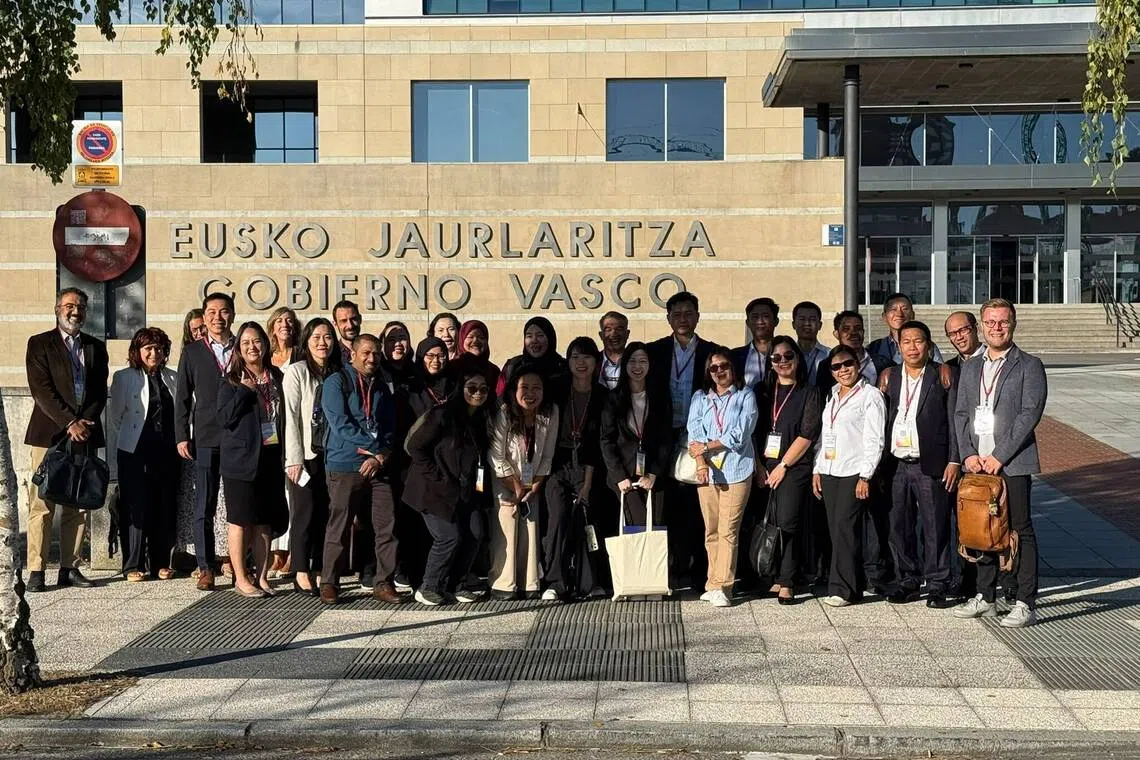
Over 20 delegates from nine ASEAN member states joined the study trip from September 14 to 18, 2026.
PHOTO: GIZ
MOM also works with GIZ and the ASEAN Secretariat to support the implementation of the network’s agreed work plan and activities for the next five years.
“Until now, regional cooperation in this area has mostly taken the form of studies, one-off workshops and study visits,” said Darjusch Tafreschi, labour market policy lead at GIZ RECOTwin, noting that these were valuable but episodic.
“What was missing was a structure that keeps practitioners learning from each other between those events.
“Singapore’s decision to propose and convene the network is what makes this continuity possible. Equally important, the ALSN sits within ASEAN’s own structures, so it belongs to all member states.”
ST was invited to the study trip ahead of Singapore’s ASEAN chairmanship in 2027, which will focus on deepening regional integration and strengthening partnerships beyond the region to make ASEAN a more effective single market.
Site visits to learn more about the European labour markets included the Eustat, the Basque Statistics Institute; Lanbide, the Basque Employment Service; and Peñascal Kooperatiba, a vocational training provider helping vulnerable youth enter the labour market by equipping them with in-demand skills like carpentry and dressmaking.
During the study trip, GIZ facilitated a discussion where delegates were split into three groups to reveal challenges they faced in collecting labour data in their countries, and discussed potential solutions. Some challenges raised include data fragmentation and overlapping of data.
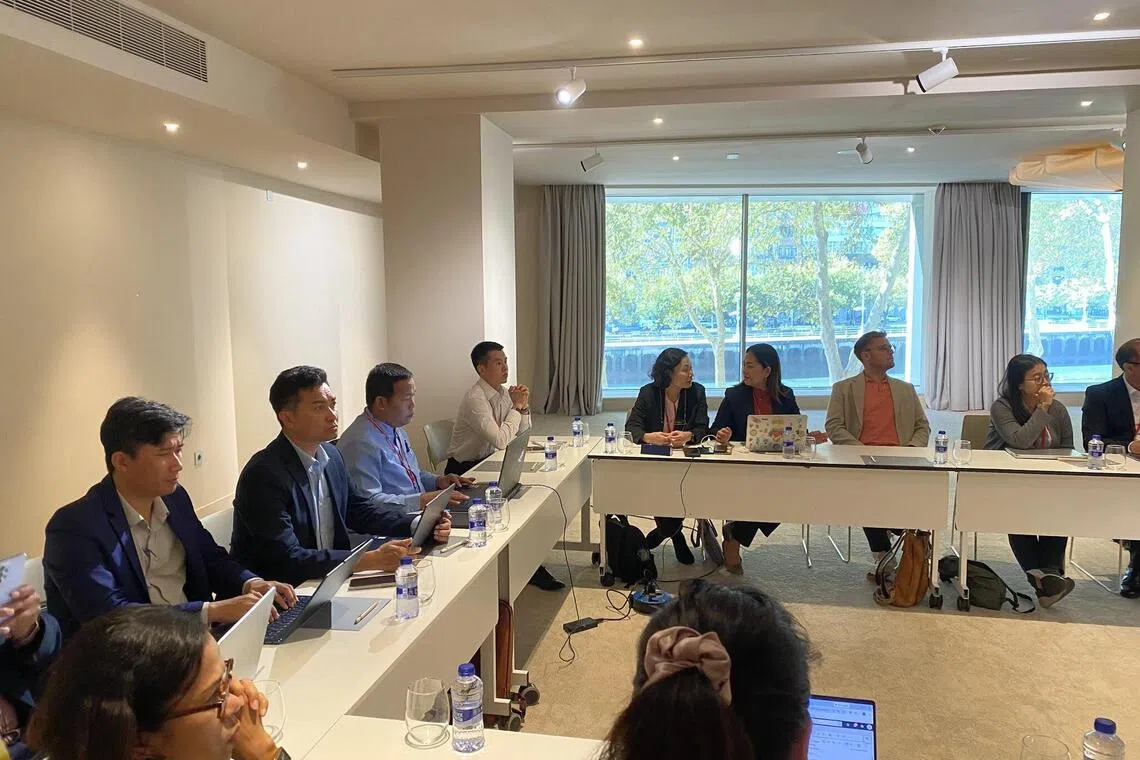
The five-day study trip in Bilbao, Spain aims to help ASEAN delegates deepen their technical knowledge through workshops and site visits to institutions with advanced labour market information system practices.
PHOTO: GIZ
“Malaysia’s primary hurdle is not a lack of data, but streamlining cross-agency coordination to transform diverse administrative streams into unified, policy-ready insights,” said a delegate from Malaysia’s Ministry of Human Resources who took part in the discussion.
The aim is to move beyond traditional data reporting toward delivering actionable labour market intelligence that directly informs policymaking and supports workers, employers and other key stakeholders, she said.
Between Singapore and Malaysia, there are some similarities in how the two nations collect labour data. For example, both utilise national portals such as MYFutureJobs in Malaysia and MyCareersFuture in Singapore to track live vacancies, skill demands and wage trends alongside official statistical surveys.
ASEAN delegates were also in Bilbao to attend the three-day EN RLMM Annual Conference 2026, where members across Europe exchange and evaluate new data and methodologies related to topics like monitoring the transformation of jobs and skills. Since 2005, there have been 21 annual conferences held in different regions across Europe and beyond.
Founder and coordinator of the European network Christa Larsen said that fostering exchange among members has helped to transparency regarding the current and future state of regional labour markets.
“Understanding how other regions address these issues helps members derive innovative solutions for their own labour markets,” she said in an interview with ST.
Christa also proposed two elements that may be critical to ALSN’s future success.
“First, a foundation of trust where members collaborate without competing, and second, the principle that a member’s return on investment grows exponentially with their own active involvement.”

