


SINGAPORE – Second-generation business leader Yeo Zong Han recently jetted off to China at the invitation of UOB, and brought back new perspectives to his family business in Singapore.
From Aug 31 to Sept 4 in Shanghai and Hangzhou, he met leaders from some of China’s largest companies, such as Unitree Robotics, Ant Group, Jinko Power, YX Digital and Semir Group.
Along with 25 individuals aged 20 to 37 from seven markets, Yeo participated in the sixth run of UOB Private Bank’s Next Generation Programme, which gave them direct access to how businesses are embracing new technologies and evolving their business models.
Participants of the programme, which was launched in 2020, are nominated through private bank senior client advisers, who work closely with business families and understand their aspirations for their successors.
Instead of focusing purely on family background or business profile, the bank emphasises on individual traits such as curiosity, leadership potential, willingness to learn and openness to new perspectives.
Yeo is among Asia’s next-generation business leaders and future family stewards who appreciate such bank programmes. The 28-year-old production manager at steel fabrication solutions firm Ribar Industries has been transitioning into his father’s and uncle’s business since he was young.
Ribar Industries is a commercial banking client of UOB. Even before the trip, the company had already begun its transition and research and development efforts.
Yeo said the visit reinforced the belief that the business was moving in the right direction, while prompting him to consider how he could further strengthen the company’s approach.
While Singapore offers strong business opportunities, government support and access to grants, exposure to a larger and more competitive economy like China’s provided valuable perspectives that might otherwise be overlooked, he noted.
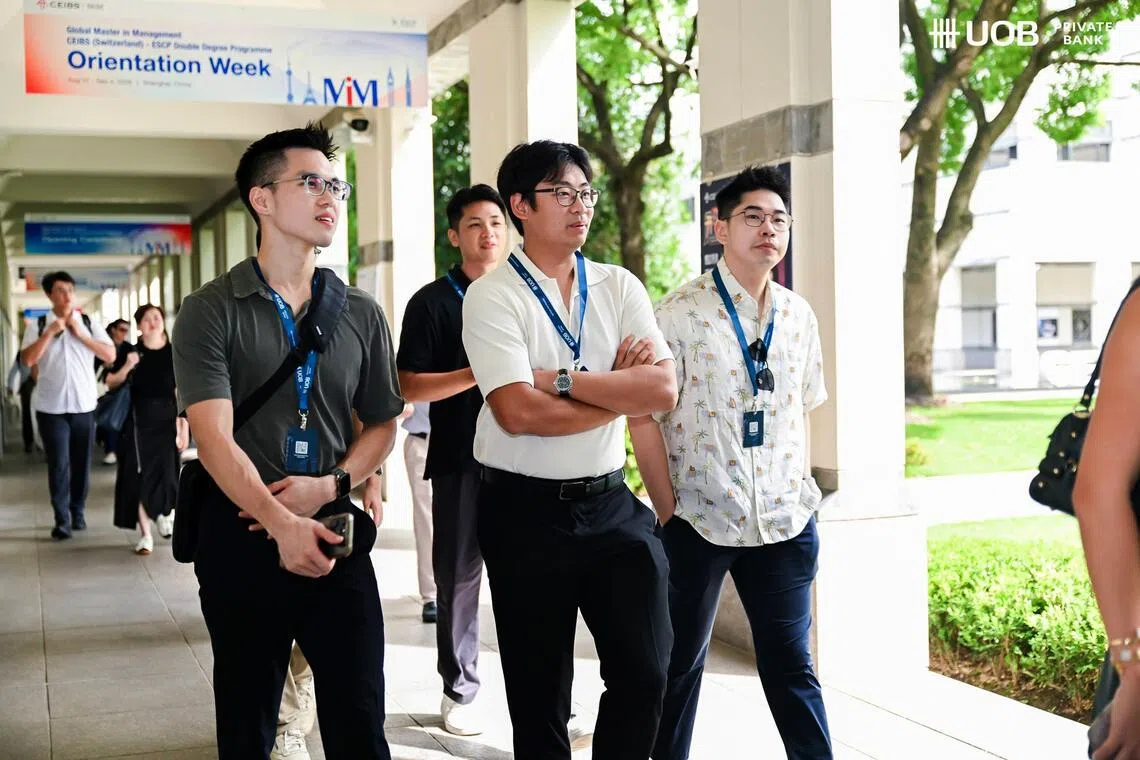
Yeo Zong Han (foreground, centre), production manager at Ribar Industries, was one of 26 participants in UOB Private Bank’s 2026 Next Generation Programme held in Shanghai and Hangzhou from Aug 31 to Sept 4.
PHOTO: UOB PRIVATE BANK
The trip also underscored the importance of offering employees clear career progression and better work-life balance, Yeo said, while acknowledging that the demanding nature of the construction industry makes providing such benefits an ongoing challenge.
He noted that family businesses often rely on unwritten rules, traditions and implicit structures, which can be a problem when it comes to recruiting younger talent.
“At the end of the day, when we want to hire people, what is our company culture and how do we answer it?” the University of Queensland economics graduate told The Straits Times.
Kristen Geng, who runs her own property development company in Australia, also joined the programme as a rare opportunity to step outside her usual business environment and learn from peers grappling with similar challenges in investments and family wealth.
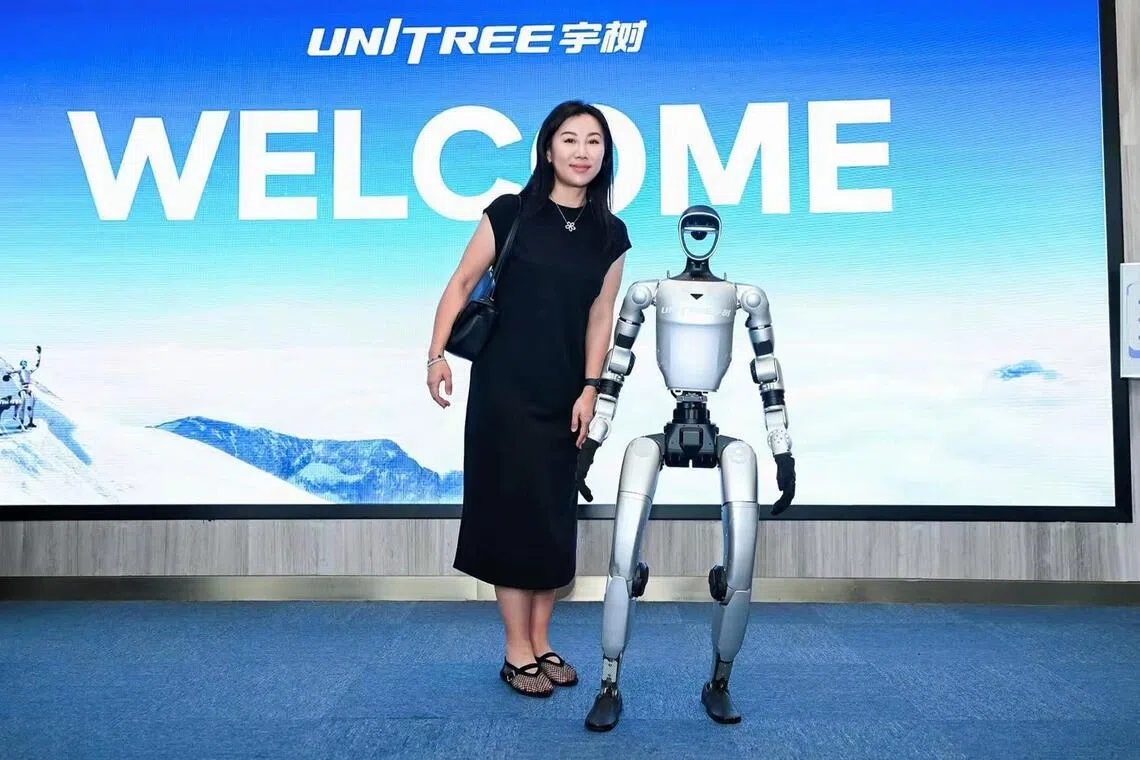
Kristen Geng was one of 26 participants in UOB Private Bank’s 2026 Next Generation Programme held in Shanghai and Hangzhou from Aug 31 to Sept 4.
PHOTO: KRISTEN GENG
Meeting other participants deepened the 37-year-old’s understanding of wealth preservation, intergenerational communication and family governance.
“Communication is probably one of the most important parts for a successful intergenerational wealth transfer, as money is a very difficult subject for any family to discuss, and being in this UOB programme has taught me that it is a conversation that probably needs to be had,” said Geng, whose family has a private banking relationship with the bank.
Interacting with fellow participants exposed her to diverse journeys and perspectives while highlighting the importance of understanding the values underpinning family wealth.
Without this understanding, she noted, transferring assets alone may not be enough to preserve wealth in the long term.
The UOB programme included a stop at the China Europe International Business School Centre for Family Heritage to focus on legacy planning.
Yeo noted that legacy planning is not simply about transferring assets from one generation to the next, but also about ensuring that a business can continue to grow across generations.
In Singapore, this means giving heirs a strong foundation to build on and the opportunity to take the business further.
Citing Semir Group as an example, Yeo observed how the Chinese apparel company was transitioning to the next generation of operators and C-suite executives while continuing to provide them with a platform to grow.
Other major local and foreign banks in Singapore also run similar programmes, such as OCBC GENesis Programme and Citi’s Young Successor Program, aimed at the children of wealthy clients, focusing on leadership, wealth stewardship and networking.
UOB Private Bank head Chew Mun Yew said there is urgency from clients to groom successors, given that many of them are first-generation wealth creators.
Across the bank’s private banking client base, it is seeing a growing focus on preparing incoming family leaders earlier and more intentionally.
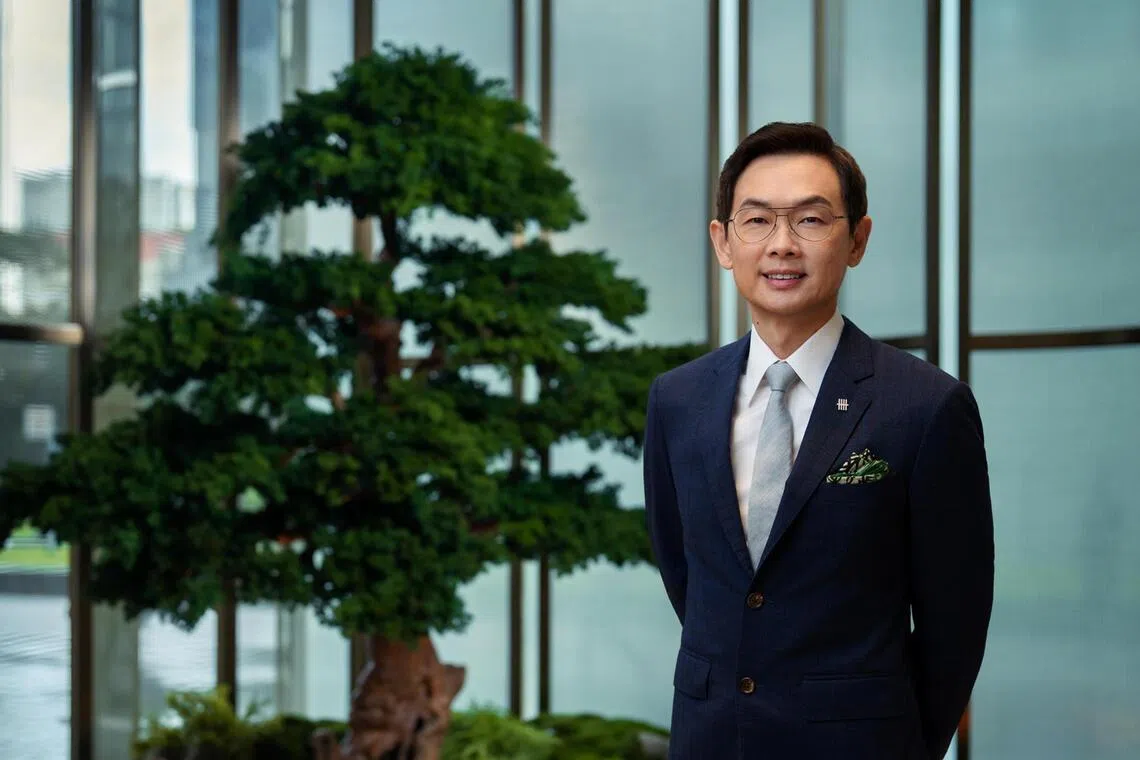
UOB Private Bank head Chew Mun Yew said the bank’s programme is grounded in its own experience as a multi-generational, family-led institution and its understanding of what it takes to sustain success across generations.
PHOTO: UOB PRIVATE BANK
“It is not only about passing the wealth or the business. It is also about managing a business, preserving the wealth and maintaining the legacy,” he said.
Chew added that the programme is grounded in UOB’s own experience as a multi-generational, family-led institution and its understanding of what it takes to sustain success across generations.
“We want to support our clients and their families in preparing future leaders so that they can navigate the opportunities and responsibilities involved in multi-generational wealth, business ownership and stewardship,” he said.
Asia is experiencing a significant period of wealth creation and intergenerational wealth transfer. Many wealth creators in the region are first-generation entrepreneurs navigating succession for the first time.
Families increasingly recognise that succession is not only about transferring wealth, but also about preparing future leaders, preserving family values and sustaining business continuity.
Reflecting on the trip, Yeo said the five days were a good “therapy session”. He connected with people from similar backgrounds, including those working in family offices, managing family wealth while pursuing careers elsewhere, and actively involved in their family businesses.
These meetings reassured him that he was not alone in tackling the challenges and responsibilities that come with managing family wealth and enterprises.
“It’s a different kind of R&R – a chance to rest, rant and learn. When you return, you feel re-energised and ready to hit the ground running,” he said.
“Very often, we are just running on numbers. This is one reason many second-generation family members are reluctant to take over the family business.
“There is a lot of stress that comes with the responsibility, the expectations others place on you, and the pressure to live up to how people perceive you,” he said.