


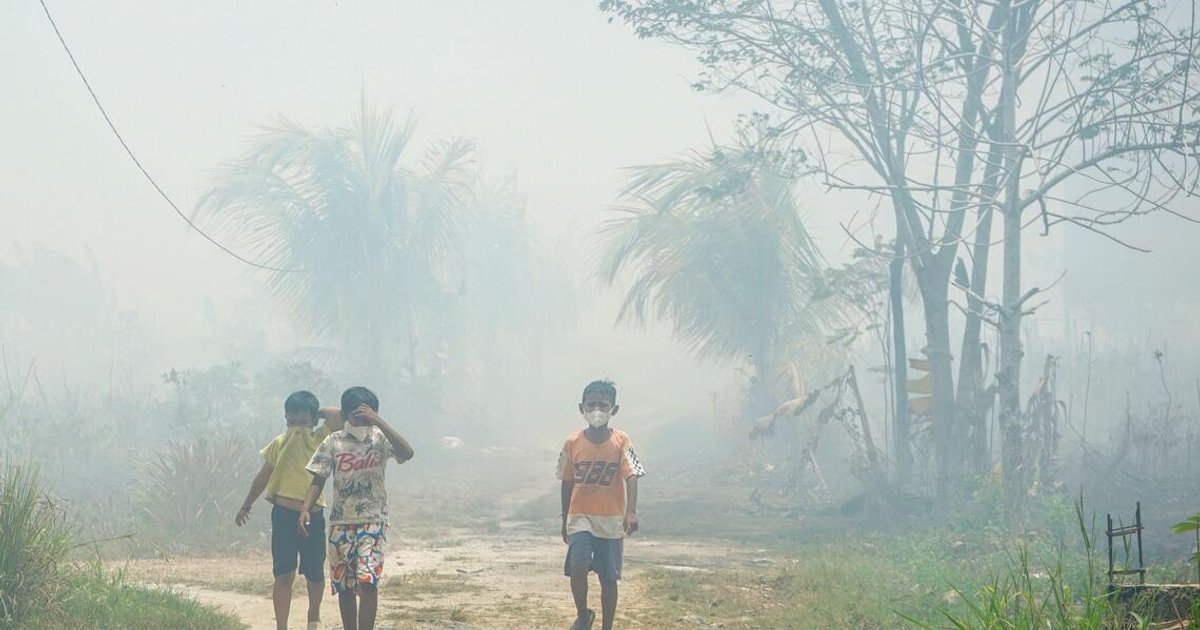
SINGAPORE – Plantation company TSH Resources said 274 hotspots were detected within its estate boundaries in Indonesia between Jan 1 and Oct 21, but maintained that none of the fires occurred within its planted or operational areas.
The Malaysian plantation group, which has a primary listing on Bursa Malaysia and a secondary listing on the Singapore Exchange (SGX), said all the hotspots were located in community enclaves outside areas directly managed by the company.
“The group’s field teams responded to and extinguished these fires, and police reports have been lodged in respect of these incidents,” the plantation group said in a filing with Bursa Malaysia and SGX.
Its Oct 22 disclosure was in response to queries from SGX Regulation (Regco) regarding forest and peatland fires in Indonesia, which have caused transboundary haze affecting the region.
The company operates 36,000 hectares of planted areas in Kalimantan and Sumatra, according to its 2025 annual report.
The company also disclosed that a fire occurred on Aug 17 within an area of its subsidiary, Bulungan Citra Agro Persada (BCAP).
It said the fire originated from a community enclave outside BCAP’s operational area, and was extinguished on the same day. BCAP subsequently lodged a police report and continued cooperating with the relevant authorities.
Separately, TSH said it received an inquiry from the sustainability department of Apical Group, one of its customers, on Sept 1 concerning hotspots at another subsidiary, Farinda Bersaudara.
TSH said it explained that the incident occurred in a community enclave outside its operational area, and that Apical, a vegetable oil processor, was satisfied with its explanation.
The company said it had not received any other formal inquiries or notices from environmental authorities concerning the recent haze.
It added that its operations and activities within its Indonesian concessions had not contributed to the transboundary haze.
TSH is among eight agribusiness companies listed in Singapore that have responded to queries from SGX RegCo concerning their operations and possible links to the Indonesian fires.
The others are Golden Agri-Resources, Bumitama Agri, First Resources, Wilmar International, Kencana Agri, Indofood Agri Resources and Olam Group.
TSH said it has enforced a zero-burning policy since May 2009, prohibiting the use of fire in land preparation, new planting and replanting activities. The policy also applies to its contractors and suppliers.
It added that it had not undertaken new planting on peatland since the end of 2015.
To monitor fire risks, the company uses satellite-based monitoring systems to detect hotspots, land clearing and possible encroachment.
TSH said it has 123 fire observation towers, 11 drones and 28 firefighting squads comprising 425 firefighters.
It spends an average of RM2 million (S$625,500) annually on fire prevention, monitoring and response measures.
TSH has continued repurchasing its own shares amid the heightened scrutiny.
In a separate filing on Oct 22, the company disclosed that it bought back another 250,000 shares, spending around RM286,577.
The purchases brought its cumulative treasury holdings to about 65.6 million shares, equivalent to around 5.1 per cent of its issued shares.
In September, TSH disclosed that its 90%-owned indirect Indonesian subsidiary has been fined about RM42 million over the cultivation of land outside the legally approved plantation area.