


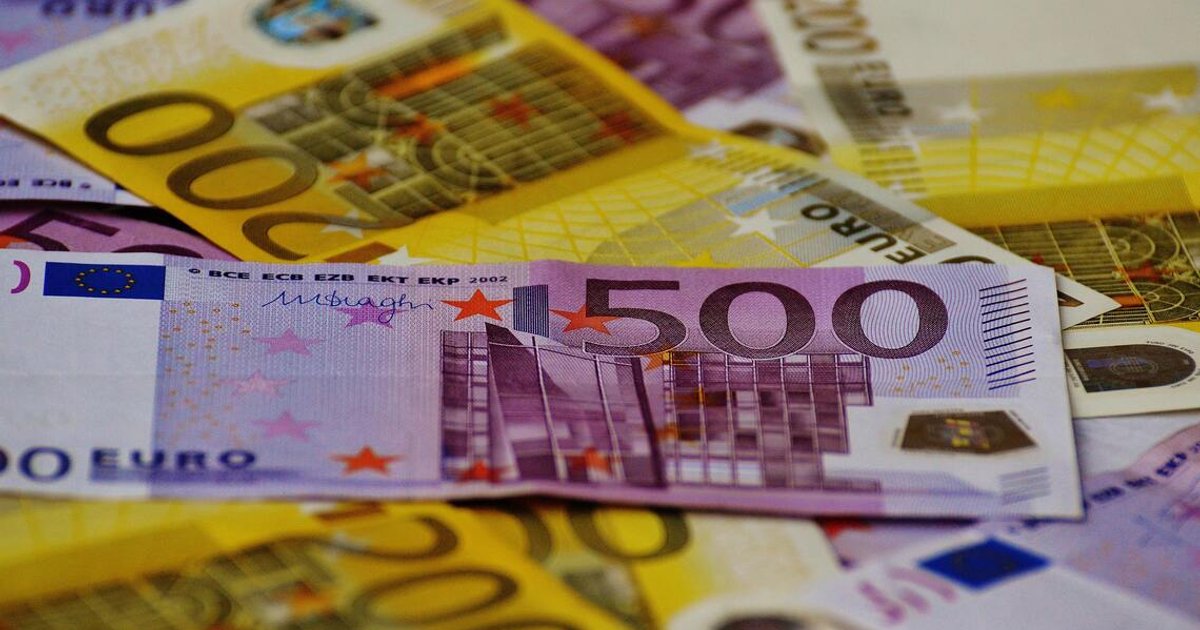
SINGAPORE – Political unrest in parts of Europe over the rising cost of living and pressure on public services has weighed on the euro, with the currency hovering near a three-month low against the Singapore dollar on Oct 21.
The euro gained 6.76% against the Singdollar in 2025, but has declined 4.8% so far in 2026. The Singdollar was trading at 1.43 per euro on Oct 21.
Analysts said continued political uncertainty could put further pressure on the euro against the Singdollar, although its direction will also depend on interest rate expectations and broader economic conditions.
Mark Matthews, head of research for Asia at Julius Baer, said much of the euro’s weakness against the Singdollar can be attributed to differences in economic growth, with Europe’s economy expanding by around 1% compared with Singapore’s growth of about 5%.
“The rioting in France is just the cherry on top,” he said.
He added that the unrest also highlights deeper fiscal and economic challenges, as the French government tries to bring its budget under control amid public dissatisfaction over school funding, financial assistance to Ukraine and higher living costs.
Protests in France began in September over inadequate school facilities and teacher shortages, before widening to include concerns over rising living costs and declining public services.
Thousands also gathered in Portugal to demand action on rising housing costs and other living expenses, while protests in Italy over the rising cost of living and deteriorating public services turned violent, with demonstrators clashing with police in Milan and several other northern cities.
Eugene Koh, sales trader at CMC Markets Singapore, expects further weakness in the euro against the Singdollar in the near term.
“A sustained break below $1.43 could bring $1.42 into focus, followed by $1.40,” he said.
Koh said the euro is facing pressure from rising energy costs, weaker growth prospects and political and fiscal uncertainty across Europe.
European gas prices have risen above 80 euros per megawatt-hour, while inflation in countries using the euro climbed to 3.8% in September.
“This creates a difficult trade-off for the European Central Bank (ECB): higher rates may help contain inflation but could further weigh on economic activity,” said Koh.
In contrast, the Singdollar continues to benefit from the Monetary Authority of Singapore’s (MAS) policy of allowing the currency to appreciate.
Although the MAS kept its monetary policy unchanged in October, its existing stance continues to support the Singdollar and help contain imported inflation, said Koh.
“Still, a sustained decline in energy prices, easing political tensions or a more hawkish ECB could trigger a rebound in the euro,” he noted.
OCBC foreign exchange strategist Christopher Wong said the euro could face further pressure against the Singdollar in the near term if political uncertainty in France persists.
But he cautioned against assuming that the euro would continue to weaken following its recent decline.
OCBC forecasts the euro to trade at $1.43 against the Singdollar in the first quarter of 2027, suggesting some stabilisation, although a further deterioration in European sentiment could put additional pressure on the currency.
Kelvin Tay, chief investment officer for Asia at Pictet Wealth Management, said France in particular faces significant challenges in stabilising its public debt, with the interest rate on its debt projected to exceed nominal economic growth by 2029.
He noted that much of the country’s public spending, including pensions, healthcare and defence, would be difficult to cut, while its already high tax burden leaves limited room to raise additional revenue.
But France’s fiscal troubles are unlikely to have a significant direct impact on Asia, although concerns over its rising borrowing costs could spread to other government bond markets if investors become increasingly wary of sovereign debt risks.
“In this situation, the Chinese yuan and Singdollar would likely be the most stable currencies in Asia due to strong government fundamentals such as high foreign exchange reserves and large current account surpluses,” said Tay.
“Singapore Government bonds could also benefit from safe-haven demand amid heightened global uncertainty,” he added.
Magdalene Teo, head of fixed income research for Asia at Julius Baer, said that events developing in Europe are a reminder that maintaining fiscal discipline is “highly important” before the costs of debt burdens and budget deficits become entrenched.
Teo added that Singapore’s AAA credit rating reflects its fiscal resilience, sizeable reserves and sound governance.
“This will underpin the Singdollar’s safe-haven appeal,” she said.