


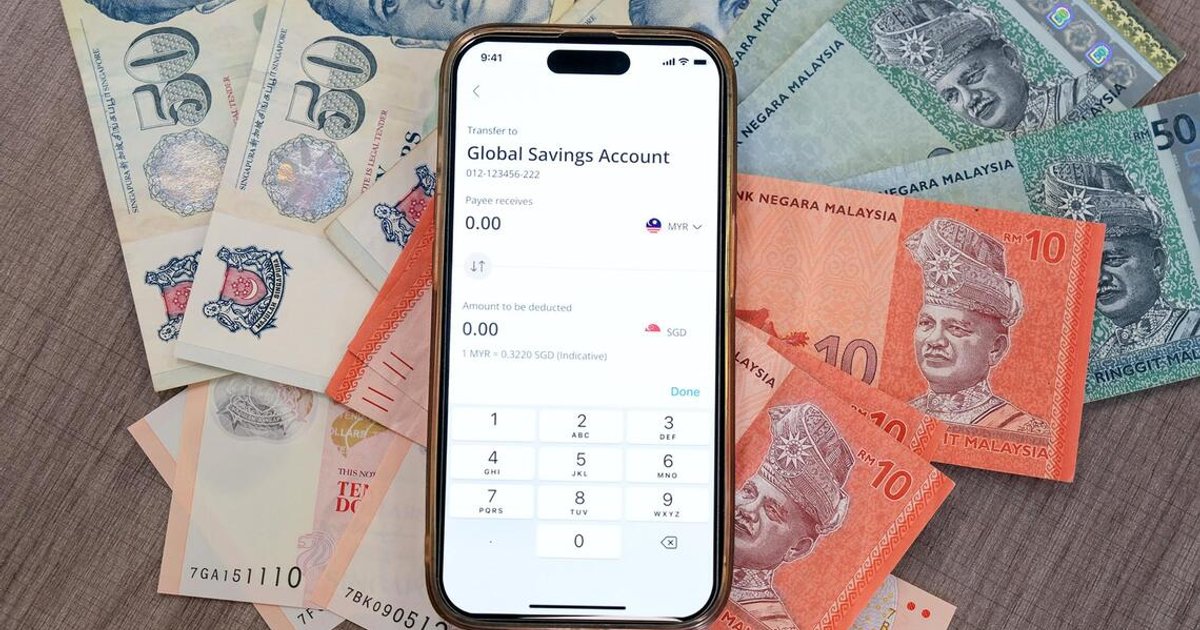
SINGAPORE – OCBC customers here will be able to hold Malaysian ringgit and earn interest on cash balances in their multi-currency accounts from Oct 23.
The bank said on Oct 21 that it will be the first non-Malaysian bank to let customers hold ringgit in Singapore-based personal savings accounts.
Those who have the OCBC global savings account and premier global savings account will be able to convert Singapore dollars into ringgit at competitive exchange rates and hold up to RM50,000 (S$15,670), the bank said.
This brings the number of currencies supported by OCBC’s multi-currency savings accounts to 11, including US dollar, the euro, Japanese yen, Hong Kong dollar and the pound.
Customers who maintain an average daily balance of RM5,000 will earn interest at a rate of 1% per annum till June 30, 2027. Thereafter, they will earn interest at 0.5% per annum.
This is a feature that sets it apart from other multi-currency digital wallets, the bank said.
“As MYR is a tightly controlled non-internationalised currency, opportunities for individuals to hold the currency in bank accounts outside Malaysia are limited,” OCBC said in its media release.
The development comes as OCBC data showed that consumers are increasingly conscious about locking in favourable exchange rates when the Singdollar strengthens.
After Singapore’s monetary policy was tightened in July 2026, the Singdollar strengthened and the number of OCBC global savings account openings grew more than 25% between July and September.
OCBC head of group wealth management Tan Siew Lee said many Singaporeans make frequent cross-border trips to Malaysia for work, leisure and everyday spending, and the inclusion of ringgit in OCBC’s global savings account will be useful for such consumers.
Spending by Singapore residents across the Causeway continues to increase, with the value of transactions by OCBC customers growing at a compound annual growth rate of 25% since 2022.
Malaysia accounts for one in three overseas transactions by its customers, making it their most popular overseas spending destination. Dining and shopping are the two largest spending categories.
The upcoming Johor Bahru-Singapore Rapid Transit System (RTS) Link is expected to further drive cross-border travel and consumer spending across the Causeway, said OCBC.
Customers can exchange currencies before travelling or making payments. When they spend using a linked OCBC debit card, they will not incur foreign currency transaction fees.
In Malaysia, they can also withdraw ringgit from OCBC ATMs without foreign exchange conversion charges, administrative fees or third-party operator fees, OCBC added.

