


SINGAPORE – Singapore sovereign wealth funds GIC and Temasek have rejected allegations that they or their staff pressured index provider MSCI to consider downgrading Indonesia’s stock market classification.
The denials follow accusations on Oct 20 by former Indonesian trade minister Muhammad Lutfi that the two investors coerced MSCI to consider downgrading Indonesia.
The former minister claimed that a downgrade could trigger market panic and create opportunities to acquire Indonesian equities at lower prices.
A GIC spokesperson told The Straits Times: “Our investment decisions are not driven by index classifications or top-down views of a market and instead by company- and asset-level fundamentals.
“We have been invested in Indonesia for over 30 years across asset classes and will continue to invest where we find good, bottom-up, risk-adjusted opportunities.”
Fock Wai Hoong, head of Asia Pacific excluding China and India at Temasek Global Investments, said the allegations have “no basis and are patently untrue”.
“No one from Temasek – neither the institution nor the individuals working for the institution – has ever reached out to MSCI in order to influence any decisions they have ever made around any exchange across the region. Maybe I’ll leave it at that,” he said.
Fock was responding to the media during the launch of the e-Conomy SEA 2026 report at Google’s office in Mapletree Business City on Oct 21.
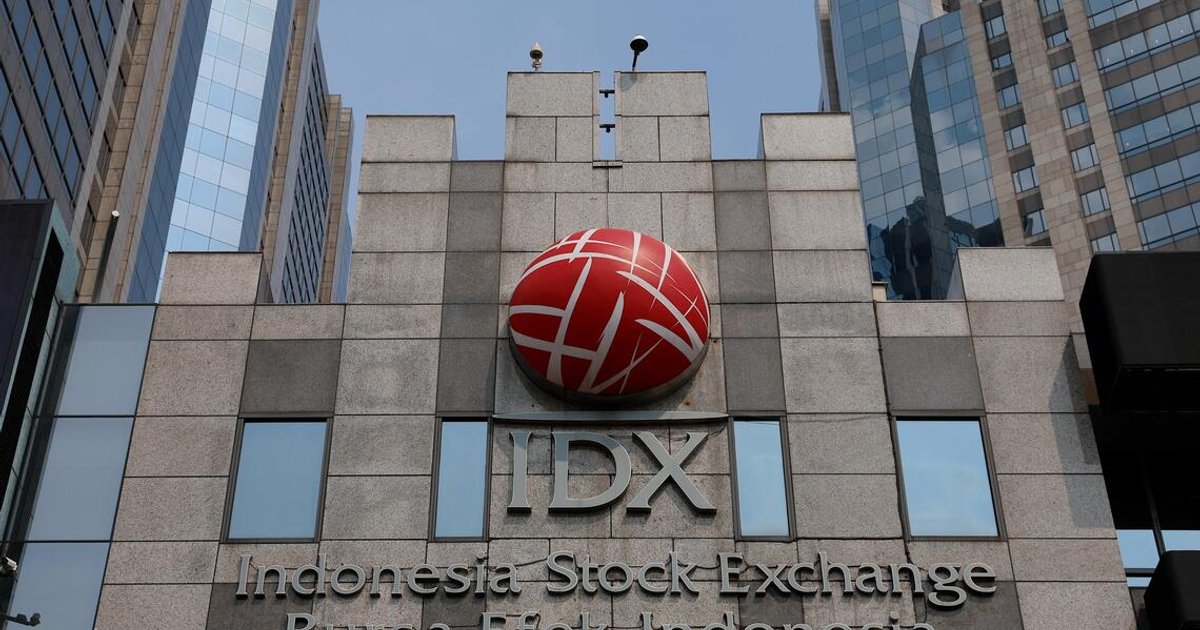
Indonesia Stock Exchange (IDX) president director Jeffrey Hendrik defended the independence of MSCI on Oct 20 following the allegations.
“We have always believed, and continue to believe, that global index providers are independent,” Jeffrey told reporters at the IDX building in Jakarta.
The controversy comes after a record two-day market sell-off following MSCI’s warning on Oct 15 of the possible removal of Indonesia from its global indexes. Among its concerns were shareholding opacity, insider trading, and regulatory enforcements.
Every year, MSCI reviews all global markets and determines whether they should be classified as developed, emerging, frontier or standalone, based on economic development, market size, liquidity and accessibility.
It has launched a consultation on whether to reclassify Indonesia from an emerging market to standalone status, a move which can be a big blow for the country as its stocks would be excluded from indices used by investors.
Any reclassification could have significant implications for Indonesian equities, including investment flows from funds that track MSCI indices, which are widely used as benchmarks for tracking different global markets.
The index provider’s move indicates that the concerns extend beyond market size or liquidity and relate to more fundamental issues involving the integrity and credibility of trading mechanisms, said Eastspring Investments, an asset management business of Prudential.
Other standalone markets include Argentina, Lebanon and Zimbabwe.
The Jakarta Composite Index fell more than 14% from Oct 16 to Oct 19 after MSCI’s warning.
However, the index recovered 5% on Oct 20, after IDX said the night before that it would expel companies with highly concentrated share ownership from its flagship index in its latest attempt to avoid ejection from MSCI’s global emerging markets benchmark.
The announcement followed a virtual meeting between the exchange and MSCI officials.
Such companies, which make up almost a fifth of the index’s combined market value, include Dian Swastatika Sentosa and Barito Renewables Energy – two of the biggest companies in the index by market value.
The exchange did not say when the expulsions would take effect.
This was not the first time MSCI has warned that it would downgrade Indonesia. It previously warned in January that it could downgrade the country from emerging to frontier market.
The Jakarta exchange has since introduced reforms, including cutting the minimum price at which a stock can trade from 50 rupiah to 1 rupiah in an attempt to promote liquidity and doubling the minimum free float – the portion of stocks available for trading – to 15% of a company’s shares.
MSCI is accepting market feedback until April 30, 2027, and will announce its decision by June 30, 2027.

