


SINGAPORE – Lower-wage workers earning up to $2,800 a month should be given a salary increase of 6% to 8%, or at least $120, the National Wages Council (NWC) said.
Employers whose businesses have done well should give their employees a pay raise of at least $135 to $170, the council said on Oct 19 in its annual guidelines on pay and employment issues.
Businesses that have not done well but are profitable or not should give their lower-wage workers a built-in wage increase at the lower end of the 6% to 8% range or at least $120, whichever is higher.
Those that have not done well and are unprofitable should still provide a salary bump of at least $120. This is a new category in the council’s guidelines this year, created in recognition of the economic difficulties faced by employers.
Bosses should review salaries and consider further pay increases for lower-wage workers if business prospects improve.
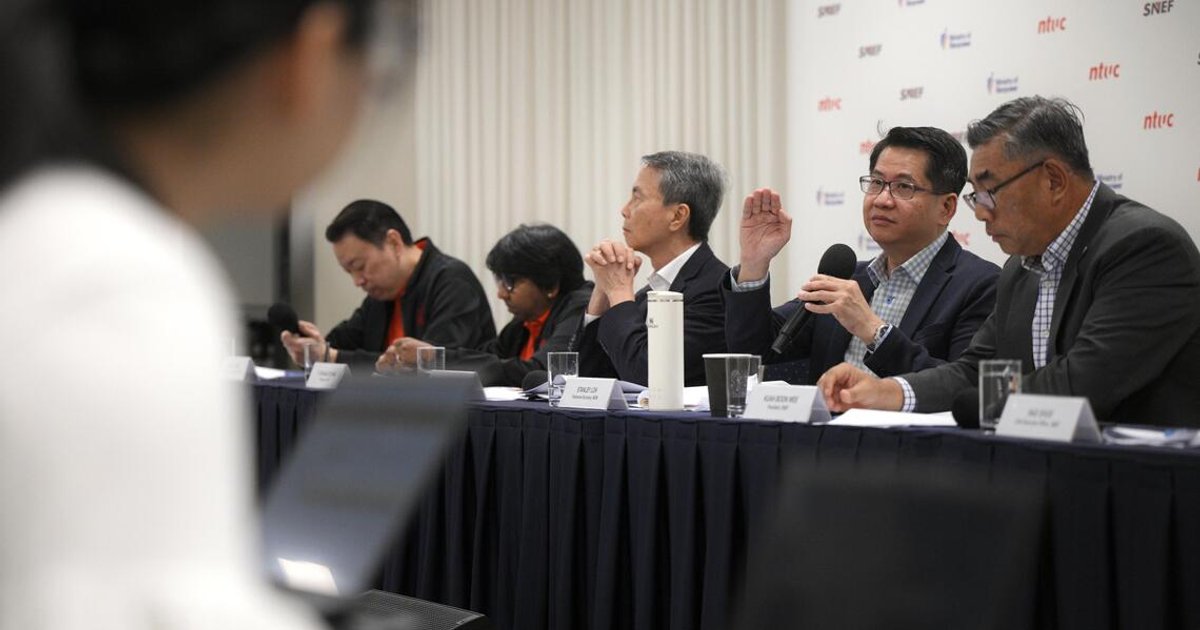
At a press conference held at the Ministry of Manpower (MOM) office on Oct 19, the ministry’s permanent secretary Stanley Loh said about a quarter of employers adopted last year’s NWC guidelines, which proposed a 5.5% to 7.5% pay rise for lower-wage workers.
However, about 60% of employers provided wage increases last year, but not up to the levels in the proposed NWC guidelines.
Singapore National Employers Federation (SNEF) president Kuah Boon Wee said many companies expressed difficulty in giving employees the proposed 5.5% to 7.5% increment last year.
“That’s why we came up with a category that hopefully will allow the percentage of adoption to go up,” Kuah said, adding about 20% of the resident workforce are earning a monthly salary of $2,800 and below.
NTUC president K Thanaletchimi said there are safety measures in place, such as the Industrial Relations Act, to ensure employers are transparent with their financial performance.
“When you are transparent, you build trust with your workers,” she said.
The guidelines apply to all employees in both public and private sectors.
They were accepted by the Government but are not compulsory, and were proposed for the period from Dec 1, 2026, to Nov 30, 2027.
The council, which consists of the government, employer and labour movement representatives, convened from August to October 2026 to formulate the guidelines.
The recommendations come amid a stronger-than-expected overall performance of the Singapore economy and continued uncertainty in the economic outlook.
Gross domestic product growth for the rest of the year will be supported by outward-oriented segments and sectors that are plugged into the artificial intelligence (AI) technology cycle despite continued weakness in sectors affected by Middle East supply disruptions, said the council.
Kuah added: “Notably, the food and beverage is a sector that has been struggling. That’s why for this year, achieving a balance is important because no employers are the same.”
NWC chairman Hsieh Fu Hua said the council calls for a “positive-leaning approach” to wage increases, even as business performance and productivity growth have not been consistent across sectors.
So employers should have the flexibility to calibrate wage increases to their specific business performance and prospects.
Meanwhile, the council urged employers to implement the Flexible Wage System (FWS) in full, which comprises both the annual variable component and the monthly variable component, if they have not done so.
The FWS enables employers to maintain wage flexibility during adverse business conditions to sustain their businesses by cutting costs rather than jobs, NWC added.
Building AI-related capabilities
The guidelines also proposed that bosses and workers build the capabilities needed to thrive in an AI-enabled economy.
“AI presents significant opportunities to raise productivity, create new sources of value and strengthen Singapore’s competitiveness,” said NWC in its press statement.
According to data from an employer supported training survey by MOM, the proportion of employers who provided structured training to employees fell to 64% in 2025, down from 66.4% in 2024. The proportion of employees receiving structured training also dipped from 52.6% in 2024 to 48.1% in 2025.
MOM’s Loh emphasised the Government’s support for NWC’s call for employers to take a proactive approach to invest in enterprise transformation, and for employees to update their skills.
For employers, the council recommended helping employees prepare for future job roles such as an AI ethics officer or green tech specialist, and equip them with new skills as industries evolve.
This includes supporting employee-initiated training and tapping subsidies provided for Skills and Workforce Development Agency-funded training programmes.
Employers should also adopt AI effectively and responsibly, and redesign jobs in tandem with business transformation to increase productivity. Employers can do so by leveraging transformation support such as through NTUC’s job placement support and training programmes.
Another proposal was encouraging human resources (HR) practitioners to upskill and obtain the Institute for Human Resource Professionals (IHRP) Certification, strengthening capabilities to support work transformation.
For workers, they should strengthen their AI literacy alongside domain expertise, judgement and human skills to become “AI bilingual” individuals. These AI-relevant skills will enable them to access opportunities across firms and sectors.
NTUC’s Thanaletchimi urged employers to provide workers with protected time to build relevant skills and take on a higher-value added job, especially in the area of AI.
“In practical terms, this means planning workloads and work arrangements so that employees can attend relevant training without having to compromise their work responsibilities or solely rely on their personal time.”

