


SINGAPORE – IOI Properties chief executive Lee Yeow Seng is betting billions on Singapore’s Central Business District (CBD), which he regards as the best location for property investments in the country.
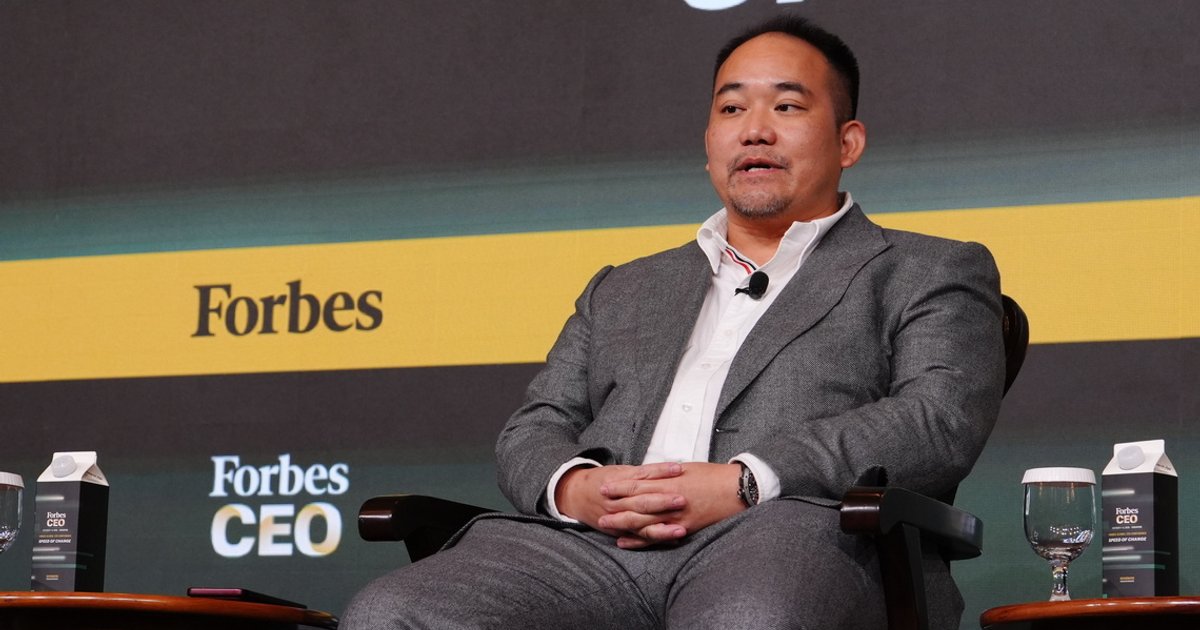
“If you want to invest in properties, location is always the most important overriding consideration,” he told The Straits Times in an interview on the sidelines of the Forbes Global CEO Conference in Singapore on Oct 7.
“There’s no better address and location than Marina Bay.”
Underlying that bet is Lee’s belief that Singapore has established itself as a safe haven for high-net-worth individuals, whose presence in the Republic will support demand for prime offices, luxury homes and high-end hotels.
“Rich people, when they look to park their money, the first thing they look at is safety,” he said.
“I think Singapore has managed to brand itself very well as a safe haven for rich people. And probably now, after the Middle East conflict, there isn’t any country safer than Singapore.”
The arrival of more rich people to the Republic would also draw multinational companies and create demand for the best property offerings.
“When high-net-worth individuals come in, they want nothing but the best,” Lee said. “That is the segment I think is still very much underserved.”
This explains IOI’s focus on the CBD, where it has assembled a portfolio spanning offices, hotels and luxury residences.
CBD focus
These include IOI Central Boulevard Towers, which it built from scratch after acquiring the site in 2016; South Beach, which it fully owns after buying out City Developments’ 50.1% stake for around $835 mllion in September 2025; and Asia Square Tower 2, which it bought from CapitaLand Integrated Commercial Trust for $2.5 billion in April.
According to The Business Times, IOI Properties and CapitaLand Investment are now conducting exclusive due diligence for the proposed acquisition of One Raffles Place, after jointly submitting a 50-50 bid to owners OUE Reit and UOB.
If completed, the deal would broaden IOI’s exposure to the Downtown Core.
One Raffles Place, which comprises two office towers of 62 and 38 storeys respectively, as well as a six-storey retail podium, also sits on an exceptionally long 841-year lease. The development has an indicative value of between $2.3 billion and $2.4 billion.
Asked about his confidence in Singapore’s CBD, Lee said the limited supply of land, as well as the Government’s control over its release, gives property investors greater certainty.
“You feel very secure investing in properties in Singapore because the supply is controlled and very limited.”
He added that land for new Grade A office developments in the CBD has not been released for about 10 years.
Lee is bullish on CBD offices despite the growth of flexible working and government efforts to decentralise jobs to commercial centres outside the CBD, saying companies and employees continue to value a prestigious downtown address.
“If I’m a worker, I would still prefer to work in the city centre because it is much more glamorous,” he said.
“You want to tell people that you work for a company that has an address in the CBD. You feel more proud and you feel happier working downtown because there are many more amenities and transport links.”
IOI Central Boulevard Towers is within reach of several MRT stations and sits close to Marina Bay Sands, for example. The convenience and prestige has also allowed the development to command higher rents of close to $18 per sq ft, compared with about $8 psf a decade ago.
The group has also raised rents at Asia Square Tower 2 since taking control of the property.
“When we first purchased the property, the average rent was only about $11. Now we are getting renewals at $13 to $14.”
More ultra-luxury hotels
IOI’s investments in the CBD extend beyond office towers. Lee said mixed-use developments allowing people to live, work and spend their leisure time in the same district represent both the present and the future of cities.
“People go for convenience. They want access to a lot of amenities and to live, work and play near one another.”
At Marina View, IOI is developing the 683-unit W Residences Marina View, which comes integrated with a W hotel of about 360 rooms. Unlike standalone serviced residences, occupants of W Residences will be able to draw on the hotel’s services, including housekeeping and dedicated butlers.
“You can have a dedicated butler who can help walk your dog when you are not free and take care of your home when you are not around,” Lee said.
He believes demand for such homes will grow as Singapore continues to attract highly paid expatriates and becomes more affluent.
The group is also bullish on the top end of the hotel market. Besides the W hotel, it owns the more than 600-room JW Marriott at South Beach, while the redevelopment of Shenton House, which will commence in 2027, is expected to have about 200 hotel rooms.
Lee said Singapore has more than enough three- and four-star hotels, as well as entry-level five-star properties, but remains underserved by ultra-luxury brands.
He pointed to names such as Bulgari, Aman and Armani, which operate in other global cities but not Singapore.
“Singapore continues to host a lot of big international events, such as the Forbes CEO Conference and Formula One, but there aren’t such hotel options for high-net-worth visitors to choose from.”
If IOI secures another CBD site, Lee said offices would be his first choice. Residential development would rank last because of the additional buyer’s stamp duty, particularly the 60 per cent rate imposed on foreign purchasers.
Lee called for the Government to review the way it awards land, arguing that repeatedly selling sites to the highest bidder places upward pressure on home prices.
“If it is always based on competitive bidding, land prices can only go one way,” he said.
“When land prices are high, there’s no way developers can underprice their products. The next launch will always be higher than the earlier launches.”
Listing a Singapore Reit
In the meantime, Lee said the game plan is to monetise IOI’s Singapore assets to reduce its borrowings. He noted that the group’s debt is currently equivalent to nearly 80% of its shareholders’ equity.
Lee, 47, is the younger son of the late Lee Shin Cheng, founder of Malaysia palm oil and property conglomerate IOI Group. He inherited a stake in the empire in 2019 and now runs the property business, which generates most of its income from developing malls and townships in Malaysia. Singapore is its second largest market, followed by Xiamen, China.
Part of his plan is to monetise several Singapore assets by offloading them into a yet-announced Singapore-listed real estate investment trust (REIT), as well as a separate private fund.
According to BT, IOI Central Boulevard Towers and the South Beach office tower have been identified as the first assets for the fund.
“By launching these kinds of funds, we will be able to deleverage ourselves and give ourselves more room to acquire more assets in the future,” Lee said, adding that IOI would also participate in future government land tenders if suitable CBD sites became available.
Asked what the group wanted to acquire next, he declined to disclose specifics, but left little doubt about where he would be looking.
“Marina Bay,” he reiterated, “is the best address in Singapore.”

