


SINGAPORE – Every two to three months, brothers Aaron Kishen Arun Pandian Pillai, 11, and Leon Shrishen, nine, join UOB volunteers on shopping trips organised by Children’s Wishing Well.
Each child gets a $50 FairPrice voucher, sponsored by the bank, to purchase groceries and household essentials under the Fresh Groceries for Every Student’s Home (FRESH) programme.
Children’s Wishing Well started FRESH in 2019 to teach financial literacy to children and youth from low-income families. The charity also equips these children and youth with other essential life skills, such as career readiness and personal development, through its other enrichment programmes.
To stretch their dollars, the children must compare prices, prioritise needs, and make their own purchasing decisions.
The initiative gives the children a chance to learn more about budgeting and apply what they have learnt in school about managing their expenses.
It is one of a slate of hands-on programmes supported by local banks to reinforce the lessons on saving, spending and budgeting that children are taught in primary school. UOB has partnered with Children’s Wishing Well on this initiative since 2022.
Budgeting lessons in the cart
The July 22 shopping trip that The Straits Times tagged along on was 11-year-old Aaron’s eighth outing with volunteers from UOB Heartbeat, the bank’s flagship volunteering programme.
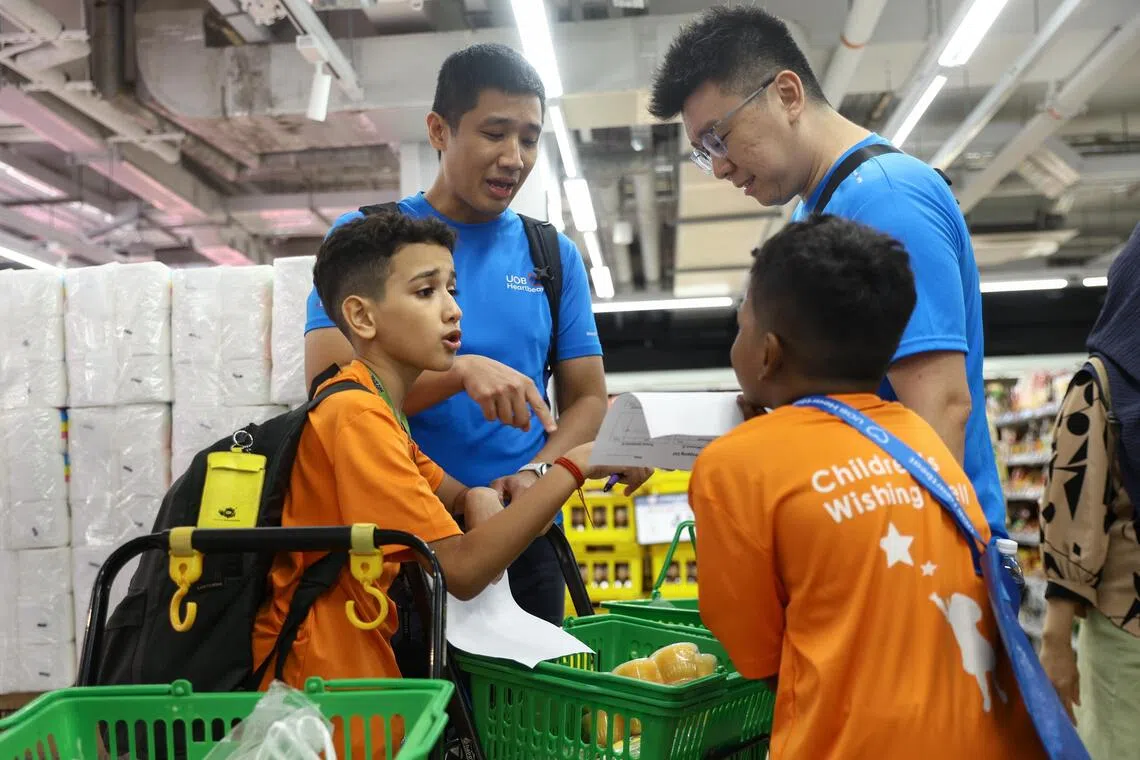
(From left) Aaron Kishen Arun Pandian Pillai, 11; UOB Heartbeat volunteers Lim Gene Harn and Derrick Sin; and Aaron’s brother Leon Shrishen Arun Pandian Pillai, nine, discussing how to deconflict their shopping lists.
ST PHOTO: SARAH LEE
Proclaiming himself the family’s “household planner”, he remarked: “My brother will buy the wrong brand, so I have to keep an eye on him.”
Aaron managed his budget tightly that day, spending $50.02, including $3.91 on sweets – just under the $4 allowed for snacks.
“My school organises workshops for us to learn,” Aaron shared. “I picked up budgeting and spending tips at the workshops, which I now apply to my shopping trips.”
Besides the two brothers, there were eight other child beneficiaries, each paired with a UOB volunteer.
Among them was Derrick Sin, vice-president of group retail (risk), a first-time volunteer on these shopping trips.
Sin, who was paired with Leon, recounted how the young boy initially wanted to buy a bunch of grapes that cost nearly $10. Knowing it would use up a fifth of his total funds, he hesitated.
But after further thought, Leon chose the healthy fruit option over an unhealthy Coca-Cola drink and gave up a few other items as well.
“He was able to make that trade-off himself,” said Sin, who also observed how Aaron managed his own shopping expenses.
When the older boy’s assigned volunteer forgot to track the price of each item in their basket, the 11-year-old stepped up and went to the counter to verify the tally.
Watching Aaron take charge, Sin was impressed. He recalled thinking, “This boy really knows what he is doing.”
Jane Lai, UOB senior vice-president of talent and development, noted that the children are forced to make choices during these shopping trips and consider what they must give up if they choose one item over another.
The July event was her third time volunteering, and she was paired with eight-year-old Jariss.
At one point, the girl felt torn between a Korean brand of instant noodles that cost more than $8, which her sister likes, and the cheaper Indomie alternative her family had asked her to get. She picked the more affordable option, leaving her enough cash for a $2 snack.
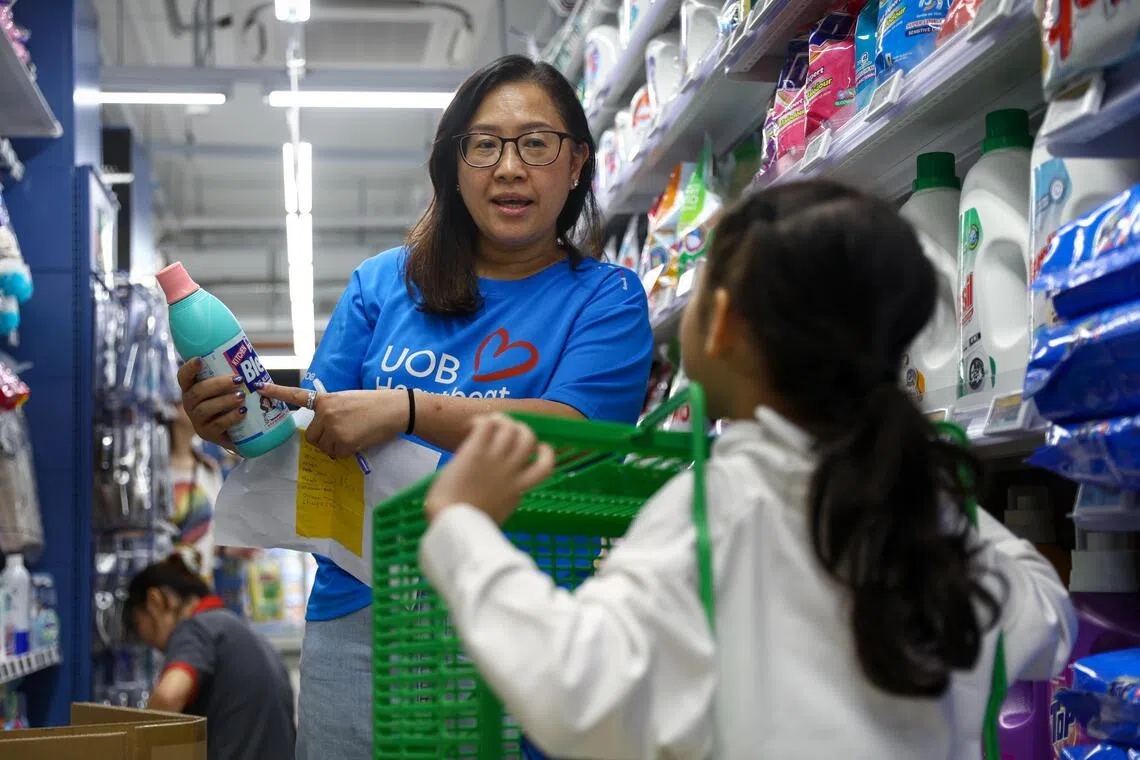
UOB Heartbeat volunteer Jane Lai (left) pointing out the bleach on Jariss’ shopping list.
ST PHOTO: SARAH LEE
Exposing children to real-life situations builds early financial awareness to ensure they become savvy consumers, Lai said.
She mused that she should have given her two children, now in their twenties, similar hands-on shopping experiences when they were younger.
“In hindsight, I would have pushed a lot more of this (financial) discipline,” she reflected. “Protected kids like ours tend to be less resilient as they grow up.”
To date, UOB Heartbeat volunteers have participated in about 50 grocery shopping sessions, which are organised twice a month, supporting more than 700 children.
Leonard Tan, the bank’s head of group corporate social responsibility, said that alongside efforts to support education and build self-confidence, financial literacy is an important pillar to help children from disadvantaged backgrounds build long-term resilience:
“By equipping young people with positive money habits and practical financial skills from an early age, we hope to empower them to make informed decisions for themselves and their families,” he added.
OCBC has also been taking children from lower-income families on guided grocery-shopping trips since 2024, in partnership with the Ministry of Social and Family Development’s ComLink+ initiative.
During each session, volunteers from the bank share basic money-management tips with the children, such as prioritising needs over wants and making the most of their given budget.
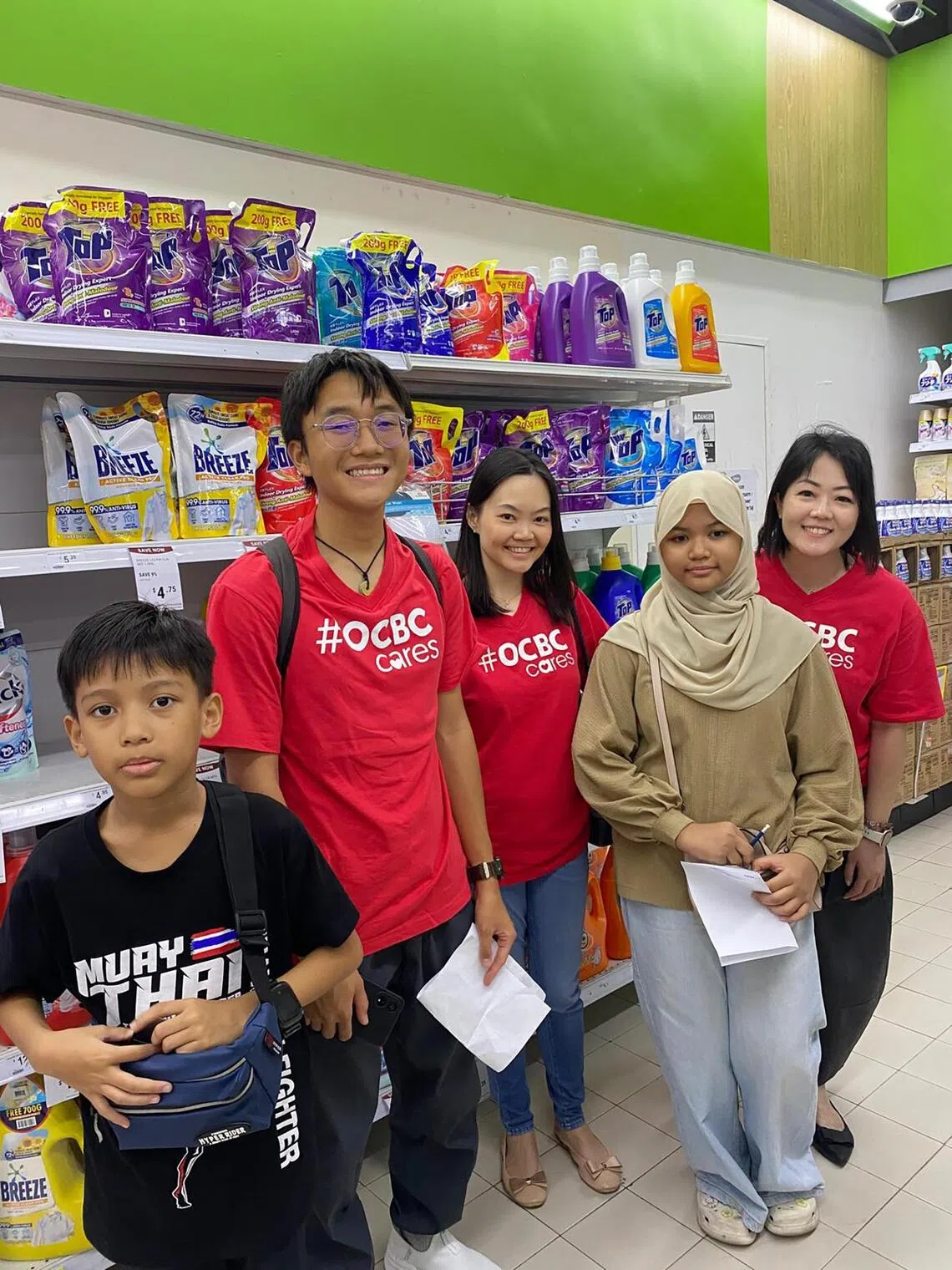
OCBC volunteers with siblings Ryyan Aaryz, nine, (in black) and Mikhayla Milan, 11, (in brown) during a grocery run, where the children were taught the importance of budgeting and making informed nutrition-focused decisions.
PHOTO: MINISTRY OF SOCIAL AND FAMILY DEVELOPMENT
To date, over 100 children have taken part in more than 50 grocery trips.
“By combining basic financial literacy with practical lessons at the grocery store, we hope to boost children’s skills and confidence, allowing them to apply these lessons in their daily lives,” OCBC noted.
Fin-lit play spaces
Taking a different route, DBS puts a “playful twist” on financial education by weaving money management concepts into its POSB Forestlands indoor play zone at Curiosity Cove within the Mandai Wildlife Reserve.
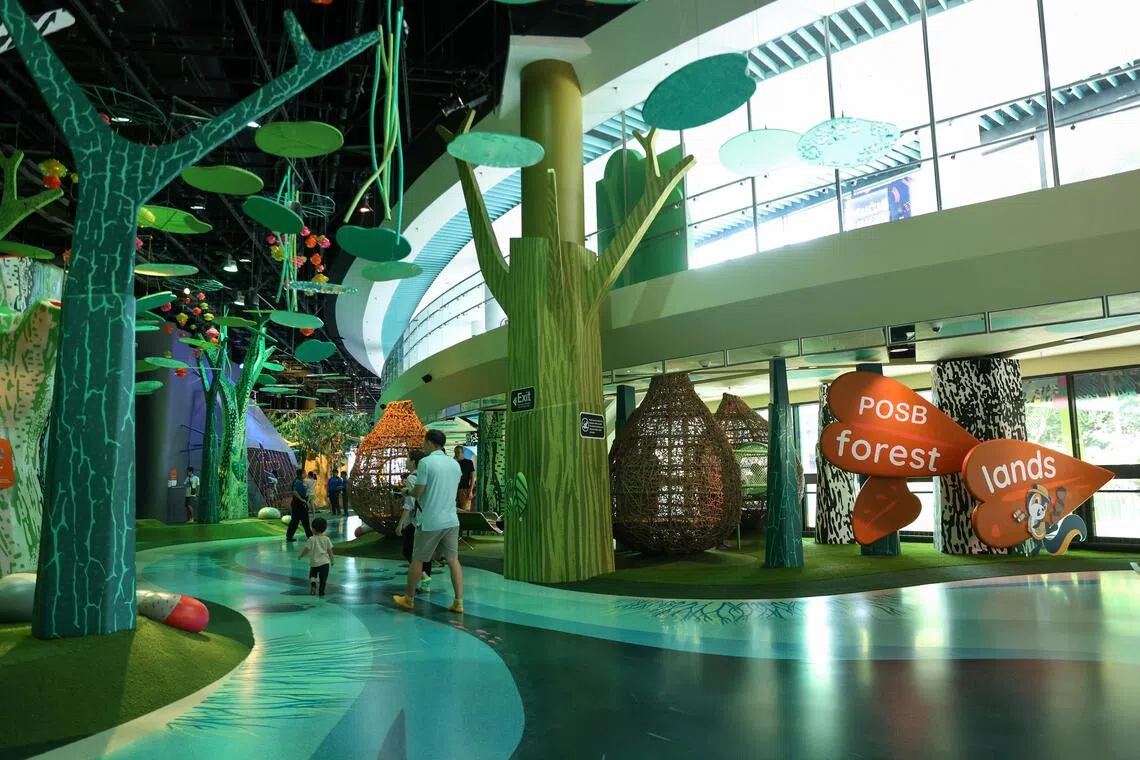
POSB Forestlands blends wildlife exploration with financial literacy.
ST PHOTO: SARAH LEE
Nelson Neo, DBS’ head of retail banking and head of POSB, said: “Beyond just going there to play, we focus very much on the learning experience.”
To achieve this, the bank curates storytelling sessions featuring Smiley the squirrel on selected Saturdays, alongside a forest adventure trail that young visitors can explore.
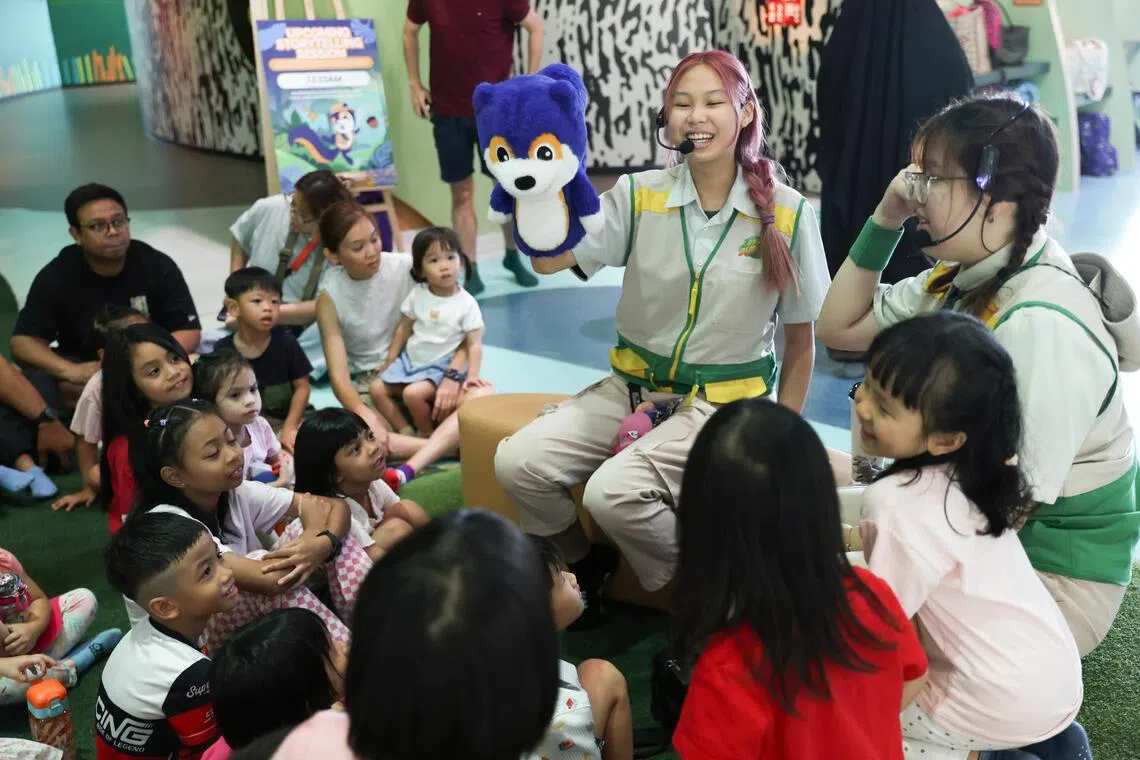
A storytelling session with Smiley the squirrel imparts lessons on wants and needs and the importance of saving money.
ST PHOTO: SARAH LEE
Nine-year-old Zyaul Haqq said Smiley’s story reminded him to differentiate between needs and wants and to save money.
He proudly added: “I actually learnt everything before.”
Goh Jia Xuan, seven, enjoyed the Smiley story because “it was funny”.
“I learnt that I should spend on my needs first, then my wants,” she added. “It was more interesting than learning in the classroom.”
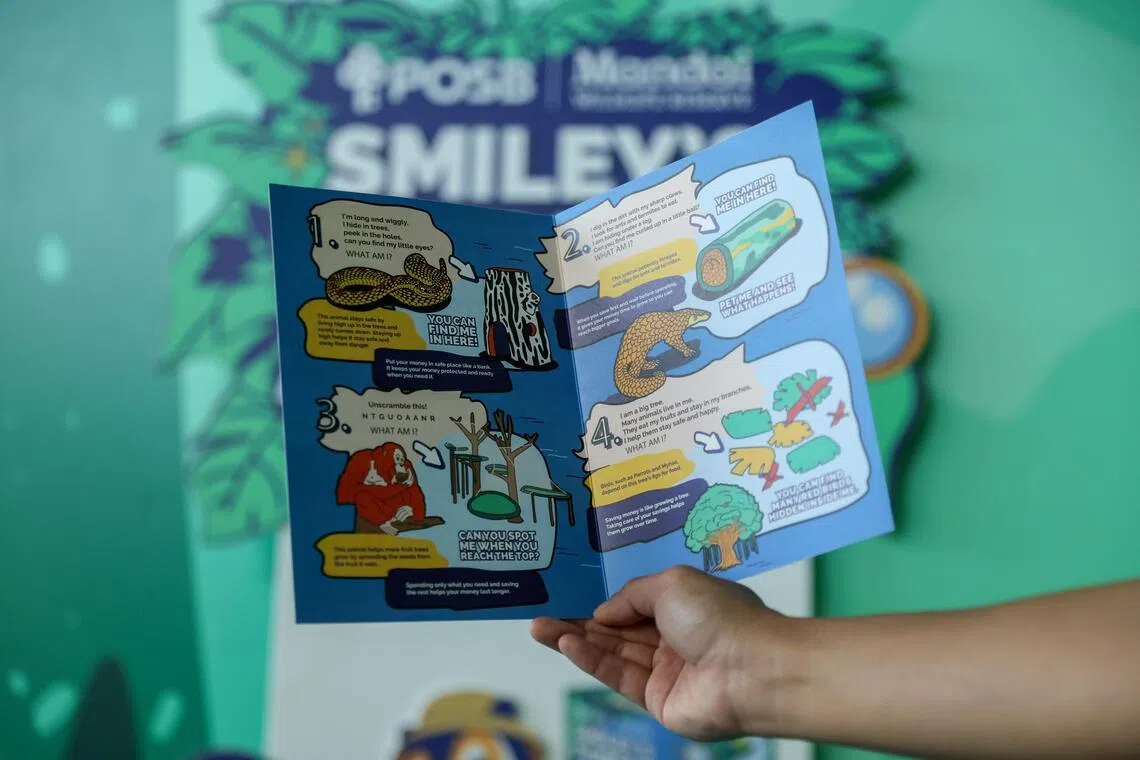
The Smiley Adventure Trail booklet contains money tips for children.
ST PHOTO: SARAH LEE
As for the adventure trail, kids pick up an activity booklet which introduces some ideas around saving and spending in a relatable manner, with tips like:
-
“When you save first and wait before spending, it gives your money time to grow so you can reach bigger goals.
-
“Spending only what you need and saving the rest helps your money last longer.”
-
“Saving money is like growing a tree. Taking care of your savings helps them grow over time.”
The more adventurous can venture outdoors for the Super Savers Trail, where they take part in six interactive financial literacy missions at physical checkpoints around Mandai.
They earn digital points when they complete the challenges and submit their answers via a web app, which go towards funding a new ranger buggy for the park’s animals. The children are rewarded with a Super Savers badge or a POSB Smiley blind box as well.
Parents are encouraged to join their children on these adventures, making this a good opportunity for family bonding.
Emphasising that parents are important partners in the learning journey, Neo said: “We want the parents to be part of the experience and to be able to participate with the kids.”

