


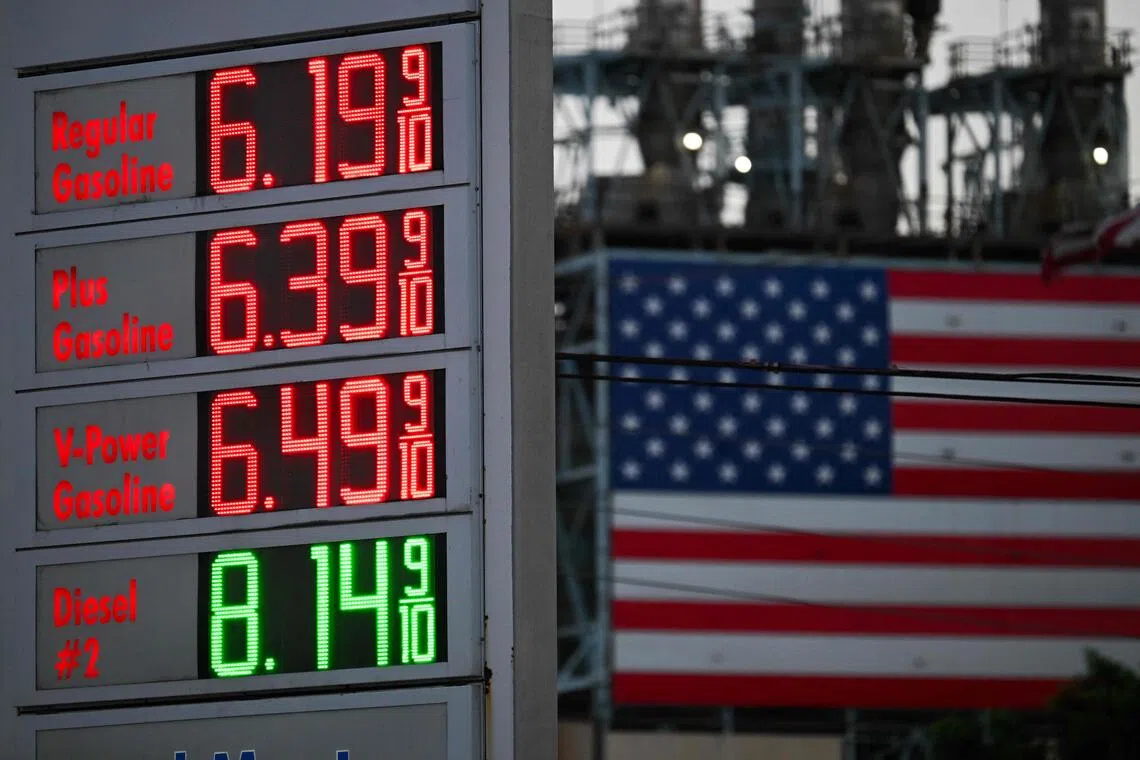
HOUSTON – Oil prices fell US$2 after European leaders agreed on Oct 2 to a request by US President Donald Trump to release diesel from their reserves to lower prices and reduce the need to import fuel from America.
Brent was down US$1.80, or 1.76%, at $100.50 a barrel at 10.49am CDT (12.49am on Oct 3 in Singapore). West Texas Intermediate dropped US$2.02, or 2.18%, to US$90.85 a barrel.
For the week, Brent was down about 2.84% so far with WTI around 1.54% lower.
European Union countries agreed to a French proposal to release additional diesel stockpiles, a source familiar with details of the discussion told Reuters.
“Europe has just agreed to release a massive amount of their heavily stocked Diesel Oil,” Trump wrote in a post on Truth Social.
Previously, Trump had said he was mulling a ban on US diesel exports.
“Europe is feeling pretty vulnerable,” said Phil Flynn, senior analyst with the Price Futures Group.
“Europe would be one of the areas to suffer the most if we put an export ban on diesel.”
French proposal
EU governments acted after discussing the proposal by France for European countries to release 50 million barrels of diesel, and for International Energy Agency members to release 50 million barrels of crude oil, three sources familiar with the discussions told Reuters.
Under the proposal, Europe would release part of the diesel volumes in a 20-day period, two of the sources said.
French President Emmanuel Macron chaired a videoconference with G-7 leaders on Oct 2, the Elysee Palace said. It was not immediately clear if G-7 countries had agreed to France’s proposal on the volumes of fuel to be released.
“This highlights that the main stress in the energy market is no longer crude availability, with Middle East flows recovering, but rather refined product supply, constrained by reduced refinery capacity and output across the Middle East and Russia,” said Ole Hansen, head of commodity strategy at Saxo Bank.
On Oct 1, prices settled higher after Reuters reported that Chinese refiners had suspended oil product exports for October, looking to preserve domestic stocks.
Also supporting prices, the Wall Street Journal reported that the US was sending a third aircraft carrier and up to 10,000 more troops to the Middle East as Trump weighed resuming strikes on Iran after the midterm elections.
Hamad Hussain, senior climate and commodities economist at Capital Economics, said another release of oil stocks “could be enough to help tip the overall market back into a slight surplus if the recent pick-up in flows from the Middle East is sustained”.
Barclays said in a note that despite better crude flows out of the Middle East, physical market fundamentals remained strong, with inventories still being drawn, and prompt cargoes commanding steep premiums over forward prices. It raised its fourth-quarter Brent forecast by US$20 a barrel to US$115 and lifted its 2026 forecast to US$100 a barrel.
Elsewhere, Ukraine has struck oil facilities in Russia’s Samara and Volgograd regions over the past 24 hours, President Volodymyr Zelensky said on social media on Oct 2.

