


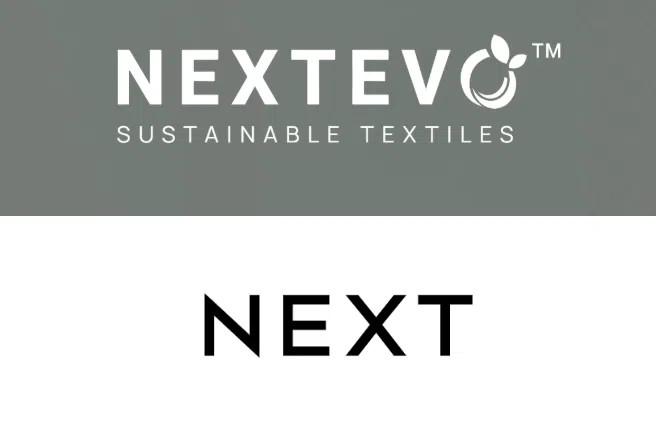
SINGAPORE – British fashion and homeware retailer NEXT has lost its bid to invalidate the trademarks of Singapore sustainability company NEXTEVO, after a dispute over whether the two names were too similar.
The Intellectual Property Office of Singapore (IPOS) found that the NEXTEVO marks were not similar to NEXT’s existing registered trademarks visually, aurally or conceptually, according to grounds of decision issued on Sept 23.
NEXT Holdings had applied to invalidate two trademarks registered in April 2022 by NEXTEVO Holdings, including a plain “NEXTEVO” word mark and another incorporating a leaf design.
The NEXTEVO marks cover goods in Classes 23 and 24, including threads, yarns and textiles.
The fashion retailer had argued, among other things, that the common “NEXT” element made the marks similar and that the “EVO” portion of NEXTEVO could be understood as an abbreviation of the word “evolution”.
But principal assistant registrar Tan Mei Lin was unconvinced, at one point observing that the parties’ arguments over the meaning of “Evo” had taken the proceedings on something of a detour.
“At this point, it has become clear that the parties’ argumentation and this inquiry have gone on a scenic romp,” she said in her decision.
She later described the question of whether “evo” was an accepted abbreviation of “evolution” as a “red herring”, saying the real question was whether the concepts behind NEXTEVO and NEXT were similar.
She found that they were not.
Invented word, unfamiliar to the public
While “next” is an ordinary English word with a well-established meaning, NEXTEVO is an invented word that would be unfamiliar to the public, she said.
Even if some people understood NEXTEVO to mean “next evolution”, the idea of evolution would significantly alter the concept and take the mark further away from the meaning of NEXT, she added.
The two companies operate in different parts of the fashion and textile ecosystems.
NEXT is a British retailer founded in 1864 that sells fashion products, including clothing and footwear, as well as home and household products.
The fashion retailer said it has about 450 stores in Britain and more than 180 franchised stores elsewhere, including in Asia, Europe and the Middle East. It also operates an online store.
NEXT said its trademarks had been used here since around 2012, and its products can be purchased here on its Singapore website and other shopping platforms such as Zalora.
NEXTEVO, meanwhile, is a Singapore company that transforms agricultural waste like pineapple leaves and coconut husks into environmentally friendly materials and products.
It supplies its materials to fashion brands, textile mills and manufacturers for further processing, rather than primarily selling finished consumer products. The company has operations in Singapore, Indonesia and Thailand.
In its counter-statement, NEXTEVO said that its name was coined by combining “NEXT” with “evolution”, reflecting its aim of turning agricultural waste into natural and environmentally friendly materials.
Why NEXT’s bid failed
Despite that derivation, the registrar found that trademarks had to be perceived as wholes and said it would be “contrived” to split the invented NEXTEVO name into two components and treat NEXT as its dominant concept.
NEXT also alleged bad faith, arguing that NEXTEVO should have known about its earlier NEXT trademarks.
The fasion brand also said the Singapore company was seeking to ride on the goodwill and reputation attached to its trademarks.
NEXT’s case failed on both these grounds of bad faith and passing off.
The registrar found that these claims had not been established, noting that the NEXTEVO trademarks were distinctive when viewed as a whole and that there was no reasonable likelihood of confusion.
“The fact that they contain the letters ‘NEXT’ is incidental because the registered marks are perceived as wholes, and are distinctive as a whole,” she said.
She also found no bad faith in NEXTEVO registering its marks in Classes 23 and 24 to protect its fibres, threads, yarns and textiles.
NEXT’s applications for a declaration of invalidity ultimately failed on all grounds, leaving both NEXTEVO trademarks registered.
NEXT was ordered to pay NEXTEVO $14,450 in costs, including disbursements.

