


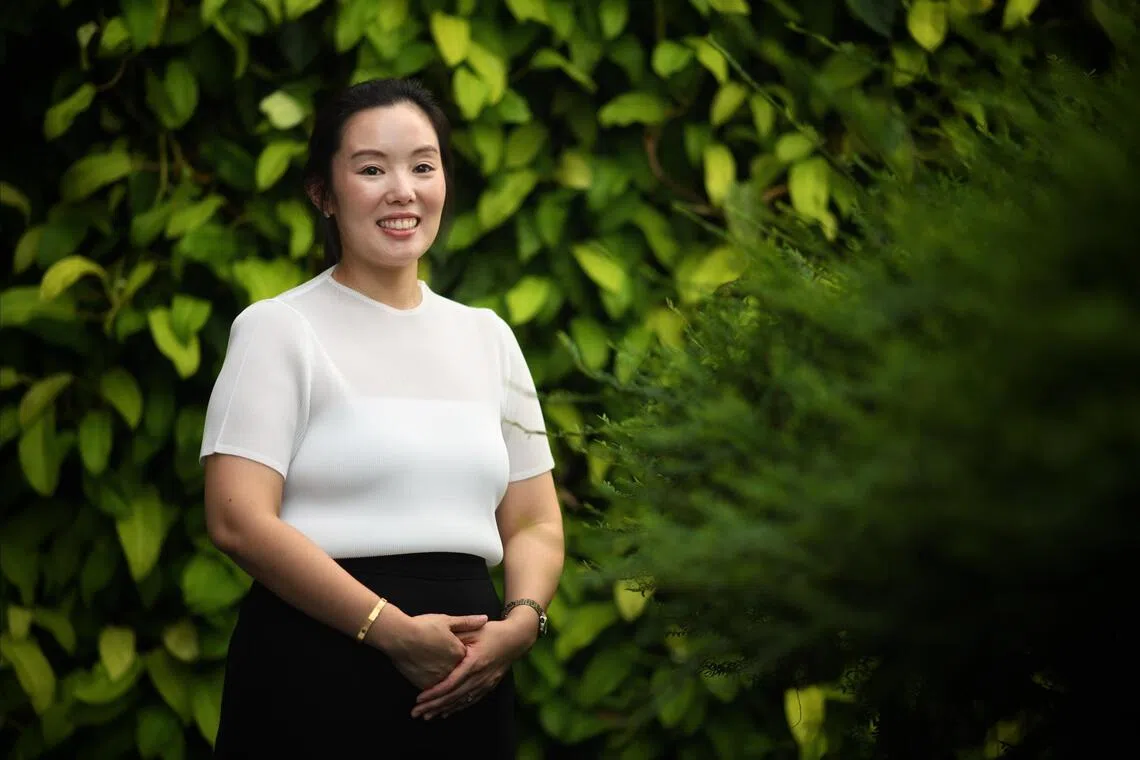
SINGAPORE – Nicolette Ng runs 12 education centres in Singapore, providing English writing enrichment to students.
Her business, Write Edge, had humble beginnings, operating out of a four-room HDB flat when Ng was 24 years old.
Ng, 36, recalled the early days when she had just 12 students in 2014.
“My mother encouraged me to move to a small 130 sq ft shop unit, and from there, we grew to 60 students in a span of six months,” she said.
She was then joined by co-founder Eileen Chin, and the business expanded by one shop a year over the next 12 years. By February 2027, she will have opened two more centres, taking the total to 14.
Ng said: “In the early years, I thought success came just from working hard and moving fast. But as the company grew, I learnt that leadership also requires emotional resilience, self-awareness and the ability to navigate uncertainty, criticism and change.”
She added that growth amplifies both her strengths and her blind spots. “I had to learn how to delegate, trust people, communicate more clearly and build systems that could scale beyond me,” Ng said.
Ng also worked in communications and media, including at Singapore Press Holdings and Weber Shandwick. She handled media monitoring and content development, and supported regional projects.
Ng holds a master’s degree in education (English language) from the National Institute of Education and a bachelor’s degree in English literature from Nanyang Technological University.
She is married to a senior product manager in a technology company and they have a five-year-old child.
Do you invest in anything?
I invest in the business itself – whether it is building stronger teams, improving our curriculum, or putting resources into systems that allow us to scale well.
I also invest in my own development – through structured programmes, mentorship, retreats, workshops or any exposure that helps me become a better professional and leader.
Financially, I take a longer-term view and focus on stability rather than chasing quick returns. Over time, I have found that these are the investments that compound.
What was your first exposure to investing?
My first investment was in an SGX-listed exchange-traded fund. I chose it because it offered diversification and was a straightforward way to start investing without needing to pick individual stocks.
What has been your biggest financial mistake?
In the early years of running the business, I made decisions in hiring and expansion that were more optimistic than disciplined.
My biggest financial mistake was waiting too long to close an underperforming branch. More recently, we closed our Woodlands branch after investing about $300,000 in it. We kept looking for ways to turn it around, but in hindsight, I should have made the decision earlier.
It is a costly reminder that a good programme does not automatically succeed in every location. We still believe in taking calculated risks, but we look more closely at parent demand, pricing and location fit before committing capital to a new centre.
What has been your best financial decision?
I think some of my better financial decisions have come from staying disciplined and taking a longer-term view.
About three years ago, I bought a home ahead of a period when the property market strengthened, and it has since appreciated by about 15 per cent. On hindsight, the timing worked out.
I also bought a brand-new car for around $75,000 when certificate of entitlement prices were relatively low. While it is not an investment, it turned out to be a sensible decision.
I also set up automated savings plans early on, which help me invest consistently without needing to actively manage it.
Lastly, investing in the business has been the most meaningful decision. What started small has grown steadily over time, and it has reinforced for me the value of patience, consistency and focusing on what compounds.
Moneywise, what were your growing-up years like?
When I was growing up, we were quite a “financially average” family. My mum was a hairdresser and my dad was a hawker, and there were years when we had to make do with less.
What I remember most is how hard they worked. My dad woke up at 2am every day to go to Pasir Panjang Market, and my mum worked long hours before eventually starting her own salon.
Growing up watching my father run his hawker business shaped me in many ways. He taught me the importance of hard work and being a good person. He was always kind-natured, even-tempered and very, very hardworking.
These experiences shaped how I think about money. I do not take income for granted and I value discipline and consistency. At the same time, my mum was quite entrepreneurial and she was the one who encouraged me to start my tuition business.
What was your childhood dream?
I wanted to be a singer. I even made it to the top 10 in my secondary school singing competition. That was probably wishful thinking, and I think the judges were being kind.
Did you do any part-time jobs?
My first jobs were a mix of part-time roles. I did everything from distributing fliers to selling clothes at Robinsons Singapore.
What was your most memorable encounter with money?
One of my most memorable encounters with money was when I first started earning through my business. For the first time, I had customers paying me on a monthly and termly basis, and there was suddenly a lot more money coming in than I was used to. That was when I realised money is not just about earning, but about managing it well.
Where’s home for you?
I live in a freehold private condominium in the Kovan area.
Do you drive?
I drive a Tesla Model Y Juniper. It is my husband’s dream car.
What would your perfect day look like?
My perfect day would be a mix of meaningful work and time with family.
I would start the day unhurried, maybe with a bit of quiet time, then spend a few focused hours on work. The rest of the day would be with my family doing something simple together, and having the space to slow down.
Money Matters
What would you do if you suddenly had a windfall of $1 million?
I would invest most of it.
At this stage of my life, I think more about long-term stability. I might set aside a small portion for family or experiences but the bulk would go towards growing it over time.
If you suddenly only had $100 to your name, what would you do with it?
I would be very careful with how I use it and, if possible, I would use it to get back to earning as quickly as possible.

