


NEW YORK – Bond markets came under renewed pressure on Sept 24 with US 30-year bond yields hitting a more than 20-year high as rising oil prices reignited concerns about higher inflation and more Federal Reserve interest rate hikes.
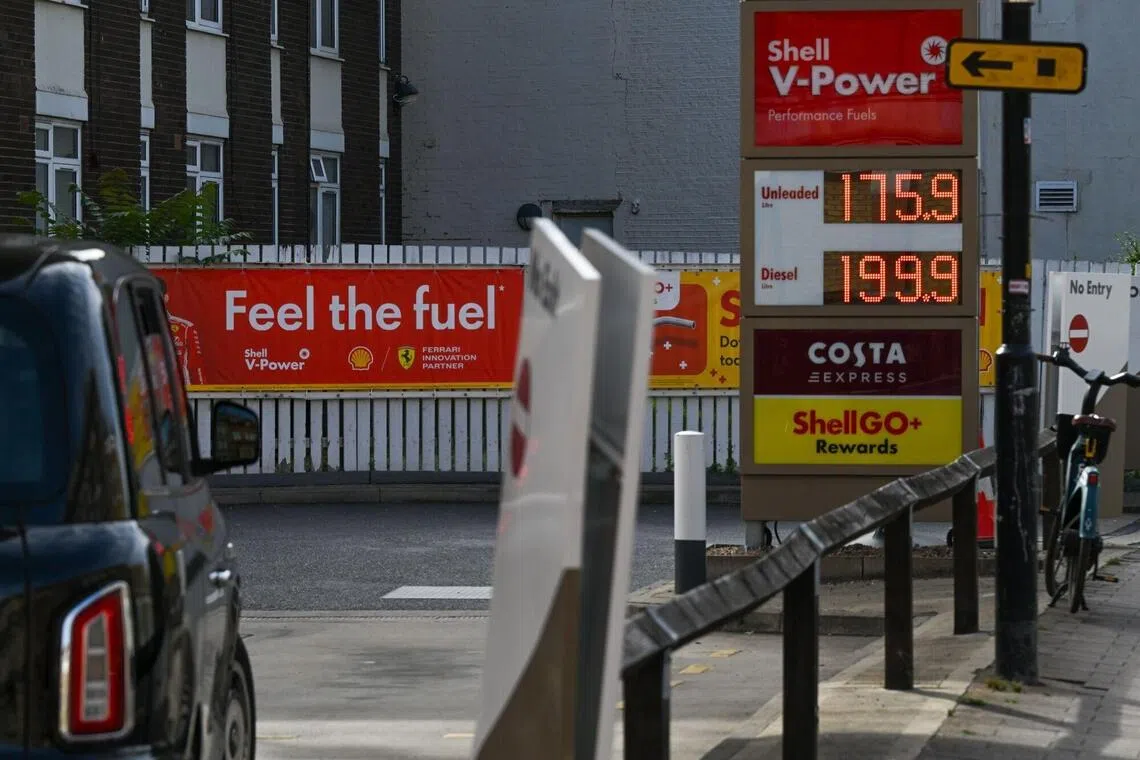
Oil prices climbed about 3 per cent to a one-week high after a Houthi missile attack on Saudi Arabia revived fears of supply disruptions, but trade was volatile and prices came off session highs after reports the US and Iran discussed reopening the Strait of Hormuz.
The interest-rate-sensitive US 2-year note rose 2.51 basis points to 4.92 per cent.
The yield on benchmark US 10-year notes increased 8.17 basis points to 5.196 per cent, the highest since 2007.
The 30-year bond yield gained 7.96 basis points to 5.4816 per cent, the highest since 2004.
“The move higher in Treasury yields has likely been driven by a combination of rising Fed hike expectations, higher growth expectations, higher oil prices, fiscal concerns, and hyperscaler issuance,” said Gennadiy Goldberg, head of US rates strategy at TD Securities. “The sharp rise in rates this week was likely exacerbated by investor positioning amid a rapid resurgence of oil prices.”
Elsewhere, the yield gap between French and German 10-year debt widened to its broadest level since Mario Draghi’s 2012 “Whatever it Takes” speech.
The Sept 24 move follows a sharp selloff a day earlier, when benchmark 10-year yields posted their largest daily increase since the April 2025 tariff turmoil. That was driven in part by stronger-than-expected US business activity data, which showed prices paid surged to a nearly four-year high this month.
The US central bank will likely need to raise interest rates again to curb unacceptably high inflation, two Fed policymakers said on Sept 24.
Fed funds futures traders are now pricing in 71 per cent odds of a Fed hike next month, up from around 53 per cent before the Sept 23 data.
The Treasury Department saw mediocre demand for a US$44 billion auction of 7-year Treasury notes on Sept 24, following weak interest at the Sept 23 US$70 billion sale of 5-year debt.
Separately, the Treasury said it bought back US$4.078 billion in 20- to 30-year bonds as part of its ongoing buybacks to support market liquidity. Bonds worth US$10.468 billion were offered during the operation. It had said earlier that it would buy back up to US$6 billion in the debt.
Yields pressure stocks
The Dow Jones Industrial Average fell 0.31 per cent while the S&P 500 and Nasdaq Composite were roughly flat on the day. The Nasdaq had reached a record high on Sept 22.
MSCI’s World Index dropped 0.29 per cent and the pan-European STOXX 600 index was down 0.55 per cent.
Traders are worried that higher bond yields could derail the equity rally by making borrowing more expensive and drawing investors out of stocks and into bonds.
Despite the Sept 24 weakness, some analysts say financial conditions still appear supportive of a resilient economy and stock market.
“Nothing in the data suggests policy is currently restrictive,” said Antonio Del Favero, head of US rates strategy at Macro Hive. He added that absent a drop of 20 per cent or more in the S&P 500, and an even steeper decline in the Nasdaq Composite, sustained over an extended period, financial conditions are likely to remain loose.
The MSCI World Index halved in value the last time the 10-year Treasury yield broke above 5 per cent, shortly before the global financial crisis.
A similar slump occurred less than a decade earlier, when a spike to nearly 6.8 per cent helped burst the dotcom bubble.
Trade tensions
Meanwhile, US President Donald Trump welcomed Chinese President Xi Jinping to the White House on Sept 24 for a lavish state summit, with both leaders keen to showcase stable ties despite a host of thorny issues such as AI, trade, Taiwan and the war with Iran.
While analysts expect few if any major breakthroughs, Washington and Beijing may extend their 11-month trade truce. Treasury Secretary Scott Bessent said the two sides had reached a deal on an initial two-month extension, as Trump personally greeted Xi at Joint Base Andrews in Maryland.
In the currency market, the euro fell 0.04 per cent against the US dollar to US$1.1376, earlier hitting a two-month low.
Against the Japanese yen, the dollar strengthened 0.38 per cent to 158.88.
Spot gold fell 0.3 per cent to US$4,274.14 an ounce. REUTERS

