


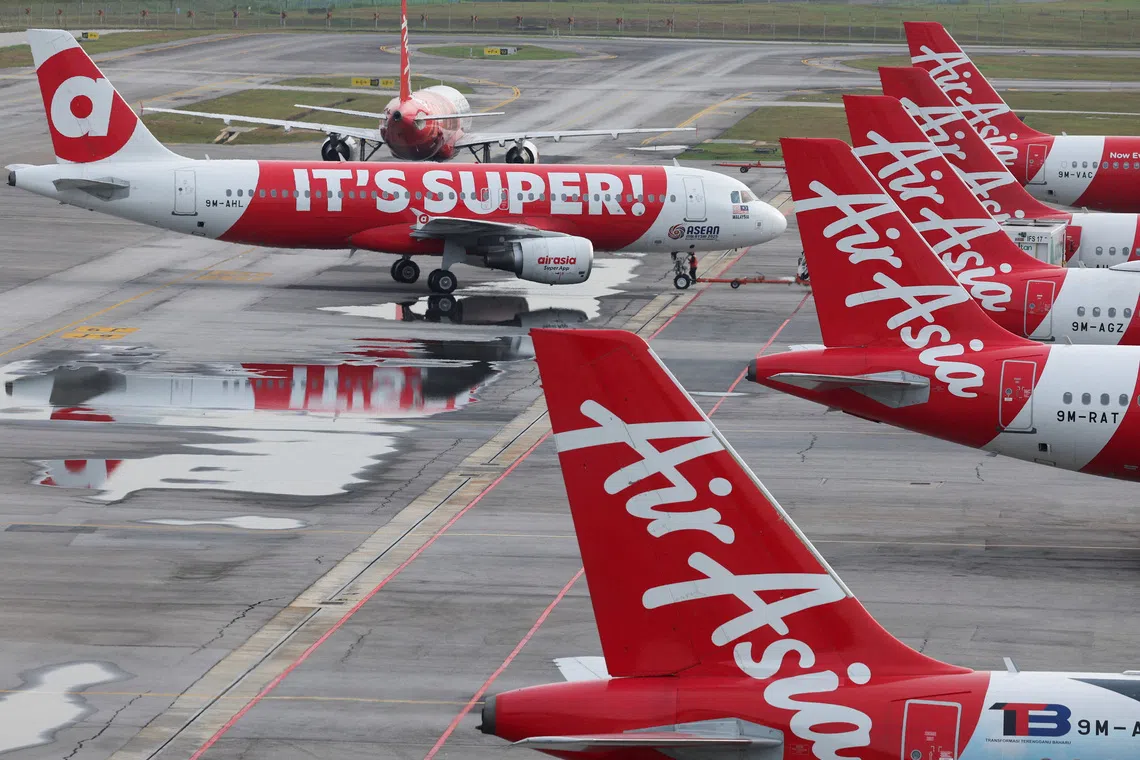
AirAsia Group has sold six newly delivered aircraft since the start of 2025, including two in July, in an unusual about-face that points to the financial strain gripping the airline.
The Malaysian low-cost carrier, which has received 10 factory-fresh Airbus SE 321neos since the start of 2025, sold half a dozen of them to lessor BBAM, according to a Bloomberg News analysis of aircraft transactions tracked by the Cirium Fleet Analyzer database.
They have since been purchased or leased by Vietnamese start-up Sun PhuQuoc Airways, the data shows.
While airlines regularly execute sale-and-leaseback deals on new planes to replace large upfront purchase costs with regular lease payments, selling aircraft without ever having put them into service is uncommon.
AirAsia’s disposal of the new-generation fuel-efficient jets comes at a time when co-founder Tony Fernandes is seeking to modernise the fleet to combat higher fuel costs.
“It’s unusual for a newly delivered aircraft in AirAsia’s livery to not enter service with only the ‘sale’ and no ‘leaseback’,” independent aviation capital markets analyst Andrew Light said. “Selling a newly delivered aircraft is probably the cleanest option, especially to maximise cash.”
AirAsia and its management team did not respond to repeated requests for comment. BBAM, Sun PhuQuoc Airways and its parent Sun Group also did not respond to requests for a response.
The airline’s woes have mounted in 2026 following the outbreak of war in the Middle East, which sent oil and jet fuel prices surging.
Low-cost carriers can be hit harder than full-service airlines by rising fuel costs because they are harder to pass on to price-conscious passengers.
AirAsia does not hedge its fuel purchases, leaving it exposed to volatile swings in prices.
Fuel expenses surged 58 per cent in the second quarter, sparking the company’s largest quarterly loss in four years.
Bloomberg reported this week that AirAsia is seeking to use collateral on a private-credit loan to pay lessors.
In June, Bloomberg reported that the airline had fallen behind on payments to suppliers and asked for deferrals on at least a dozen planes.
AirAsia had RM954 million (S$298 million) in cash and equivalents as at the end of June, one of the lowest balances among airlines tracked by Bloomberg globally.
The shares have slumped almost 75 per cent since the Iran war started at the end of February, making it the worst-performing stock in the 58-member Bloomberg World Airlines Index.
Of the 239 Airbus planes in AirAsia’s fleet at the end of June, only 161 were operational, according to the company.
The airline said it was returning 25 older aircraft in 2026 to optimise its fleet. However, it has made no mention of the disposal of brand new planes.
Cirium’s database shows Vietnam’s Sun PhuQuoc Airways has expanded to a fleet of 19 aircraft since its launch in November 2025.
A total of 14 planes it has bought or leased have come directly from AirAsia.
Cirium’s records do not include AirAsia’s most recent July delivery, which is still in AirAsia’s possession but will be transferred to Sun PhuQuoc in October. BLOOMBERG

