


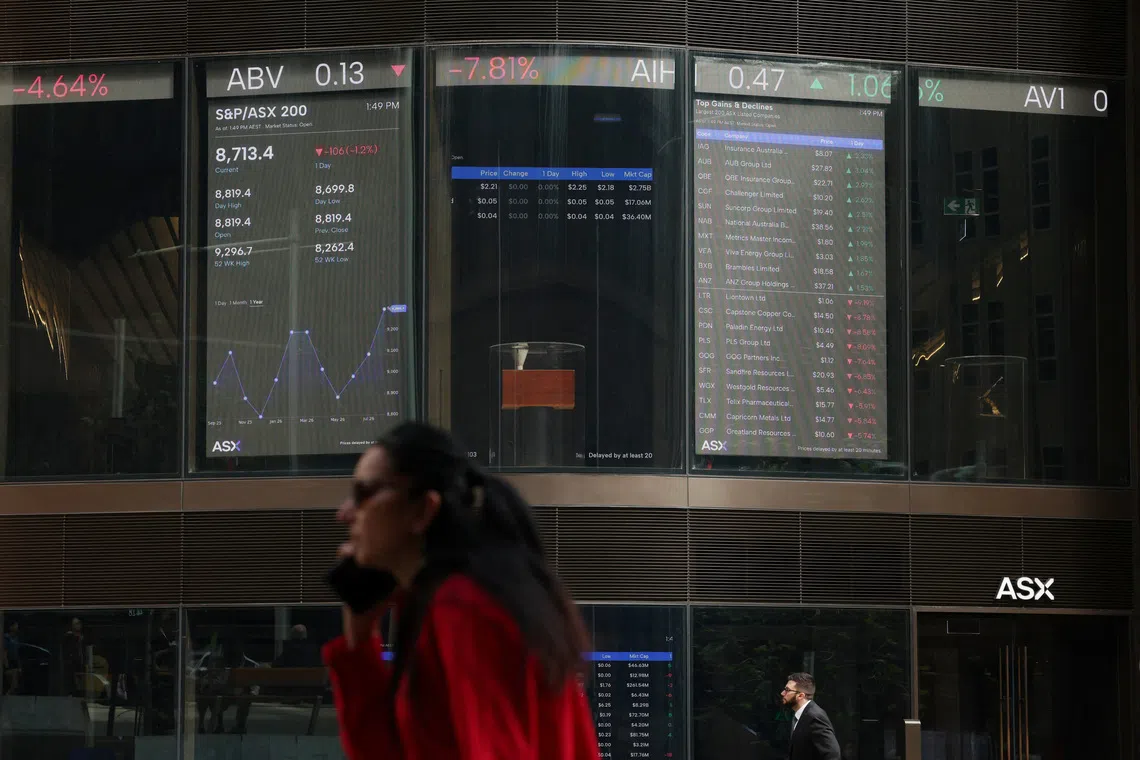
Shorter-dated Asian sovereign bonds fell, tracking moves in Treasuries after the US Federal Reserve raised interest rates for the first time since 2023 and signalled further tightening to curb inflation.
The dollar gained the most since June.
Government bonds in Australia and New Zealand slipped in early trading after the yield on the rate-sensitive two-year US note rose seven basis points to 4.74 per cent, the highest since 2024.
The moves came after US Fed chair Kevin Warsh struck a hawkish tone, saying the rate increase “removed a dose of accommodation”.
Money markets priced in about a 50 per cent chance of another Fed hike in October.
Elsewhere, a Bloomberg gauge of the dollar advanced 0.5 per cent in New York trading after the Fed hiked rates.
Gold, which typically loses its appeal as rates rise, held its losses from the previous session, trading around US$4,270 an ounce.
Asian stocks edged 0.1 per cent higher with gains in Japanese and South Korean benchmarks.
Equity-index futures for the S&P 500 Index and the Nasdaq 100 Index also rose in early Asian trading.
Earlier, Wall Street traders drove stocks to the lowest since July on bets the Fed will keep raising rates to combat inflation.
“The Fed had no choice but to give the market a hike or risk a much bigger bond market selloff, which is shown in the 12-0 vote,” wrote Byron Anderson, head of fixed income at Laffer Tengler Investments.
“The Fed is trying to calm the bond market rather than signaling a hiking cycle.”
The Federal Open Market Committee voted unanimously to lift the benchmark rate by a quarter percentage point to a range of 3.75 per cent to 4 per cent.
The Fed’s so-called dot plot, which shows policymakers’ projections for the path of interest rates, indicated one more increase in 2026.
Investors are now weighing how quickly the Fed may tighten further as policymakers confront broader inflation pressures.
The Fed’s projections point to another hike in 2026, putting upcoming inflation and labour market data in the spotlight ahead of the October meeting.
“The committee removed references to inflation being driven by supply shocks, suggesting policymakers are increasingly focused on broader and more persistent inflation pressures rather than viewing recent price increases as largely transitory or externally driven,” said Daniel Siluk, portfolio manager at Janus Henderson Investors.
In other corners of the market, oil retreated on signs that some recent Middle East supply disruptions are easing, with traders also adjusting positions after a blistering rally.
Brent fell 0.7 per cent to around US$105. On Sept 16, Brent settled below US$106 a barrel as Saudi Arabia sought to restore about half the capacity of its East-West pipeline within days after drone strikes forced its closure last week.
In Asia, the yen held its losses from the past three sessions, trading at 156.20 per dollar.
Meanwhile, Warsh reinforced the inflation-fighting message he delivered at Jackson Hole in Wyoming in August.
Speaking to reporters on Sept 16, he said too many categories of goods and services were showing annualised price gains above 3 per cent over six- and 12-month periods.
President Donald Trump said on social media after the decision that US interest rates should be at 1 per cent or lower, though he stopped short of directly criticising Warsh.
The Sept 16 move may mark the start of a broader tightening cycle, with both policymakers and traders anticipating at least one more increase in 2026. Attention is now shifting to the timing and pace of further moves.
“History is clear that once the Fed begins raising rates, they do it multiple times,” said Chris Zaccarelli, chief investment officer at Northlight Asset Management.
“But the pattern is less clear about whether they will raise rates at consecutive meetings or leave rates unchanged” at some of them. BLOOMBERG
This story was produced with the assistance of Bloomberg Automation.

