


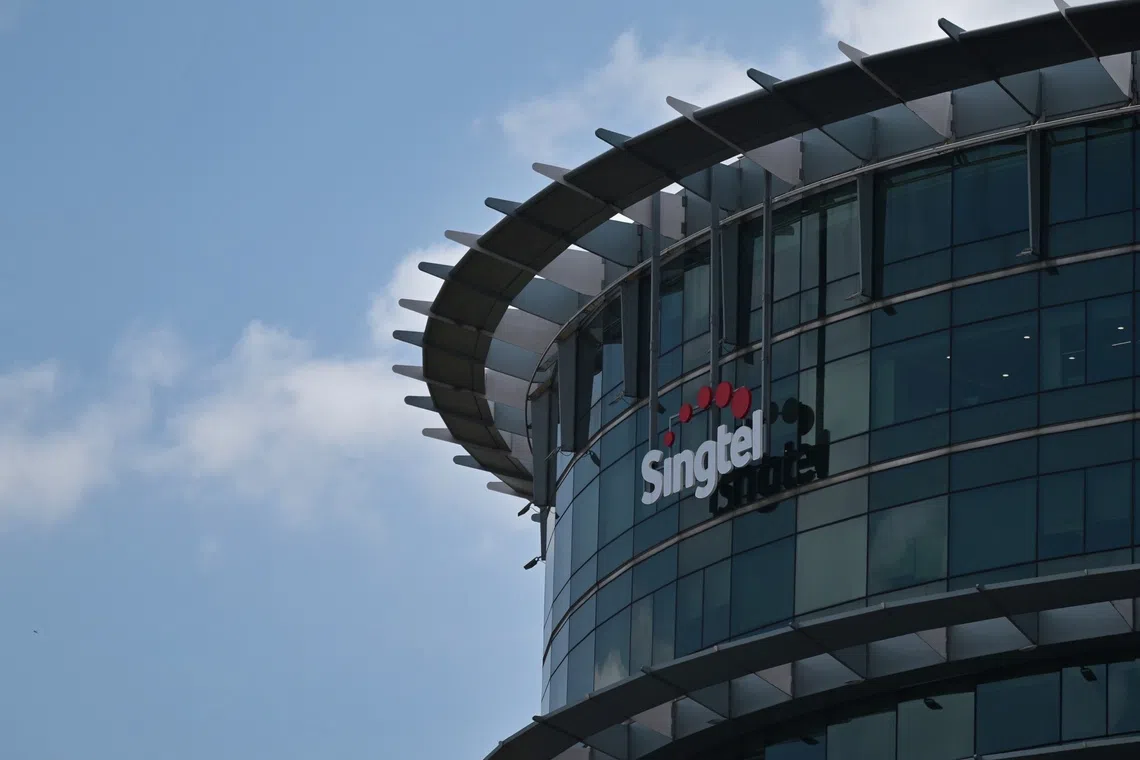
SINGAPORE – The market’s reaction to the recent Optus telecommunications outage underscores growing pressure on its parent company Singtel and the Australian authorities to improve the telco’s infrastructure and network reliability.
Singtel shares opened at $4.43 on Sept 14, down about 1.3 per cent from $4.49 on Sept 11. They recovered to close at $4.45, but slipped further on Sept 15 before paring losses.
A 76-minute technical glitch on Sept 11 affected Optus voice calling services in parts of Victoria, South Australia, Tasmania and the Northern Territory, with some customers experiencing “intermittent call dropouts”.
The outage follows a string of other network disruptions in the country, some of which had also affected calls to emergency services.
While the recent disruption was relatively less severe than the 13-hour outage in September 2025, with no adverse outcomes according to local police, it still affected some emergency services calls.
The outage also comes as Singtel explores a potential sale of a minority stake in Optus, its wholly owned subsidiary.
Singtel said in May that it was open to bringing in an Australian partner with expertise that could strengthen Optus’ operations, and confirmed in July that it was in talks with multiple parties.
Analysts told The Straits Times that while the recent outage may not significantly impact Singtel’s share price as the Singapore telco still has multiple revenue drivers in its other businesses, Optus’ continued drag on its stock and business could affect its effectiveness in selling its stake.
Critically, Optus has to improve its network resilience.
Optus had invested A$1.5 billion in its networks and IT systems for the 2026 financial year (FY) ended March 31. At Singtel’s Investor Day on Aug 27, CEO Stephen Rue said the telco will invest another A$1.5 billion in “immediate priorities to build foundations for growth”.
These include addressing IT resilience and cybersecurity concerns, strengthening its network resilience and modernising its capabilities, and completing a multi-year tech transformation.
“Repeated outages make the case for more capital expenditure, not less,” said Nirgunan Tiruchelvam, head of consumer and internet at Aletheia Capital.
Singtel has already invested over A$9.3 billion in Optus’ network infrastructure over the past five years, and increased capex spending could weigh on Singtel’s near-term margins, he added.
This could lead to Singtel’s management focusing on exploiting cost efficiencies to improve Optus’ earnings before interest and tax (EBIT) margin, noted Jonathan Koh, director of research at UOB Kay Hian.
Singtel declined to comment on how much more it plans to invest in Optus, but noted that preventing future disruptions to emergency services would entail not just upgrading Optus’ network but also Australia’s network infrastructure, which would involve other stakeholders.
Analysts also noted that outages and technical issues, such as fibre cable cuts, are known risks for any telco operation and not unique to Optus. Both Vodafone and Telstra – its two main competitors – have also experienced service disruptions this year.
In a statement to ST, Optus said that it had identified the hardware issue on Sept 11 within minutes through its network monitoring systems and immediately mobilised technical teams to restore services, while activating established escalation processes and engaging relevant stakeholders.
In the near term, said Paul Chew, head of research at Phillip Securities Research, the outage could jeopardise the current market correction in Australia’s telco sector, where operators are steadily raising mobile plan prices to repair compressed profit margins and offset heavy government licensing costs.
Prolonged outages that lead to a significant loss, like the 2025 incident, could pose major concerns for Singtel and Optus, said Hussaini Saifee, head of ASEAN telecom media and technology at Maybank Securities Singapore.
In addition to hurting Optus’ reputation, repeated incidents could also incur further fines and legal costs. Altogether, this could impair Singtel’s ability to find the right partner for its business.
A local Australian partner would help Singtel politically by demonstrating local ownership of critical infrastructure, Tiruchelvam pointed out. This would allow Singtel to share the capital burden and risk, while retaining the potential for greater long-term returns from its Optus investment.
The search for a minority stakeholder could still move quickly, but Singtel would likely have to sell its stake for a lower price than before the outages, especially if the potential buyer views that the Optus network has been under-invested.
Dan Baker, senior equity analyst at financial services Morningstar, noted that Singtel had spent A$17 billion to acquire Optus in 2001, which amounted to $21 billion at the time, and had reportedly tried to sell the telco for around A$16 billion in 2024.
It is highly likely that Singtel could cut its losses by selling its minority stake at a value less than what it had originally paid, he added.
The telco was reportedly in talks to sell a 30 per cent stake in Optus to New Zealand infrastructure investor Morrison, which is still testing investor appetite.
In the meantime, the Sept 11 is outage is likely to have minimal lasting impact on Singtel’s share price as it is unlikely to lead to material penalties or meaningful impact on consumer perception, said Saifee, and its current share price is mostly a “knee-jerk reaction”.
He added that Singtel has also indicated that it expects a meaningful improvement in Optus’ profitability in the next four to five years, given that its return on invested capital is already “too low to begin with”, and therefore it will remain committed to supporting its Australian business in the long term.
Optus is a core business pillar of Singtel, generating about half of the group’s total operating revenue.
Analysts also cited Singtel’s other growth drivers in India, as well as its data centres and digital infrastructure businesses that could offset any drag by Optus on its share price. But a full recovery would still hinge on the stabilisation of Optus’ services.

