


SINGAPORE – Google is ramping up its hiring of engineers in Singapore, betting that artificial intelligence will increase demand for skilled tech workers even as it automates more of the work they used to do.
The tech giant has hired more than 85 specialists in under six months for the first phase of its Google Cloud Singapore Engineering Centre (SEC), officially launched on Sept 15.
The centre is co-located with Google DeepMind’s Singapore AI research lab, which opened in November 2025, bringing AI researchers, software engineers and customer-facing engineers together to develop solutions in Singapore for local and global use.
The hiring builds on an expansion that Google promised earlier in February 2026, when the company said it was looking to fill more than 150 positions in Singapore.
Moe Abdula, Google Cloud’s vice-president of technology and customer engineering for Asia-Pacific and Greater China, said the speed at which Google staffed the new engineering centre shows that Singapore has a strong pool of talent – from early-career workers to experienced workers.
“Talent is abundant,” said Abdula, who relocated from the United States to Singapore three years ago for his role at Google.
“Getting into Google is not easy,” he told The Straits Times. “We’ve not compromised on the bar. We have a very rigid process that we go through, and we’ve been delighted by the availability of talent.”
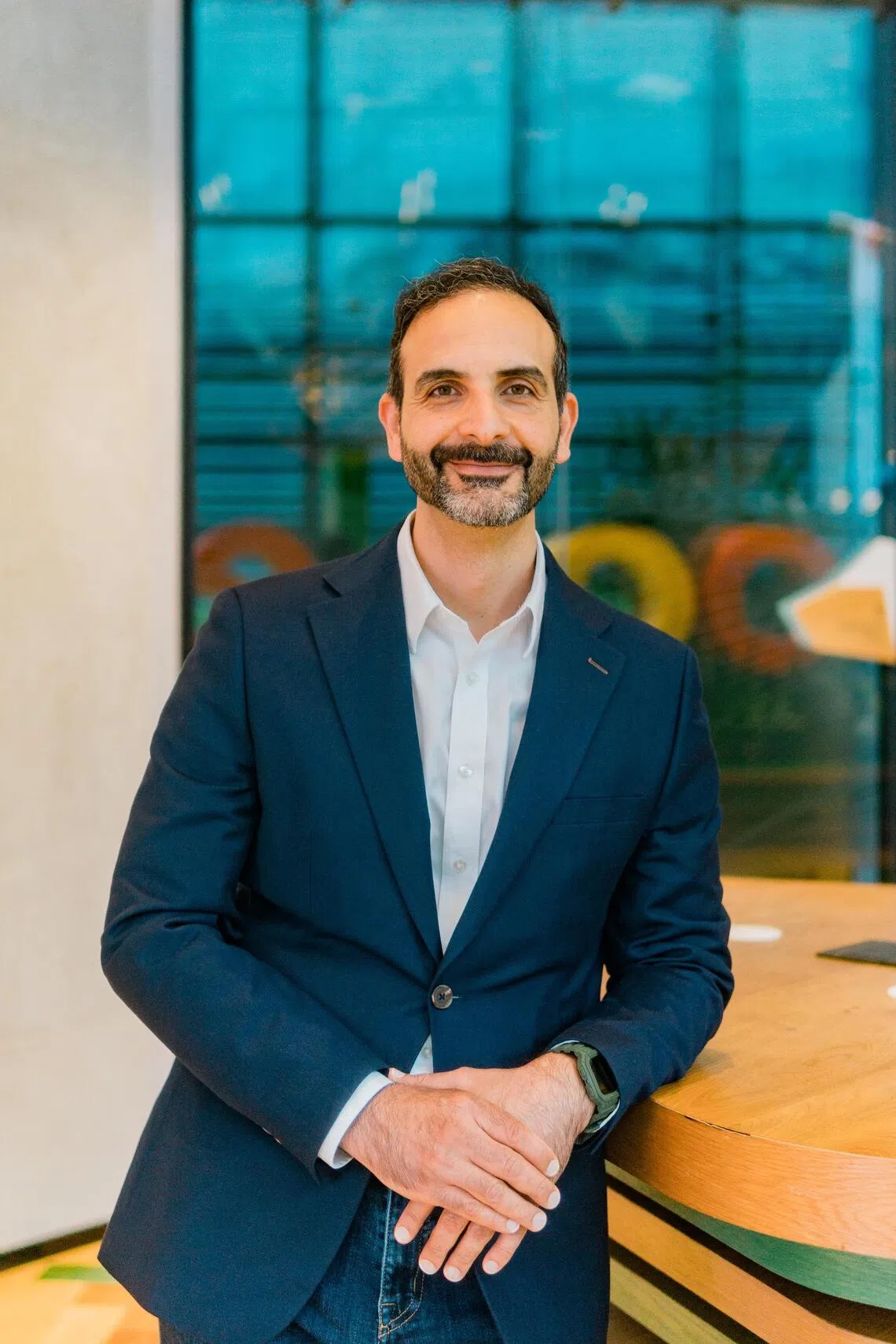
Moe Abdula is vice-president for customer engineering at Google Cloud.
PHOTO: GOOGLE
The expansion comes after a few rough years for the global technology workforce. Like many of its peers, Google’s parent company Alphabet expanded rapidly during the pandemic before reversing course in 2023, slashing jobs across various functions as growth normalised.
But its overall workforce has since returned to a growth trajectory. According to its latest earnings release, Alphabet had 198,933 employees at the end of June 2026, up from 187,103 a year earlier.
In Singapore, Google has more than 3,000 employees. Google said its net hiring in Singapore has grown year on year, with the SEC accounting for a meaningful share of those additions.
The expansion comes as its Google Cloud business continues to grow rapidly, with revenue rising 82 per cent year on year in the second quarter.
Abdula said the demand for talent is not limited to those working directly on AI. Cyber security, data analytics and software engineering are also seeing more demand as companies put AI to work.
Customer-facing engineers
Engineers who can do more than coding will “have an advantage, for sure”, said Abdula.
Google’s forward-deployed engineers (FDEs), for example, work alongside corporate clients for weeks to build solutions from start to finish, rather than simply advising them. They have to meet the same technical bar as Google’s software engineers, but also have strong consultative skills and the ability to tease out what creates value for businesses, he said.
He pointed to Google’s work with Grab as an example. Grab handles more than 10 million voice calls through its app each month, with language barriers between ride-hailing drivers and passengers across South-east Asia among the trickiest problems.
Google engineers worked with Grab to develop a translation system that accounts for dialects, accents, tone and sentiment, while keeping response times short enough to enable natural conversations and reduce miscommunication.
In another project, Google’s DeepMind researchers and engineers helped customise a weather model to help Grab manage food deliveries.
By improving predictions of rain, humidity and wind at much finer geographic and time scales, Grab can prompt delivery riders on when to start deliveries or take breaks, helping them avoid rain and traffic that could delay orders.
Such projects show why having engineers close to customers and understanding the local context matters, Abdula said. Unlike some regional tech offices that function primarily as post-sales support outposts, he said the SEC combines research capabilities, core systems engineering and customer-facing frontline engineers under one roof to deliver better solutions.
Beng Kong Pee, executive vice-president of the Economic Development Board (EDB), which supported the SEC’s expansion, said: “We welcome Google’s continued investment in the Singapore workforce with new core engineering and FDE roles presenting exciting opportunities for Singaporeans to build expertise with frontier technologies.”
Returning talent
The Google Cloud SEC’s establishment has drawn some Singaporean Googlers back home.
Software engineer Chris Chen, 29, relocated back after more than three years at Google’s London office. He now works on the Cloud interconnect team at the centre, developing private network infrastructure for enterprise clients.
“As the leading tech hub in Asia, Singapore is budding with career opportunities and is a perfect place for me to further my career for the long term,” said Chen.
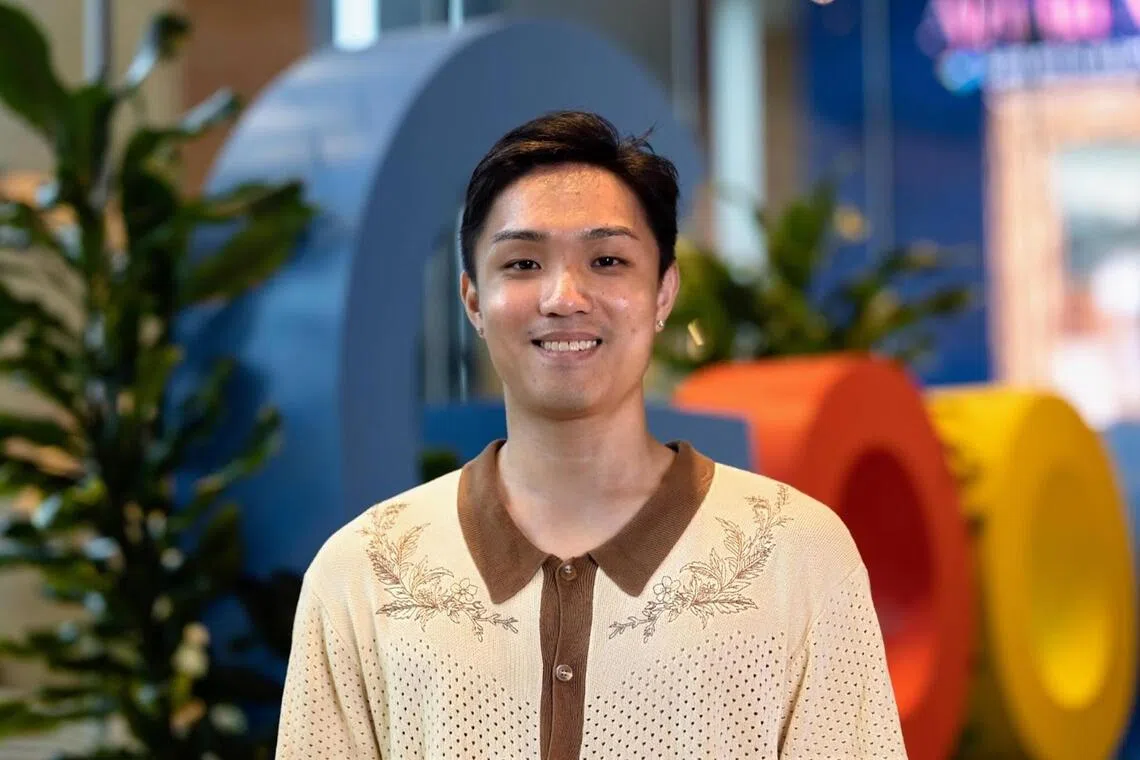
Chris Chen is a software engineer working at Google’s Singapore Engineering Centre.
PHOTO: GOOGLE
Fellow software engineer Zhang Xinyi, 26, who started as an intern at Google Taiwan in 2022 before returning home, said the setup of the SEC aligned with her career goals.
“Returning to Google Singapore was really a blend of great timing and the right opportunity,” Ms Zhang said. “Given the importance of Cloud products and the opportunities across the region, Singapore’s timezone, location and talent pool perfectly taps into this growth opportunity.”

Zhang Xinyi is a software engineer working at Google’s Singapore Engineering Centre.
PHOTO: GOOGLE
While AI will automate some tasks, Abdula does not buy the narrative that it will wipe out software engineering jobs. Even as the proportion of AI-generated code jumped to 70 per cent, Google is still hiring software engineers, he said.
To him, AI simply makes coders more productive, helping them work through massive backlogs much faster. AI also helps take over the tedious work that developers dread, like writing endless test cases.
By delegating these repetitive tasks to AI agents, engineers are freed up to design better user experiences and solutions, and he expects them to do so.
Beyond the current need for software engineers, as evident from Google’s hiring, he is also optimistic about the profession’s future.
“I certainly advised three of my nephews and nieces to go into software engineering.”
While top AI leaders, including Google DeepMind co-founder Demis Hassabis, recently backed calls to slow the pace of frontier model development over safety risks, Abdula said this will not affect the SEC’s mission.
“Regardless of how model training evolves, it will not change what we are building on the ground in Singapore, because a model alone is not an enterprise solution,” he told ST.
Real-world AI deployment demands a full spectrum of core technical capabilities, ranging from robust data governance and security to high-performance storage and networking, he said.
“That is the exact gap the Google Cloud SEC is built to close: engineering foundational technology into secure, mission-critical workflows for customers building in and from Singapore, for the world.”

