


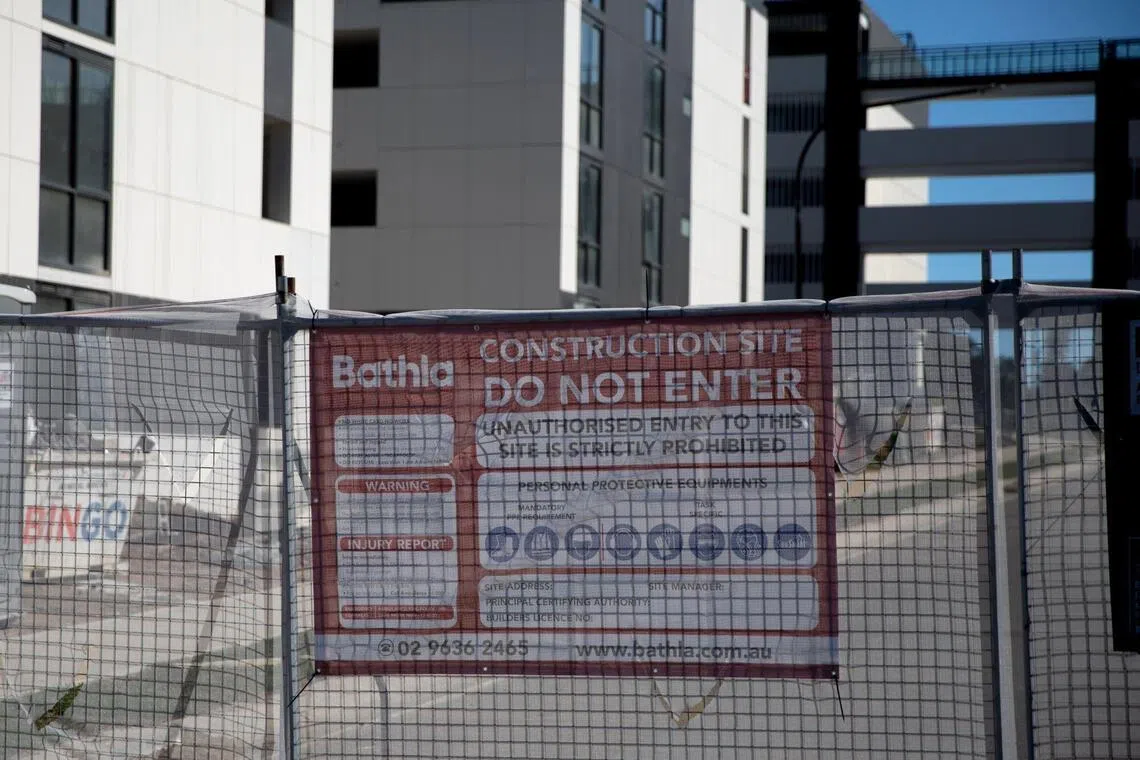
SYDNEY – Sydney property developer Bathla Group’s collapse has left thousands of Australian home buyers – who have paid deposits and are waiting for their off-the-plan homes to be built – in limbo.
Those caught up in Bathla’s crisis face a patchwork of outcomes.
They could potentially get their deposits back or eventually receive the keys to their new homes, depending on their contracts and what happens to individual projects. But if the company ultimately goes into liquidation, their chances of recovering the money will depend partly on how their deposits were held.
By law across Australian states, deposits for off-the-plan properties must be held in a trust account until settlement.
But Bathla’s administrators said some contracts stated that deposits could be used to fund projects, meaning some of the money is no longer sitting in those trust accounts, leaving buyers potentially exposed. A full reconciliation is still under way.
When asked about Bathla’s trust accounts, a spokesperson for the New South Wales government said it would take “appropriate action in the event the mismanagement of deposit funds is identified”.
Bathla’s credit crisis lays bare the pitfalls for off-the-plan buyers when corporate missteps collide with a housing-market correction. Construction has accounted for about a quarter of Australia’s insolvencies in each of the past six years, according to data from the Australian Securities and Investments Commission, its corporate watchdog.
Who’s behind Bathla Group?
Bathla, also known as Universal Property Group, was co-founded in 1997 by India-born brothers Bhart Bhushan and Rajinder Mohan to build more affordable homes.
Bhushan worked as a taxi driver before moving into property development, according to local media reports. They started with five townhouses in the Sydney suburb of Girraween, which is home to a large Indian population. Over 25 years, Bathla built a portfolio of about 22,000 apartments and 3,500 houses, concentrated in Sydney’s western suburbs.
Bathla sought to cultivate an approachable, family-friendly brand, holding galas where it raffled off A$1 million in cash and properties, as well as sponsoring a local rugby team.
But the company also attracted regulatory scrutiny.
In 2011, Australia’s corporate regulator alleged Bathla had engaged in “unconscionable conduct” over its lending practices.
Between 2004 and 2009, Bathla had allegedly provided financing to buyers, many of them immigrants from Sudan or the Philippines, without verifying whether they could afford the loans. Bathla agreed to an enforceable undertaking where it would provide compensation for victims who came forward.
What led to Bathla’s collapse?
Over time, Bathla took on a lot of debt, borrowing from more than 40 private credit lenders. In the 2025 financial year, its total debt increased by 7 per cent to A$2.85 billion (S$2.6 billion) from the year before, with A$1.99 billion due within 12 months, according to financial disclosures.
More than 20 per cent of its revenue was eaten up by debt-financing costs while net profit shrank. At the same time, most of the company’s assets were locked up in A$3.51 billion of illiquid inventory, such as land held for future developments, leaving it with just A$14.5 million in readily available cash as a buffer, according to its latest filing.
That left Bathla particularly exposed as Sydney’s housing market started to weaken in 2026. The company said its business had been affected by a period of declining sales and falling property prices, while facing increased construction costs.
On Aug 25, Bhushan announced the company was entering voluntary administration. It appointed insolvency firm Teneo Australia to take charge of finding a way to save the company or wind it down.
What happens to the buyers of Bathla’s unfinished properties?
According to Teneo, about 2,000 dwellings by Bathla were under construction at the time Bathla entered into voluntary administration. They include a 339-apartment complex in Sydney’s Rouse Hill and a 312-apartment project, The Peak Residences, in Pemulwuy.
What happens next could vary by project and whether the administrators can secure enough funding to continue construction. Some developments may be completed, allowing buyers to eventually receive their homes. If projects do not proceed, buyers face greater uncertainty over whether they will get their deposits back.
“The key point is that insolvency does not automatically mean buyers lose their deposits, but neither does it guarantee a full recovery,” said David Glinatsis, managing director at Sydney-based Kreisson, a speciality construction litigation firm.
“The reality is that outcomes are likely to vary significantly from project to project,” he said.
By law, off-the-plan deposits must be held in a trust account and not be used by the developer until the property is handed over, or the contract is terminated or rescinded. In theory, this means that money is protected in the case a company collapses.
But Teneo managing director Stephen Longley said on Sept 4 that some of Bathla’s contracts had stipulated deposits could be used to fund projects and that some buyers’ money was not in required trust accounts.
That does not necessarily mean those buyers will lose their money. Longley said some contracts had settled since Bathla entered administration even though the deposits were not held in trust.
But if Bathla is ultimately liquidated, buyers whose deposits are not protected could be treated as unsecured creditors, potentially putting them behind secured creditors – such as financial institutions or specialised funds – in the queue for payment, according to a person familiar with the matter.
Is there legal recourse for homebuyers?
Buyers may have several avenues to recover their money. If deposits that should have remained in trust were improperly withdrawn or misused, beneficiaries could pursue action, says Jason Harris, professor of corporate law at The University of Sydney Law School.
“The problem may be that the company trustee is insolvent and any enforcement involves litigation, which is expensive and time-consuming,” he said.
Some buyers may also be protected by insurance as a last resort.
In New South Wales, builders and contractors must generally obtain insurance from the Home Building Compensation Fund for residential projects valued at more than A$20,000.
The scheme can cover losses – including deposits – if a builder becomes insolvent or otherwise cannot complete a job. It also covers defective work such as serious water leaks or poor finishing.
The coverage is capped at A$340,000 per dwelling – although buildings higher than three stories are exempt. This means buyers of townhouses or low-rise apartments may have protection that those who have purchased units in larger complexes do not. Bathla has hundreds of active insurance certificates for properties across New South Wales, according to the State Insurance Regulatory Authority’s register.
Buyers may also have options to exit their contracts. Depending on the terms, they may be able to terminate if a company restructuring materially changes the agreement, such as the issuing of a new builder, or if a project fails to meet a contractual “sunset” deadline, by which a specified project milestone must be reached.
What should buyers know before purchasing off the plan?
Buying a property off the plan comes with financial risks that may not be immediately obvious. Buyers should check where their deposit will be held, when it can be released and under what circumstances they can exit a contract if a project goes awry. They also should not assume government safeguards apply equally to every type of property.
“In stronger market conditions, buyers often focus on price and location,” said Glinatsis. “In a more challenging financing environment, it becomes equally important to understand who the developer is, how the project is funded and what protections exist if things do not go according to plan.”
Buyers should also be wary of simply stopping payments required under their contract if the developer runs into trouble. Insolvency does not automatically terminate a contract, and a developer could potentially sue a buyer to force completion of the contract or seek damages, Harris said.
Even if a buyer can recover a deposit, it may be a poor substitute for receiving the property they bought. “Just getting back your deposit doesn’t build you a home or repay your mortgage costs,” Harris said.
That can be particularly painful in a rising property market, where years may have passed since the original purchase and the same deposit may no longer stretch as far.
Whether to wait it out or try to recover the deposit is a dilemma facing some Bathla customers.
Donna Jones, 64, a disability support worker, said she had put down a A$54,500 deposit in September 2025 on a one-bedroom Bathla apartment in Kembla Grange, about 92km south of Sydney.
Asked whether she would like her money back, Jones said: “I want my apartment. If I was certain that I was not going to get that place, absolutely.” Bloomberg

