


SINGAPORE – As measures to revive the local stock market begin to bear fruit, Singapore’s stock exchange has been recording over the past year stronger retail investor participation, including a younger generation of investors it has been seeking to attract.
According to the Singapore Exchange (SGX), retail securities daily average value – a key measure of retail trading activity in the local stock market – grew 52 per cent year on year, reaching its highest level in 12 years in the 2026 financial year ended June 30.
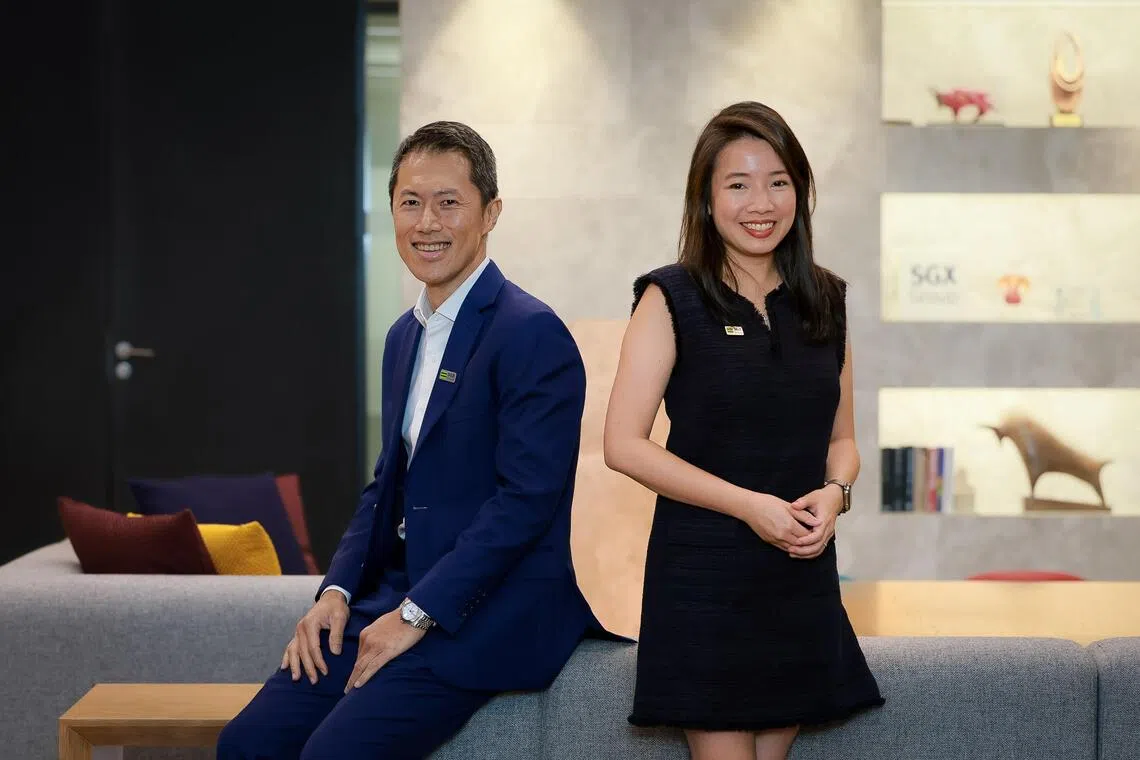
In an interview with The Straits Times, SGX director of capital market development Emelia Tan said the exchange will step up efforts to engage younger investors and dispel the perception that the local market lacks excitement.
“There’s always this myth,” she said. “When we talk to young investors, they say, ‘The Singapore market is very boring. The US is where all the growth stocks are.’”
But Tan noted that the risks of investing in the US market are high, especially for growth stocks.
She added that it is ironic that young investors have shunned local growth stocks for being too risky, and parked their money in investments like Treasury bills and Singapore Savings Bonds instead.
In fact, the Singapore stock market has outperformed the US in recent years, Tan said.
Over the past five years, it delivered a total return of 125 per cent, compared with 73 per cent for the US market.
Over the past three years, Singapore returned 94 per cent, again outpacing the US’ 64 per cent.
And in the past year, the local market has rallied to yield returns of 41 per cent, outstripping US returns of 18 per cent.
SGX head of capital market development Chan Kum Kong said the local market offers interesting opportunities, but acknowledged that changing young investors’ perception of it would take work.
“We are at the onset of this momentum, and we’re working to continue to drive it and change their perception of the market,” he said.
Measures to increase young investor participation
One way SGX has helped young investors enter the market is through reducing board lot sizes.
Come Oct 5, the standard board lot size will be cut from 100 units to 10 units for instruments priced above $10, up to $100.
The initial reduction will target 11 stocks priced above $10.
They are UOB, OCBC, DBS, Keppel, Venture Corporation, Great Eastern Holdings, Haw Par Corporation, Jardine Cycle and Carriage, Jardine Matheson Holdings, Prudential and SGX.
This means that a young investor can buy a local bank stock, for instance, with less money than before.
Investors can also access the stock market by buying exchange-traded funds (ETF) that track the Straits Times Index (STI).
ETFs have been growing in popularity, Tan added.
The assets under management of SGX-listed ETFs grew 43 per cent year on year, with the STI ETFs and gold ETFs seeing the most inflows.
ETFs offer convenience, cost and efficiency, she said, as buying one gains the investor exposure to a broad-based index, instead of buying 30 stocks individually.
Another initiative that might attract more retail investors, especially young investors, is the Global Listing Board (GLB), which will allow a company to list concurrently on the SGX and Nasdaq with a single set of documents.
Chan said: “We want both the GLB and our main market to do well. GLB is meant for large companies which are looking for Asia exposure.
“And if we are able to get interesting companies in, I think that should help younger folks (to be interested) as it’s also associated with the US.”
In 2026, SGX also launched a new edition of Invest in Action, a refreshed initiative to bridge the gap between local investors and companies.
Tan said the initiative aims to make learning about investing more accessible and engaging, instead of through traditional classroom-style courses.
To better engage investors, SGX plans to work with companies to conduct site visits for investors so that they can speak directly to the senior management and see the actual physical assets of the companies.
Tan added that the intention is to do this for the small- and mid-cap companies, going beyond the big companies on the STI.
Site visits are already in place for the real estate investment trusts.
These efforts come on the back of rising investor interest in small and mid-caps, with trading activity in these stocks tripling year on year, she said.
Besides conducting company visits, SGX in 2025 also launched a website called InvestSG, which functions as a social media platform where investors can discuss stock picks.
It is operated by AlphaInvest, one of SGX’s partners.
Users can write posts about stocks, share comments, access consolidated research reports and view share price performance. The website now has more than 50,000 users.
Tan said: “Investing matters even more today because everyone is living longer and things are just getting more expensive.
“There’s no point timing the market. Time in the market is actually more important. So for investors, how can they get exposure to the market and ride economic growth?”
A future where babies already have investments
But starting investors early in adulthood is still not enough.
Chan envisions a future in which new parents receive a “baby bonus” package that includes a sum earmarked for the local stock market, allowing their child to hold investments from birth.
“Then when the kid is say, 16 years old, they can say, ‘Hey, mum and dad, how’s my investment going?’
“Even if they don’t trade at the end of the day, it doesn’t matter. By then, they will have a vested interest.”
The time horizon of around 20 years will also allow investments to grow significantly, he said.
“So that’s something to think about and (we can) say, this is the future that we want.”

