


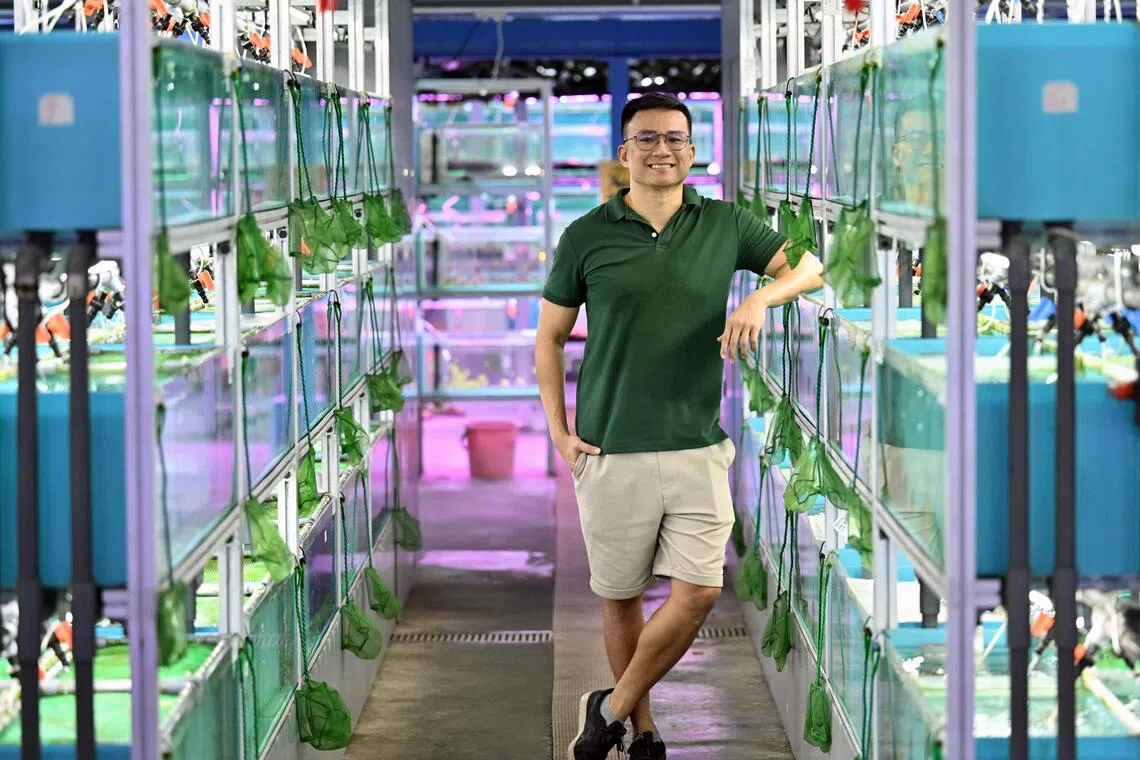
SINGAPORE – When he finished junior college and national service, Desmond Lim decided not to go to university with his peers.
Instead, his days were filled with ornamental fish at his family’s business – a fish farm in Johor Bahru.
At the same time, Lim, then 20, also started his own ornamental fish trading business, building relationships with buyers and exporters.
“The goal was to help my family and other breeders sell fish at better prices by reducing layers of middlemen in the supply chain,” he said.
At that young age, he learnt how to hire people, invest in systems and read profit sheets.
“By working at my parents’ farm, I realised that if I bought a new species of fish and managed to breed them successfully, the value could multiply,” he said.
“For example, I could buy 50 fish for $100 and bring in revenue of $3,000 every month. It was a very practical introduction to concepts like risk, patience and return.”
In 2019, with the business acumen he developed, Lim created Fishlist, an e-commerce marketplace for ornamental fish and aquarium products.
Ornamental fish hobbyists usually have to visit multiple shops or rely on word of mouth to find certain fish species, he explained.
“The platform connects hobbyists, breeders and aquarium retailers, making it easier for people to discover and purchase ornamental fish while helping traditional aquarium businesses reach customers online.”
Not only does Fishlist help buyers find trusted sellers, but it also helps fish breeders reach a wider audience.
“I’m proud that Fishlist has helped bring a traditional industry into the digital era while still supporting the people behind it,” said Lim, now 41.
Besides spending his childhood helping his father with fish farming and aquatic animals on the family farm, he also kept and bred ornamental fish like goldfish, guppies, catfish and mollies at home.
“Of course, I was too young to understand the concept of overfeeding and often overfed the fish. I didn’t understand why some of them died,” he said.
“That hobby eventually shaped my entire career.”
Lim, who is single, went back to school at 27. He now has a bachelor’s degree in maritime and aquatic studies from the University of Tasmania.
Do you invest in anything?
During the Covid-19 period, a friend introduced me to the world of investing. With more free time and no travel plans, I decided to put my funds into some stocks and shares.
However, my biggest investment has always been in building businesses and technology. Growing Fishlist required investments in digital marketing, logistics systems, team building and, more recently, AI tools that help automate operations and track performance.
I also believe in investing in people and education, and I have invested some funds in UBI Business School where I do some work in student experience. I hire some of their students as interns, and they contribute ideas to Fishlist. It’s interesting because it brings back memories of my own academic journey.
Do you invest in tangible assets?
Not in traditional collectibles like art, but I do appreciate rare ornamental fish and aquascapes.
Some rare fish species can be quite valuable due to breeding difficulty or limited supply. But for me the real value is the passion and dedication behind the hobby. An aquarium can be a living piece of art.
What has been your biggest financial mistake?
I underestimated how much work goes into building a digital business.
When we started Fishlist, I thought launching a website would be relatively straightforward. In reality, it involved marketing strategy, advertising, operations, hiring people and constantly improving the platform.
The lesson was that technology businesses require long-term investment and commitment.
I also underestimated the fragility of livestock. I lost about $30,000 from a few shipments when the fish died due to supply chain issues. I learnt it would be more profitable to keep minimal stock and do more drop shipping instead.
What has been your best financial decision?
I started my own trading network early in my career. I created strong business relationships with veterans in the local fish industry and took time to understand how they work.
By building relationships with buyers and exporters directly, I was able to help breeders receive better margins while learning how the industry works at every level. Those connections eventually helped shape the idea for Fishlist.
What were your growing-up years like, money-wise?
I am the oldest child and have three younger siblings. Growing up, much of my time was spent supporting my father’s fish farm.
It taught me that money is closely tied to effort and responsibility. Farming and breeding fish require patience and attention to detail. Those early experiences shaped my practical approach to business and finance.
Where’s home for you?
It is a condominium in Bukit Panjang.
I drive…
A practical car – a Toyota Wish, mainly because there are times when I still help with logistics and shipping during peak seasons or holidays. Running an e-commerce platform sometimes means getting involved directly when things get busy.
What would your perfect day look like?
My ideal day would start with 10 minutes of meditation to clear my mind and get focused, followed by a gym session or a high-intensity interval training class.
Then, I’d spend the morning visiting different farms, checking out any new arrivals and seeing what’s available. I’d also take photos and gather information on anything that I could potentially list online. In the late afternoon, I’d work with my team to check in on day-to-day operations, make sure everything is running smoothly, and address any issues.
To me, it’s a good balance between staying active, being out in the field, finding new opportunities and working closely with my team to keep the business moving.
Money Matters
If you suddenly had a windfall of $1 million, what would you do?
I would invest most of it in expanding Fishlist’s technology and regional reach, especially in South-east Asia.
If you suddenly had only $100 to your name, what would you do?
I would probably start again by buying a few nice guppies and breeding them. Many great businesses have very small beginnings.

