


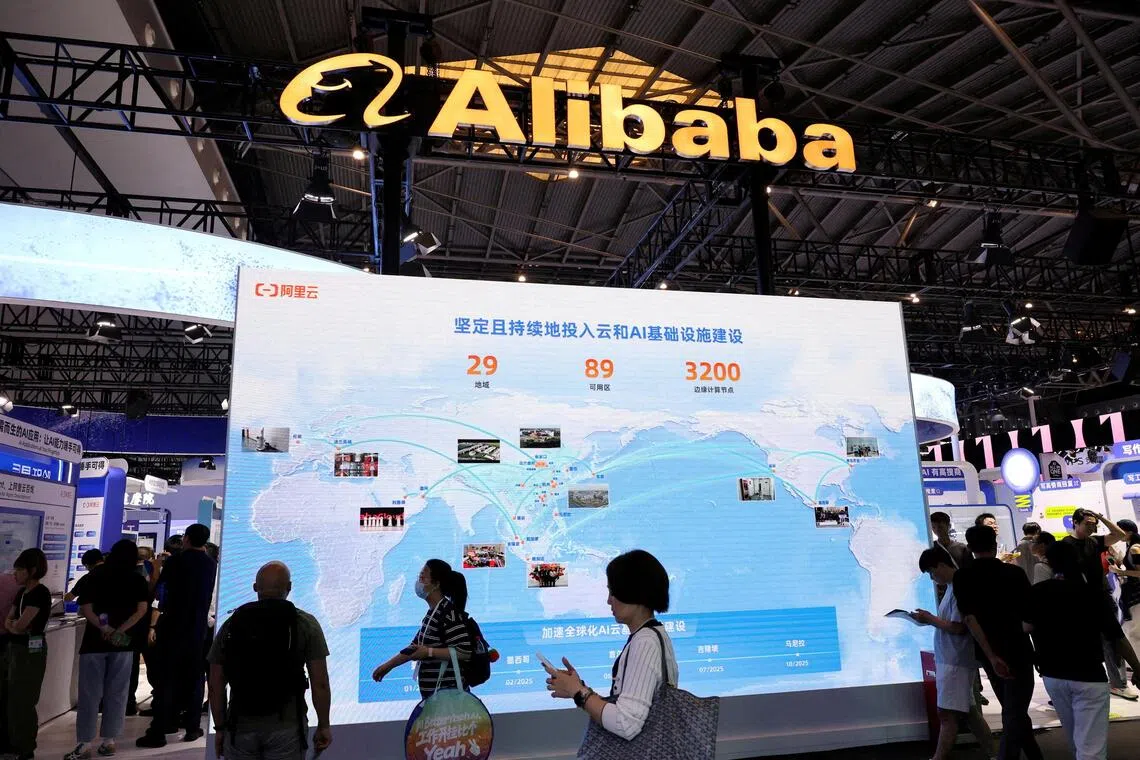
BEIJING – Chinese tech giant Alibaba saw increased revenue in its most recent quarter, results published on Aug 20 showed, boosted by the global artificial intelligence frenzy driving demand for its products.
The Hangzhou-based firm has been ploughing tens of billions of dollars into AI, with its shareholders eager to see how it will monetise the huge investments.
Alibaba’s revenue in the quarter ended June 30 was nearly 269 billion yuan (S$51 billion), up 9 per cent year on year, the firm said in results posted to the Hong Kong Stock Exchange.
But net profit plunged 76 per cent year on year to 10.5 billion yuan, reflecting the impact of large strategic investments and economic pressure in its home market.
In the statement, CEO Eddie Wu described a “strong quarter”, driven by “improving commercialisation of our full-stack AI capabilities”.
“Alibaba Cloud’s external revenue growth accelerated to 45 per cent, with AI-related product revenue delivering triple-digit growth for the twelfth consecutive quarter,” said Wu.
The firm is known for its open-source “Qwen” AI models, which have gained popularity with developers worldwide.
It is also an e-commerce behemoth that runs some of China’s biggest online shopping platforms, including Taobao.
Alibaba has faced pressure in recent years from a persistent consumer slump in China, which has squeezed the country’s leading e-commerce firms and intensified a price war in the sector.
Adding to recent turbulence is its designation in June by the US Defense Department as a military-linked firm, a claim it challenged with a lawsuit filed in a California federal court.
In China, Alibaba was previously in the crosshairs of an aggressive regulatory crackdown on the domestic tech sector launched in late 2020 and attributed to worries in Beijing that top firms had become too powerful.
Jack Ma, the firm’s charismatic co-founder who spoke boldly about the shortcomings of China’s financial and regulatory system, kept a low profile during the lengthy campaign.
His sudden reappearance in February 2025 during a meeting with President Xi Jinping and other business luminaries was a shock development that suggested a warmer stance from Beijing and sent Alibaba stocks soaring.
Ma is no longer an executive at Alibaba but is believed to retain a significant shareholding in the company. AFP

