


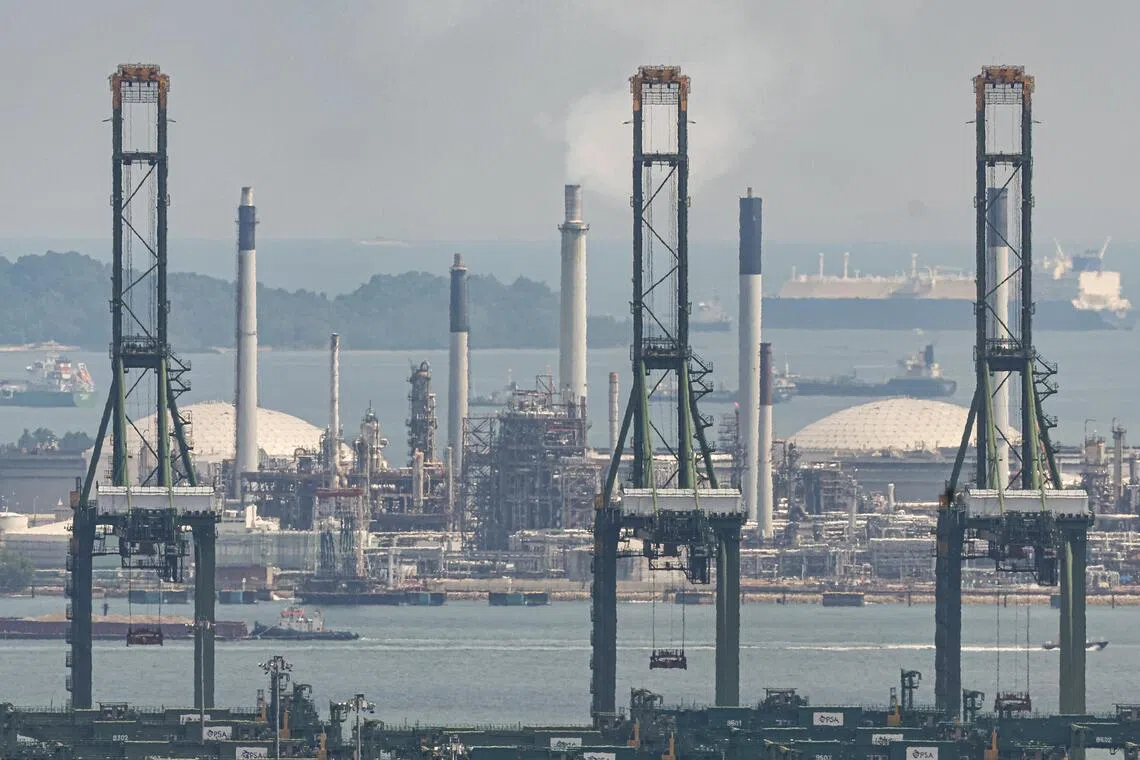
SINGAPORE – PSA Singapore’s Tuas Port has handled 25 million twenty-foot equivalent units (TEUs) since operations commenced in September 2022, highlighting the continued ramp-up of the world’s largest fully automated container terminal.
A TEU is a standard unit of measurement used in the shipping and logistics industry to describe the cargo capacity of container ships, trains, trucks and terminals. One TEU represents the volume of a standard 20-foot-long shipping container.
The volume milestone serves as a crucial proof of concept for Singapore’s next-generation mega-port, validating the terminal’s ability to successfully scale its automated operations to absorb shifting global cargo flows and buffer supply chains against geopolitical trade disruptions.
The facility currently operates 14 berths and remains on schedule to expand to 18 by 2027, said PSA on Aug 6.
“With global trade patterns becoming increasingly complex, robust coordination across ports and supply chain nodes has become more essential than ever,” PSA International group chief executive Ong Kim Pong said.
The automated port acts as a core component of PSA’s “Node to Network” strategy, linking the company’s local transshipment capabilities with its broader global port ecosystem. This will help Singapore retain its position as the world’s leading container transshipment hub, said PSA.
Regional investment required
The Tuas Port milestone comes after a World Bank study, published in late July, showed that ports in East Asia and the Pacific need US$12 billion (S$15.4 billion) in annual investment between 2025 and 2040 to raise efficiency and capacity.
If container trade growth stays at 3.5 to 4 per cent a year, US$90 billion (S$115 billion) in total investment, or US$6 billion a year, will be needed to nearly double capacity to 300 million TEUs by 2040.
Ports in Singapore, the Philippines, Indonesia, Thailand and Malaysia will require about 25 per cent of that total capital.
PSA Singapore processed 44.5 million TEUs in 2025 and maintains a network connecting to 600 ports globally with daily sailings.
Beyond standard port operations, the company relies on port adjacency services and bespoke digital solutions to provide mid-mile logistics and shared end-to-end supply chain visibility. THE BUSINESS TIMES

