Ten seconds is all it takes for this home-grown start-up’s AI analyser to assess a batch of coffee beans for defects.
In comparison, convincing some of the world’s biggest commodity traders to trust this result can take months.
That has been the challenge facing Singapore start-up ProfilePrint as it introduces AI to an industry that has long relied on laboratories and trained tasters to judge the quality of agricultural ingredients.
Founded in 2018, ProfilePrint has developed the Beluga, a portable analyser that uses AI to assess ingredients such as coffee, cocoa and nuts.
It interprets the information collected by the analyser to identify possible defects and predicts qualities such as flavour and aroma, allowing producers, traders and manufacturers to assess ingredients closer to their source, without having to repeatedly send samples to labs or experts elsewhere.
Today, the firm’s technology is deployed across more than 90 locations worldwide. It has also expanded its range with the Orca, a more sensitive analyser with a broader scanning range, and the Mini Beluga, a smaller and more affordable model developed for food businesses that require entry-level quality assessment and ingredient scanning.
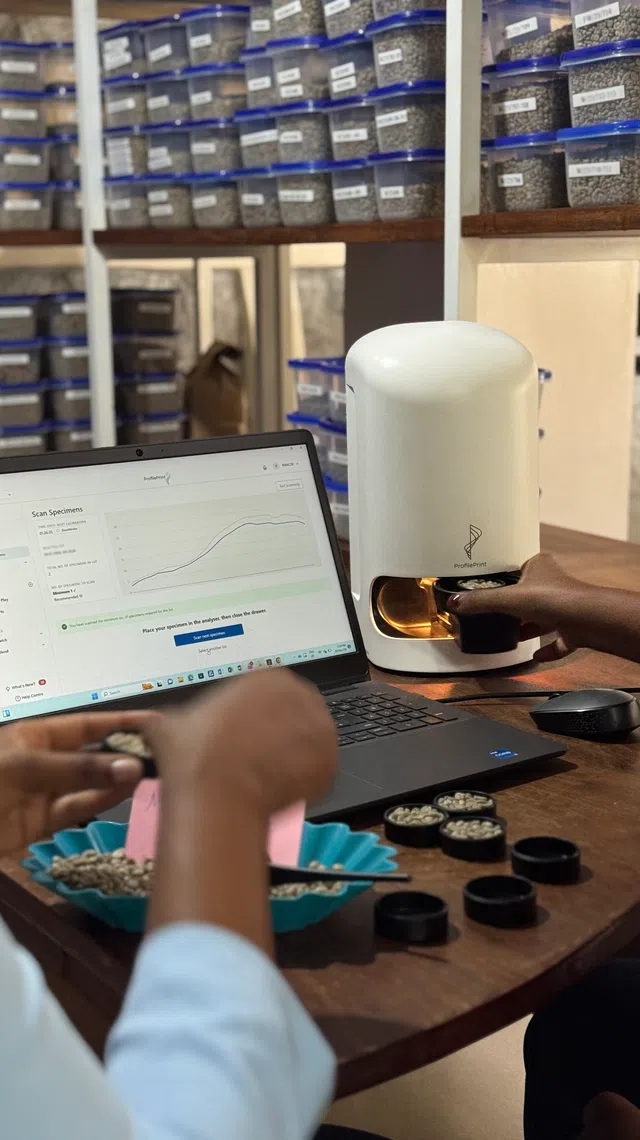
Designed to be portable and practical for on-site use, the Beluga enables a coffee supplier in Rwanda to analyse green coffee beans closer to the source.
PHOTO: PROFILEPRINT
Among its early customers was Geneva-headquartered coffee trader Sucafina, which sources coffee from more than 178,000 growers across 43 countries.
During a project with ProfilePrint, Sucafina was able to assess between 30 per cent and 60 per cent more coffee lots in the same amount of time. The trial demonstrated the technology’s potential for large commodity companies, helping ProfilePrint to open doors to other multinational customers.
Building trust in data and AI governance
Winning interest from multinational companies (MNCs) turned out to be easier than winning contracts.
As ProfilePrint expanded overseas, the start-up found that customer due diligence often involved lengthy discussions with the MNCs’ procurement, legal and cybersecurity teams.
Alan Lai, founder and chief executive officer of ProfilePrint, says: “A large part of the time in negotiating contracts is spent on rigorous Q&A, proving to clients that we can protect their data – and that our AI is not ‘frivolous’.”
ProfilePrint realised that demonstrating the accuracy of its technology was only part of the equation. Enterprise customers also wanted independent assurance that the company could be trusted with their data and that its AI systems were responsibly governed.
To address this, the company first worked towards ISO/IEC 27001, which sets out requirements for establishing and maintaining an information security management system to safeguard sensitive information. It attained the certification in May 2023.
This gave customers greater assurance and reduced the time spent responding to security-related questions.
“We’ve been able to shorten the onboarding process for new clients by roughly half,” says Lai.
This has been particularly useful when working with large US firms, where stringent data-security checks could otherwise hold up potential deals.

The Mini Beluga and Orca analysers (from left) scan coffee beans and feed the data into an AI platform, which can identify possible defects and predict qualities.
PHOTO: SPH MEDIA
ProfilePrint then spent 18 months strengthening how it governed its AI systems, building on the information-security processes it had already established.
In April 2026, it attained ISO/IEC 42001, the world’s first international standard for AI management systems. The standard provides a framework for organisations to govern AI responsibly, manage risks and continually improve their AI management practices.
How standards help strengthen operations
The certifications did more than reassure customers. They helped ProfilePrint put in place the processes needed to scale its business.
Like many start-ups, ProfilePrint prioritised building products and responding quickly to customers in its early years. The certification process helped formalise many of the internal processes that had evolved as the business grew. As a result, ProfilePrint implemented greater structure and consistency to its operations.
To achieve the certifications, ProfilePrint had to show how it protected sensitive information and governed its AI systems.
That included demonstrating who was accountable for the AI, how models were developed and monitored, how potential risks such as errors or bias were managed, and how the company ensured appropriate transparency in the use of AI.
“The value is beyond just having the certification,” says Lai. “The standards allowed us to clarify our internal processes and look ahead into areas to decide what to start working on even before clients start asking for them.”
For multinational customers already familiar with ISO and IEC standards, the certifications also gave them a familiar benchmark during procurement.

Adopting standards has enabled Lai and his team to clarify who is accountable for its AI systems, how risks are tracked and how the company ensures appropriate transparency in the use of AI.
PHOTO: SPH MEDIA
“When we have the certification, especially for big companies that have also gone through ISO themselves, they know what’s behind it,” he says.
Meeting the standards’ requirements is only one part of the process. The firm also had to undergo an independent audit before the certification could be signed off.
ProfilePrint was audited by a certification body accredited by the Singapore Accreditation Council (SAC), which is managed by Enterprise Singapore (EnterpriseSG).
SAC checks that organisations providing testing, inspection and certification services are consistent, competent and impartial.
It also partners international and regional networks to ensure that reports and certificates issued by SAC-accredited bodies in Singapore are recognised worldwide.
ProfilePrint’s experience reflects how internationally recognised standards can help growing companies address the trust and governance concerns of overseas customers.
Choy Sauw Kook, director-general for quality and excellence at EnterpriseSG says: “For companies like ProfilePrint that grow by serving customers around the world, standards and accreditation are more than a mark of quality – they help a company build trust that opens doors to new markets.
“Businesses can gain the confidence of overseas partners more quickly when they hold certification issued by accredited certification bodies, verifying that they meet international standards, enabling them to expand globally.”
Investing early to compete globally
EnterpriseSG supported ProfilePrint on its capability building efforts through the Enterprise Development Grant.
Although ISO/IEC 42001 certification required a significant investment, as well as time and resources, it prepared the company for the increasing scrutiny that companies using AI are likely to face.
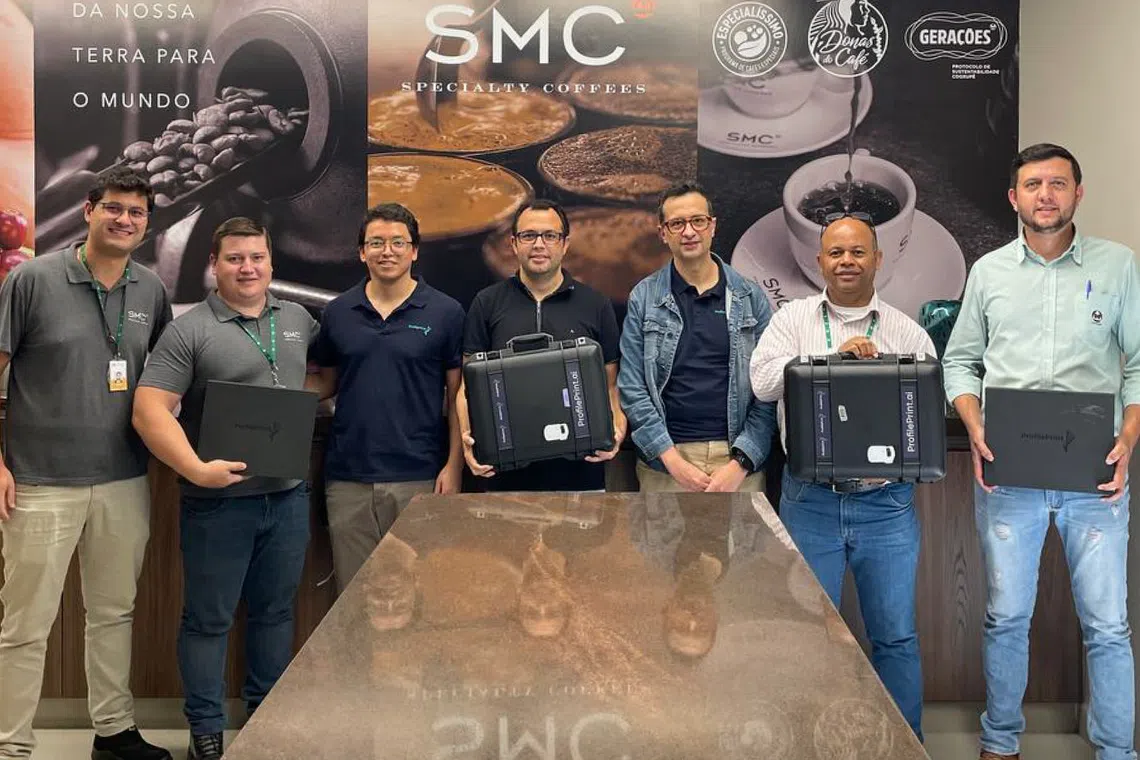
ProfilePrint works with international customers such as SMC Specialty Coffees in Guaxupé, Brazil. The firm says internationally recognised standards have helped strengthen trust in how it protects data and governs its AI systems.
PHOTO: PROFILEPRINT
“We are only at the start of seeing this level of questioning,” says Lai. “More companies – whether big conglomerates or even mid-sized companies – are becoming aware of the need to make sure that these checks are done.”
For a start-up that once lost potential customers to lengthy approval processes, the standards have become more than a compliance exercise.
They have helped ProfilePrint reduce friction in security-related discussions, and strengthened the firm’s internal AI governance. Together, they have helped the firm build the foundations needed to compete for multinational customers in global markets.
This story is part of a series on how home-grown companies stay competitive and are benefitting from the adoption of international standards, with the support of Enterprise Singapore. Find out more here.