


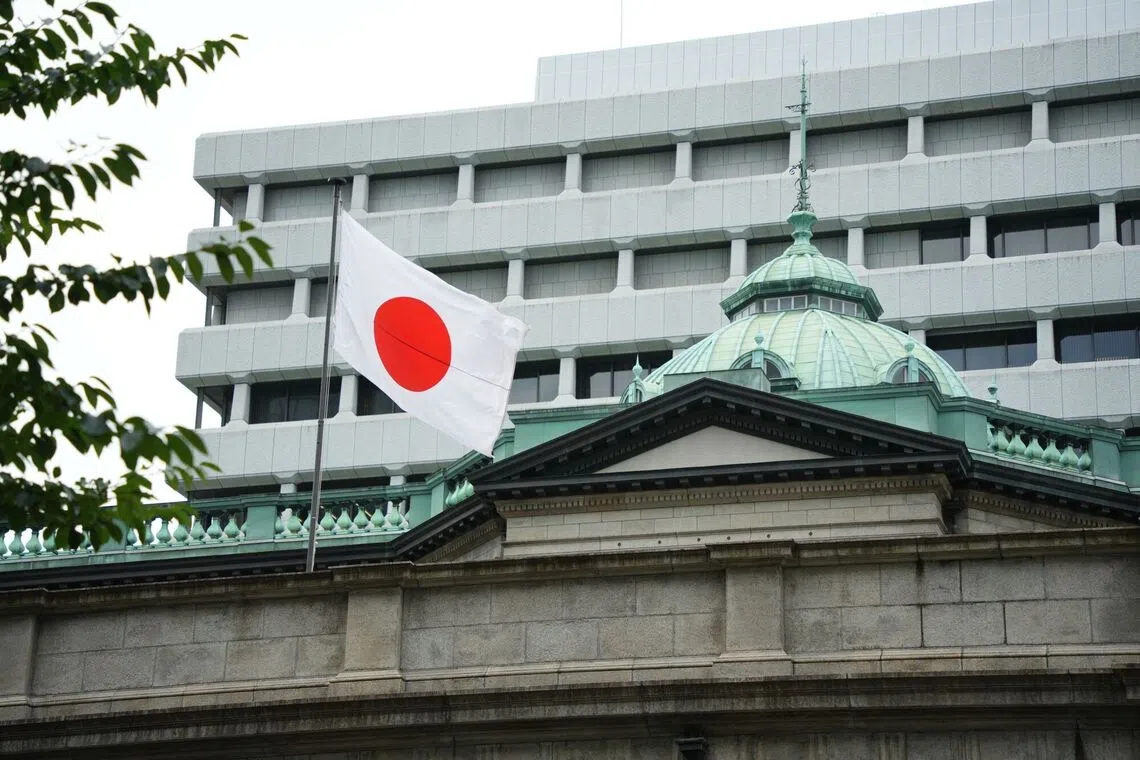
TOKYO – The Bank of Japan (BOJ) kept interest rates steady on July 31 but warned for the first time that underlying inflation could exceed its target, signalling further rate hikes in the wake of the government’s yen-buying intervention.
The central bank also highlighted inflationary pressures from robust global AI-demand and said concern over the economic hit from the Middle East conflict was receding, underscoring its focus on inflation risks that could warrant higher rates.
“There is a risk underlying inflation could deviate above our 2 per cent target as medium and long-term inflation expectations continue to rise, and firms become more active towards raising prices and wages,” the BOJ said in a quarterly outlook report.
“We must pay due attention to keep such a risk from materialising and exert an adverse impact on the economy.”
That language was stronger than that used in the previous outlook report released in April, in which the BOJ said underlying inflation was approaching 2 per cent and required the central bank to be vigilant to upside price risks.
“Given that underlying inflation is approaching our 2 per cent target, we must scrutinise upside price risks more than ever,” BOJ governor Kazuo Ueda told a news briefing.
“We will debate our policy from our next meeting onward with this point in mind.”
At the two-day policy meeting that ended on July 31, the BOJ kept short-term interest rates steady at 1 per cent in a widely expected move after a hike to the 31-year-high level just in June.
Board member Hajime Takata was the sole dissenter to the decision, calling for a rate hike to 1.25 per cent to respond to inflationary risks from external demand shocks.
The BOJ’s decision and its hawkish statement pushed up the two-year Japanese government bond yield but did little to prop up the yen, which hovered around 160.760 per dollar.
“The BOJ’s outlook report was hawkish and we’re sticking to our non-consensus view that the central bank will lift interest rates to 2 per cent by the end of next year,” said Marcel Thieliant, head of Asia-Pacific at Capital Economics in Singapore.
“The decision itself wasn’t unanimous because arch hawk Hajime Takata once again dissented in favour of a rate hike just as he did in April. That’s remarkable, given that the bank just raised rates at its June meeting.”
Yen pressures
The BOJ’s decision came after Japan conducted yen-buying, dollar-selling market intervention in New York markets on July 30, a move that failed to give the yen a sustained boost.
In a sign Tokyo’s action had the blessing of Washington, US Treasury secretary Scott Bessent said Japan may have intervened to prop up its currency that looked “very undervalued”, according to a Fox Business Network reporter.
In the outlook report, the BOJ revised down its core inflation forecast for the current fiscal year ending in March 2027 to 2.5 per cent from 2.8 per cent projected in April due to stabilising oil prices. But it revised up its forecast for fiscal 2027.
The BOJ also said while risks to the economic outlook were evenly balanced, those for prices were skewed to the upside.
“The rise in prices of semiconductors and other items, reflecting increasing global AI-related demand, and the yen’s recent declines are likely to push up prices mainly of durable goods,” the report said.
While maintaining its pledge to keep raising interest rates, the BOJ added the impact of strong AI demand and currency moves – on top of Middle East developments – as factors it would scrutinise in considering the timing and pace of further hikes.
“The perspective of stabilising underlying inflation around 2 per cent is becoming important” in guiding policy to avoid causing an inflation overshoot that damages the economy, it said.
Hawkish talk
The BOJ raised rates to a 31-year high in June and signalled its readiness to tighten further as it focuses on taming price pressures from the energy shock. Most analysts polled by Reuters expect the BOJ to raise rates again to 1.25 per cent by year-end.
The slow pace of rate hikes has been blamed for pushing the yen to a 40-year low, leading to rising import costs that hurt households and retailers.
Japan’s yen-buying intervention, first reported by the Nikkei newspaper, would be the first since Tokyo’s record US$73 billion (S$93.64 billion) yen-buying spree between late April and early May that had little effect in reversing the currency’s downtrend.
Tokyo’s top currency diplomat Atsushi Mimura on July 31 declined to comment on intervention but hinted at US involvement in the effort to stem the yen’s decline, including so-called rate checks by the Fed.
He said Japan was communicating closely with South Korea, which also conducted dollar-selling intervention on July 30.
Data released earlier on July 31 showed annual core inflation in Japan’s capital accelerated to 1.7 per cent in July, a sign of broadening price pressures from the Middle East conflict. REUTERS

