


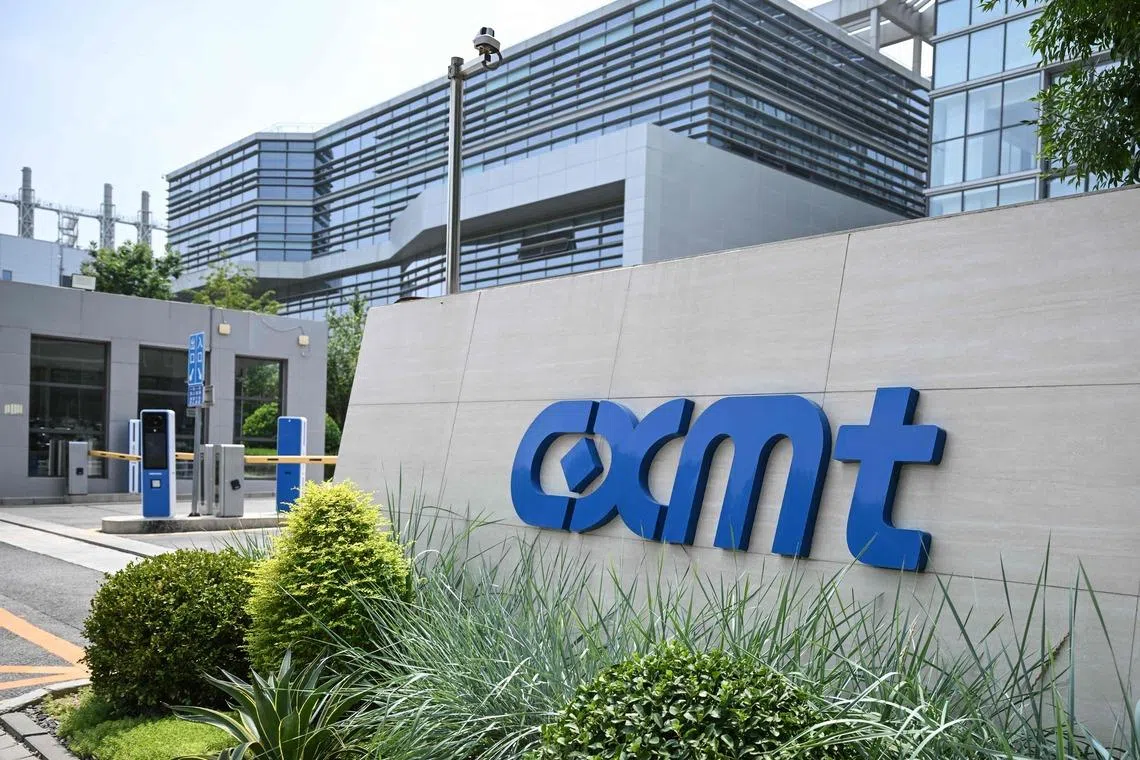
China’s biggest IPO in more than a decade became the first major Asian test for crypto’s emerging pre-IPO futures – and the blockchain market largely delivered.
Memory chipmaker CXMT’s shares surged 472 per cent from their offer price when trading began on Shanghai’s Star Market on July 27.
While many expected CXMT to quickly become the most valuable firm listed in China, Hyperliquid had already been pricing the company near its eventual opening valuation for more than a week.
The stock opened at a market capitalisation roughly 2.5 per cent above that implied by the blockchain contracts.
The market for perpetual futures tied to companies ahead of public listings has fuelled debate over whether the contracts are becoming a genuine price-discovery tool or simply another venue for speculative positioning.
Earlier pre-IPO futures tied to US companies, including SpaceX and Cerebras Systems, broadly converged with public trading. But CXMT was the first blockbuster Chinese listing to test whether the model could travel beyond Silicon Valley.
“This is one of the largest and most strategically important IPOs globally,” said Ayesha Kiani, chief operating officer at Monarq Asset Management. “It could mark the beginning of decentralised derivatives becoming an accepted input into institutional price discovery alongside indications of interest, grey markets and private secondary transactions.”
The debut of CXMT, which competes with Samsung Electronics and SK Hynix, had been highly anticipated. The shares opened in Shanghai at 49.5 yuan, close the US$7.14 for the contracts on Hyperliquid. The prices converged within minutes.
By market close, CXMT shares were at about US$7.24, valuing the company at US$488 billion (S$629 billion), while the Hyperliquid contracts were trading at US$6.95.
So-called perps are contracts that trade 24/7, do not expire and are designed to track the price of an asset through periodic funding payments. Perps tied to everything from cryptocurrencies to oil trade on Hyperliquid, a decentralised blockchain-based venue, and have become a popular way to wager on price movements outside regular market hours.
In 2026, the products expanded to include pre-IPO stocks.
CXMT is the fourth pre-IPO perp introduced in 2026 by Trade.xyz, the platform that creates the contracts traded on Hyperliquid.
The company’s IPO was the second-largest ever in mainland China, surpassed only by the 2010 listing of Agricultural Bank of China, which raised US$10 billion in Shanghai.
CXMT has benefited from the artificial intelligence boom, which has drastically driven up the price of computer memory, as well as from China’s push for technological self-sufficiency.
However, investors globally have grown more concerned about the billions of dollars technology giants are spending on AI.
On Wall Street, investors have retreated from shares of the seven largest US tech firms, including Nvidia and Google parent Alphabet. The group’s collective market value fell 4.8 per cent in a single session last week, the worst single-day drop since April 2025, wiping out US$797 billion in market value.
Perps ‘here to stay’
Interest in pre-IPO perps has grown among retail traders seeking exposure to stock listings that would otherwise be difficult to access.
On their debuts, shares of semiconductor firm Cerebras and Elon Musk’s aerospace giant SpaceX quickly approached levels indicated by Hyperliquid contracts leading up to the IPOs.
SpaceX priced its IPO at US$135 a share, opened about 11 per cent higher and closed its first session at US$160.95, having converged with the Hyperliquid perps that came down from about US$175 earlier in the day.
Cerebras perps, which had debuted at US$175, climbed to nearly US$340 an hour before the company’s Nasdaq opening. Cerebras priced its IPO at US$185 a share but opened at US$350.
Perps linked to the lesser-known quantum computing firm Quantinuum proved less predictive. The contract fell from above US$90 to close at about US$60 – the same price at which the company’s shares opened.
“Traders are no longer searching for exposure to unlisted assets, they’re demanding venues to make it happen,” said Mike Cahill, chief executive officer of blockchain company Douro Labs. “Those markets are here to stay and price discovery to support that exposure is crucial.”
The growing popularity of perps has also raised concerns. Unlike traditional gray markets for private shares, perps do not confer ownership in a company. They provide synthetic exposure, with prices determined by supply and demand on the blockchain and potentially distorted by retail enthusiasm and scarcity premiums.
That can produce sharp swings outside normal trading hours or before a stock listing. Once publicly traded shares become available, pre-IPO perps begin tracking their market prices – not always to the benefit of traders holding long positions.
Cerebras, SpaceX and Quantinuum were trading all below their opening prices as at the July 24 close. BLOOMBERG

