


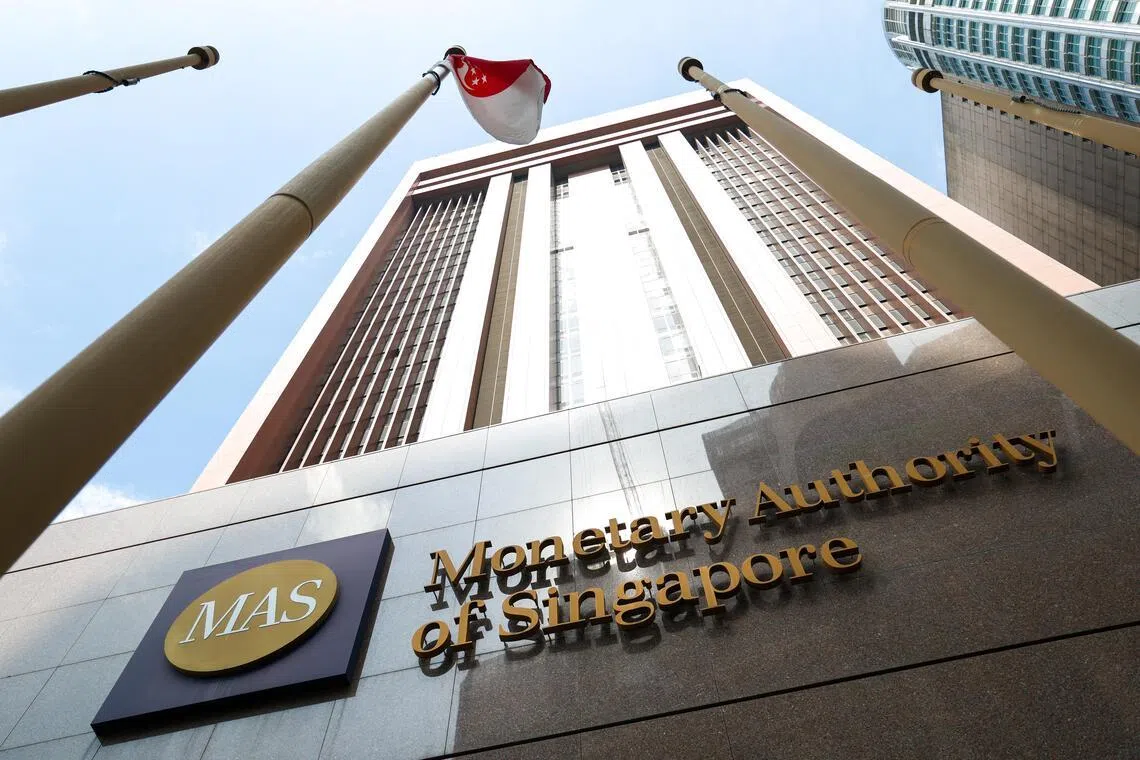
SINGAPORE – Singapore’s central bank has tightened its monetary policy stance for the second time in a row, allowing for a stronger currency in the face of the risk of relentless inflationary pressure from higher oil and natural gas prices due to the Iran war.
The Monetary Authority of Singapore (MAS) said on July 27 that it will increase the rate of appreciation of the Singapore dollar’s trade-weighted value, also called the Singapore dollar nominal effective exchange rate (S$NEER) policy band.
In its last policy announcement on April 14 MAS tightened its stance for the first time since 2022 for a stronger S$Neer that helps dampens the impact of rising import costs.
MAS said the policy tightening in April, which followed a period of broad S$NEER appreciation, has contributed to a dampening of inflationary pressures in the economy.
“However, external price pressures are expected to persist and pass through more broadly to domestic consumer prices in the period ahead,” it noted.
MAS core inflation – which excludes private transport and accommodation to better reflect household expenses – is projected to step up from July and remain elevated, but should moderate discernibly from around mid-2027, the central bank added.
Singapore’s core inflation ticked up to 1.6 per cent in June. It was higher than the 1.4 per cent in May, but remained at the lower end of MAS’ 1.5 per cent to 2.5 per cent forecast range for 2026.
However, as the central bank says, many analysts believe prices will remain elevated because of higher energy costs.
The global oil benchmark Brent has risen by more than 50 per cent since the start of the year, touching the US$100 a barrel mark last week after a shaky 60-day ceasefire agreed upon by the US and Iran in mid-June collapsed.
A lull in hostilities over the weekend has helped lower oil prices to around US$96 barrel. But analysts say higher energy prices will push up manufacturing and transport costs as they pass through global supply chains with a lag.
The trade-weighted S$Neer has stayed on its gradual appreciation path, guided by the MAS, this year. But in the foreign exchange market, the Singapore dollar has eased by about 0.4 per cent versus the US dollar.
However, its Asian peers have retreated much more versus the greenback, helping the Singapore dollar gain some ground against them. So far in 2026, the local dollar is up about 4 per cent against the yen and 0.6 per cent versus the ringgit.
This means that Singaporeans can continue to enjoy the higher purchasing power of their currency in the most favoured holiday destinations of Malaysia and Japan.
For now, economic growth is not a worry for the central bank, which said the Singapore economy is forecast to record a firm pace of growth for 2026 as a whole.
The Singapore economy grew 5.7 per cent year on year in the April to June quarter, a decent pace but slower than the previous quarter’s 6.3 per cent – which was upgraded by 0.3 percentage point.
This took first-half gross domestic product (GDP) growth to 6 per cent, a full 2 percentage points above the Ministry of Trade and Industry’s forecast range of 2 per cent to 4 per cent.
However, the strength of the economy this year has been narrowly based on the AI-powered semiconductor super-cycle, which has boosted exports and manufacturing output, generating some spillovers into other trade-related segments.
Some analysts worry that the non-electronics complex is not expanding as fast, signalling that the Republic’s expansion remains uneven despite robust GDP growth.
The higher costs of doing business, amid higher energy prices, have also kept unit labour costs in Singapore’s services sector increasing at a slower pace in 2026. Nominal wage growth has also eased from the firmer levels in 2025.
Meanwhile, domestic consumer spending appears to be turning more cautious amid the economic uncertainty.
Retail sales rose 3 per cent year on year to an estimated $4.5 billion in May, down from the 5.4 per cent growth recorded in April.
Hence, MAS said there continues to be significant uncertainty around the macroeconomic outlook.
“Inflation could pick up more strongly than anticipated if energy prices spike anew: fuel reserves have been drawn down significantly and renewed supply disruptions in the Middle East could cause sharp surges in oil prices.”
Inflation could also be more persistent than projected if robust investment growth generates greater demand spillovers abroad and in Singapore.
At the same time, downside risks to the global and domestic economies are still present.
An unexpected tightening in financial conditions or pullback in AI-related investment could impact the sustainability of GDP growth, and thus weaken inflation, said MAS.

