


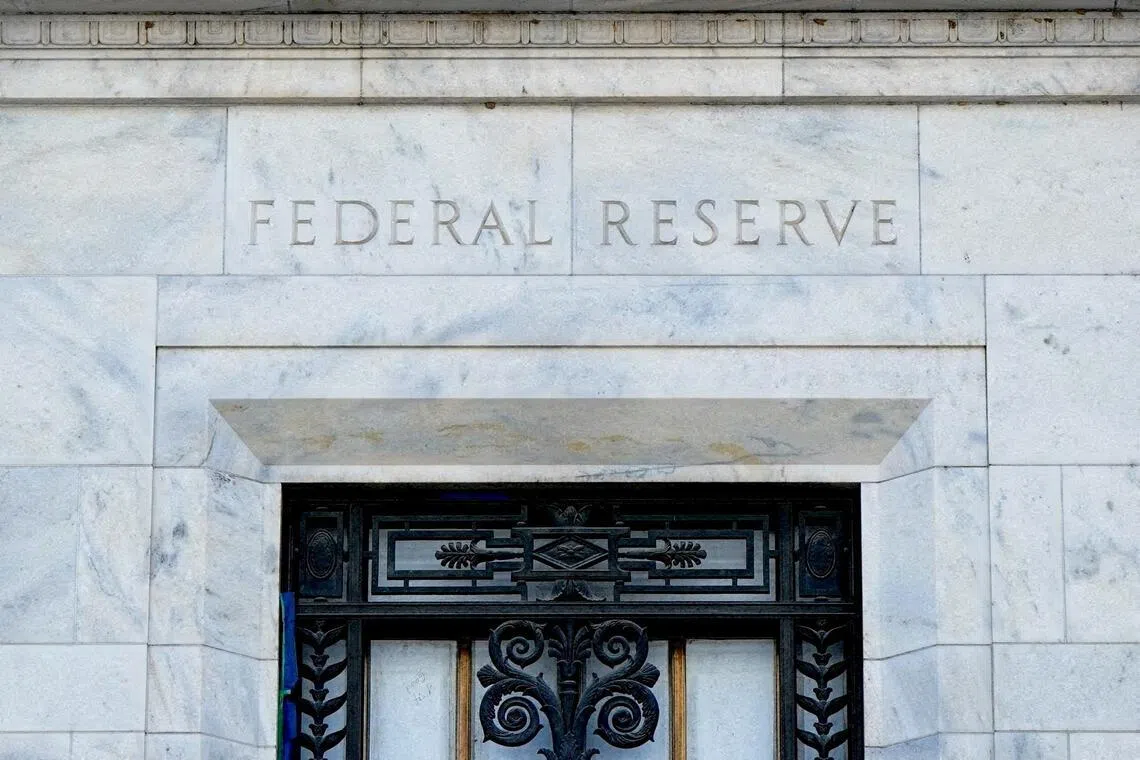
US Federal Reserve officials will head into their policy meeting this week confronting a resurgence in price pressures that could make their decision on whether to hold or hike interest rates a close call – and a contentious one.
Renewed tensions in the Middle East have sent oil prices soaring again, overshadowing a tamer-than-expected reading on June consumer prices that seemed to offer officials breathing room to keep rates stable.
Add to that a demand boom fuelled by artificial intelligence and the Trump administration’s announcements of new tariffs, and Fed watchers see the possibility of dissents at the July 28-29 meeting if officials again leave policy unchanged.
Investors in recent days have also boosted their bets the central bank could hike at this week’s meeting, putting the odds close to 40 per cent at one point last week.
“Things are definitely heating up in the conflict in the Middle East and, for oil, the risk of moving significantly higher from here has increased,” said Alex Payne, a senior portfolio manager at Vanguard. “The market is adjusting to the risk of inflation being a little bit stickier due to some of these geopolitical issues.”
Potential pushback
A growing number of policymakers have outlined a rationale for why they support higher rates now, or could soon.
Dallas Fed President Lorie Logan earlier in July called for modestly higher rates, citing her view inflation is not heading sustainably back to the Fed’s 2 per cent goal. Cleveland Fed President Beth Hammack also chimed in recently, saying “there is no conflict” in the Fed’s mandates and inflation is a bigger concern than employment currently.
Both will vote on this week’s interest-rate decision and could dissent if officials opt to hold steady.
“It is clear listening to the Fed officials that you have a small group – like Logan, Hammack – who probably are ready to get going,” said Claudia Sahm, chief economist at New Century Advisors LLC. “And then there’s a pretty large group that wants to see more improvement – and soon.”
Even at June’s meeting, when officials left policy stable for a fourth consecutive time, a few policymakers already saw a case for raising rates. Minutes of that gathering also showed most officials had discussed scenarios in which inflation remained elevated due to AI-related demand, the Middle East conflict or the effects of tariffs. And almost all in that group indicated that such scenarios would likely warrant higher rates.
Since that meeting, the Trump administration said it would impose fresh tariffs on Canada and other trading partners, a fragile ceasefire between Iran and the US fractured and robust AI investment has shown few signs of slowing.
Fed Chairman Kevin Warsh has reaffirmed the Fed’s commitment to reducing inflation, vowing on Capitol Hill in July to use the central bank’s tools to achieve price stability. But his reluctance to offer specifics on how he plans to use those tools has kept markets guessing about where rates are headed – even in the near term.
At the close of last week, investors were pricing in about a 35 per cent chance for a rate increase at this meeting, according to federal funds futures contracts.
Those odds had dropped to roughly 10 per cent after Labor Department data released on July 14 showed the US Consumer Pice Index fell in June for the first time in six years as gasoline prices declined. But the drop reversed amid the re-escalation of the war with Iran.
“Roughly one third of the banks we work with are positioning for further rate increases, while the rest are hedging against cuts,” said Pradeep Bhatia, chief executive officer of Derivative Path, which helps financial institutions hedge rates and currency risks. “That kind of bifurcation tells you the market has stopped trying to predict the Fed and started preparing for both outcomes.”
Now versus later
Officials may be comfortable leaving rates unchanged on the heels of the cooler June inflation reading, said Veronica Clark, an economist at Citigroup.
If future data reports show limited pass-through from higher energy prices and rising unemployment, policymakers may opt to extend the hold on borrowing costs or even cut rates, she said.
Some officials have indeed suggested the Fed can be patient for now. But they have also said the central bank may need to hike in upcoming meetings if price pressures don’t abate.
“In a scenario where actual inflation does not start to cool down soon, I believe that it could be appropriate to reconsider our current policy stance,” Fed Vice Chair Philip Jefferson said two days after the CPI report.
Lifting rates in July could help Warsh build credibility in his fight against inflation and may be viewed as less political than a rate move closer to the midterm elections in November, said Joseph Lavorgna, chief economist of the Americas for SMBC Nikko Securities America and a former Treasury Department official during US President Donald Trump’s second term.
Trump criticised former Fed Chair Jerome Powell after officials lowered rates by a half percentage point in September 2024, weeks ahead of the presidential election, calling it a “political move” designed to help his election rival, former vice-president Kamala Harris.
“Going in September or, God forbid, October – a first hike, right before the mid-terms – how’s that going to look? He might as well go now,” said Lavorgna.
Lavorgna added Warsh might be able to soothe the President by framing a hike as a move that could help hold down longer-run market rates, which Trump cares about, by containing inflation expectations.
Whatever the outcome, Warsh’s post-decision press conference will be closely watched for clues on how he and his colleagues see the economy evolving.
“I think that’s the key thing that we need to learn over these next several meetings – about where the center of the committee is on whether or not rate hikes are needed,” said Matthew Luzzetti, chief US economist at Deutsche Bank Securities. BLOOMBERG

